
3/4 stars
When Max (Mel Gibson) enters the Thunderdome he is introduced to the roaring crowd as “the man with no name.”
It suits.
Like the seminal Man with No Name trilogy that made Clint Eastwood famous the Mad Max series presents a singular hero against a singular backdrop without the need for any ongoing continuity. Their adventures can be viewed in any order with no appreciable loss of comprehension. Like tall tales of gods and folk heroes told around a fire, which story is chosen on any given day does not matter a great deal. By being introduced in this way what director George Miller is trying to tell the audience is that Australia now has its own modern day Eastwood.
A more striking allusion in Mad Max Beyond Thunderdome is made to Peter Pan and his Lost Boys of Neverland. In the film Max encounters a group of feral children who yearn for unclear memories of the past before the apocalyptic wastelands became their home. And like Wendy Darling in Peter Pan, Max must face off against the children’s naivete, delusions, and mistrust before leading them in a fight for freedom against some roguish grownups.
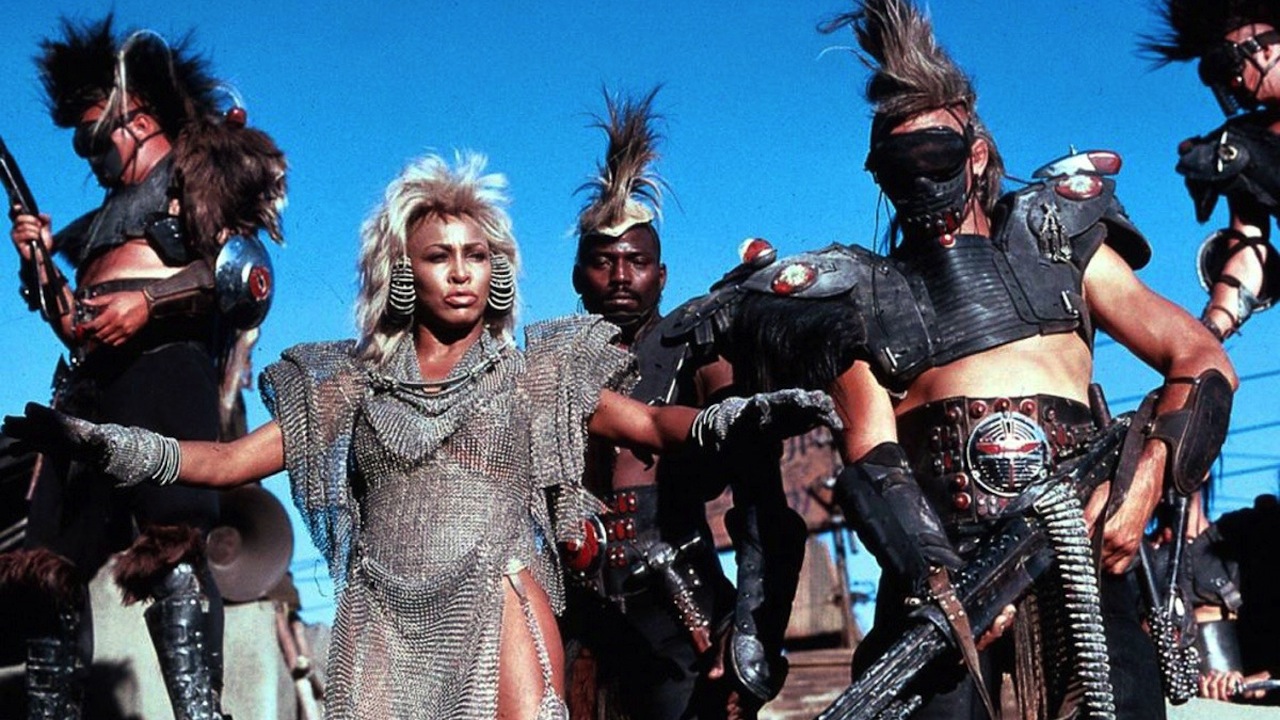
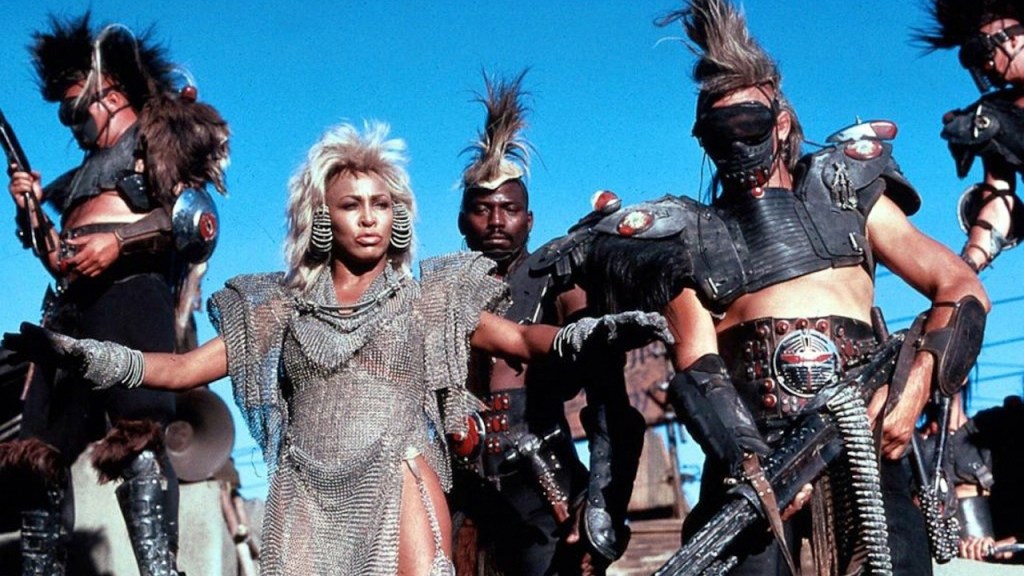
The movie begins with Max coming to a thuggish frontier city called Bartertown where resides the titular Thunderdome, a crude gladiator arena which sits in the center of town. What he finds there is an ongoing power struggle between a charismatic dominatrix named Auntie Entity (played by Tina Turner) and Master Blaster, an odd couple consisting of a child-minded brute (Blaster) and the brains of their unit (Master) who is a dwarf that rides Blaster’s back.
A deal is struck between Auntie and Max that in exchange for resources he must fight and kill Blaster in the Thunderdome. He agrees and what follows is one of the more memorable action set pieces of the film.
The Thunderdome is taller than it is wide and its combatants are attached to suspending harnesses that allow them to bounce around the arena grabbing a variety of weapons attached to the dome. The environment is not flashy, but the fight is exciting.
When Max discovers that Blaster has the mind of a child he refuses to kill him and reveals the deal to Master. Enraged, Auntie has Max sent out into the desert to die. There he is rescued by a clan of young children who mistake him for a legendary captain who featured heavily into their myths. He denies the messianic role and at first wants little to do with the group. But soon he takes on a protective paternal role and leads them to the film’s climax in a faceoff against Auntie Entity and the villains of Bartertown.
Sadly the relationship between Max and the kids makes for one of the weakest points of the film and lacks proper development. Much is rushed and I wanted to see more. Some more time getting acquainted with the group and scenes of Max preparing them for the battle ahead would have gone a long way and the absence of such scenes robbed me of emotional investment. I would have preferred the Lost Boys motif better explored, but pacing and marketable film length are often at odds when crafting an action picture and the movie suffers from prioritizing its action scenes.
The action scenes, however, are quite good if not quite up to the standards of Mad Max 2. The previous film featured a sustained chase scene in the desert that is replicated here, but not as effectively. I felt that I had seen much of this before in the last film; Tina Turner’s gravitas and the good-natured fun of the whole thing being the chief highlight of the final sequence.
I genuinely liked Mad Max Beyond the Thunderdome, but I wanted more of it.

