
3.5/4
Furiosa: A Mad Max Saga is a thoroughly entertaining movie that doesn’t quite reach the kinetic energy of the previous film. Mad Max: Fury Road was a well-sustained action sequence from beginning to end, but here there is more room for introspection. Director George Miller doesn’t try to top what he had achieved with Fury Road and I cannot say I blame him. That movie represents the height of his craft as an action director and with his latest he attempts to do something different.
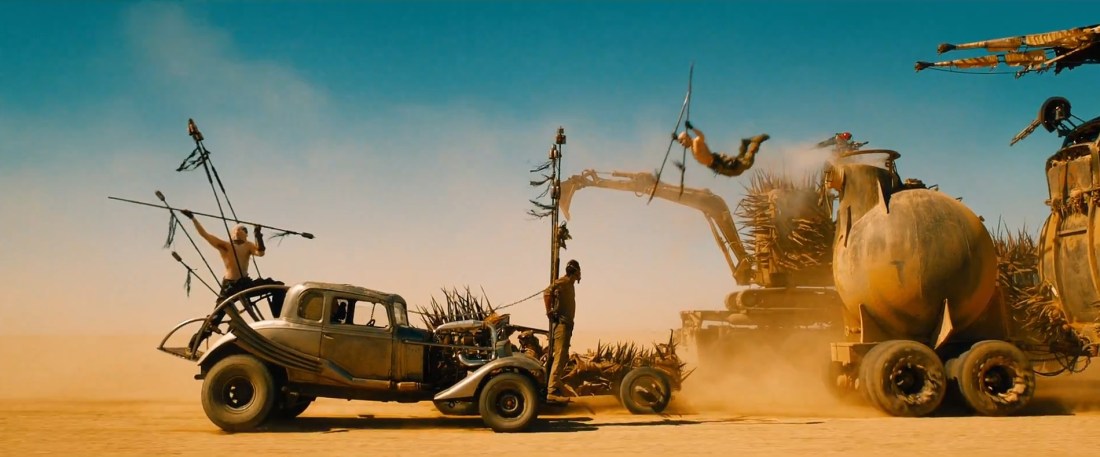
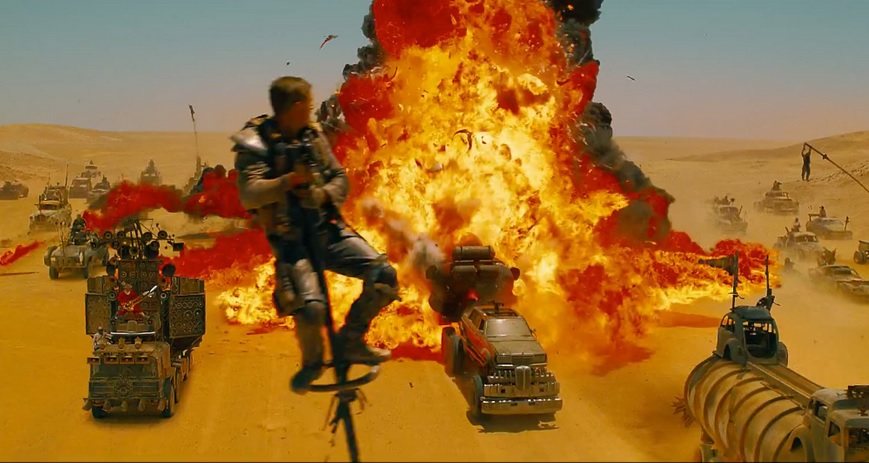
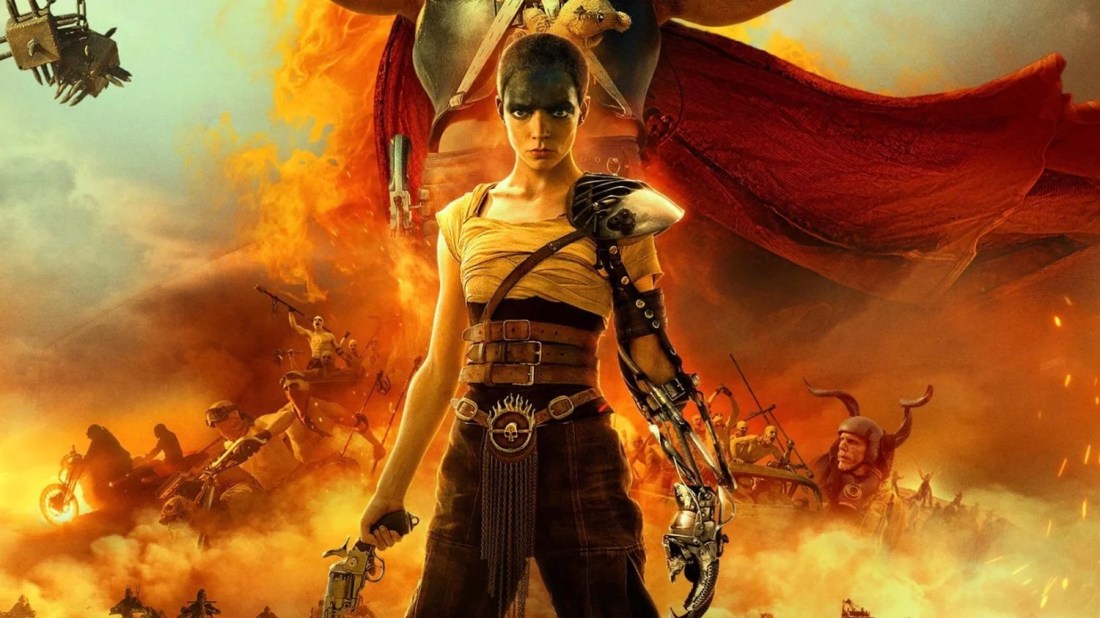
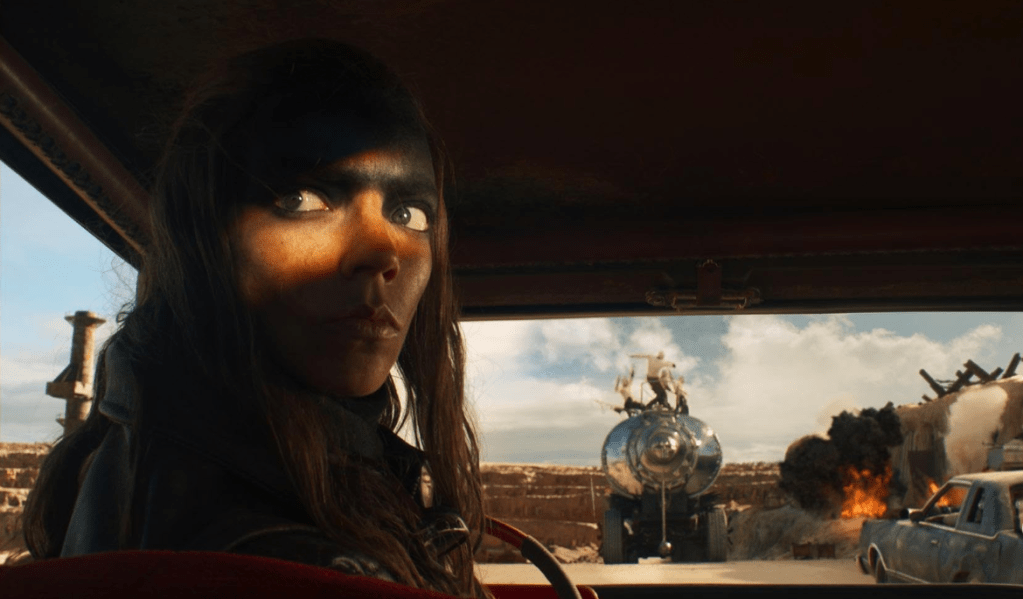
The previous Mad Max entries were more or less one-offs that could be viewed in any order. They all exist on a floating timeline and each creates its own world and aesthetics. Furiosa, however, doesn’t look at all that different in style from Fury Road and, indeed, this should more deservedly be considered a companion piece. It expands upon the world Fury Road created, revisiting much of same locations and characters. But, this time with no Mad Max. The absence is not greatly missed and it goes to show that this world is interesting enough to tell stories in without him. Instead, the film is a prequel exploring the early life of Imperator Furiosa, originally played by Charlize Theron in Fury Road. Miller, to avoid overusing de-aging techniques recasts the role with the lovely, but much less charismatic Anya Taylor-Joy.
We first meet Furiosa as a young girl (Alyla Browne) who is kidnapped from her home by raiders. When her mother (Charlee Fraser) rescues her they are caught and Furiosa’s mom is killed by the bandits’ leader, Dementus (Chris Hemsworth). Hemsworth’s performance is one of the biggest draws in the picture. He is affably wicked, playing the role like a soft-headed child turned bully. He throws deadly tantrums when he doesn’t get his way, clutching a teddy bear like a totem throughout. He strikes me as someone who in their childhood was given too much sugar and not enough spankings.
Dementus strikes a deal with warlord Immortan Joe (Lachy Hulme) that leaves him in control of Gastown, one of three major ramshackle cities in the wasteland. Part of the exchange involves handing over Furiosa to Immortan, who is to join his harem when she comes of age. She, understandably, wants no part of this and she flees. She disguises herself as a warboy (one of Immortan’s foot soldiers) and pretends to be mute.
Following a quick transition in time (a first in the series) Furiosa is older and one of Immortan’s most trusted enforcers. In the sequences where we see her grow from child to adult George Miller makes impressive use of AI tools to blend Anya Taylor-Joy’s face with Browne’s. He is a director who understands the limits of CGI and, while the film is the most CGI-laden of the Mad Max films, he doesn’t become overambitious. The use of AI here is subtle enough to escape notice and far more convincing than what we have seen in the last Indiana Jones or The Mandalorian. He keeps her body and head shrouded completely in these scenes allowing only the face to be seen resulting in none of the usual unnatural movements that characterize AI tools most of the time.
Furiosa befriends a war-rig driver named Jack (Tom Burke) who shares in her dream of escaping from Immortan Joe’s Citadel. He teaches her everything she knows setting her up for her role as war-rig driver in Fury Road. If Jack is somewhat lacking in personality it can be forgiven. He is introduced to the audience as incentive and encouragement to Furiosa, but obviously meant to die before the story is over. Is that a spoiler? Perhaps, but he is not in the previous film so…
A pathway for revenge against Dementus soon opens up when Immortan declares war on him for going rogue. The climax is not quite the action spectacle that graced Fury Road’s final act, but the film has a satisfying conclusion that gives surprisingly meaningful insight on the psychology of revenge. Her dialogue with Dementus at the end airs out intelligently what vengeance can achieve and what it cannot. He tells her that she can do him in slowly or quickly, but it won’t matter either way. His death is only merciful oblivion and faced with his lack of remorse there can be no pain that she can inflict that will justly match her own. Dementus, like any good Mad Max villain, is absurd and over-the-top. But in his final moments when he is weak and vulnerable there is something more menacing in his words. He gives full expression to how frustrating seeking revenge really is. His tolerance for physical pain is high and there is no room in his heart for seeing the error of his ways. He can be killed. But he is untouchable. The eventual choice she makes at the end may not be understood by everyone, but they are her own to make and moral judgment is left to the viewer.
Furiosa: A Mad Max Saga is an engaging revenge story packed with action and impressive special effects. But, I wanted more from Taylor-Joy’s performance. She is given very little dialogue throughout the picture which grates against the more talkative portrayal of her in Fury Road. Especially given that the film ends exactly where Fury Road begins, showing unnecessary clips from that movie during the end credits. The recap is gimmicky and only insinuates a dependence on the other film that I don’t believe is there. This is only a mild gripe, and my main issue remains the disappointing use of Furiosa as a character. She is not very interesting, which is frustrating given Anya Taylor-Joy’s talent as a performer. The best written character by far is Dementus which diversifies Chris Hemsworth from his more typical heroic roles. He is a great deal of fun to watch and he is my favorite of the many villains that have come and gone in the Mad Max series. He is, of course, ridiculous, but underlying his absurdity is a genuine menace.
The movie is good, but mostly for the reasons that made Fury Road good. There are a number of impressive shots, but nothing transformative enough to elevate it to greatness. I would recommend the picture, but with the added warning that it is not the same experience as watching Fury Road.
Miller has said he intends to make at least one more Mad Max film after this one and I am optimistic. Furiosa shows he has not lost his touch and I am hopeful that the next will be another elevation in quality we had seen before. Furiosa: A Mad Max Saga as a side story is an excellent diversion while we wait. But, I expect the next to be much better.