
Roman Holiday (1953)

4/4 stars

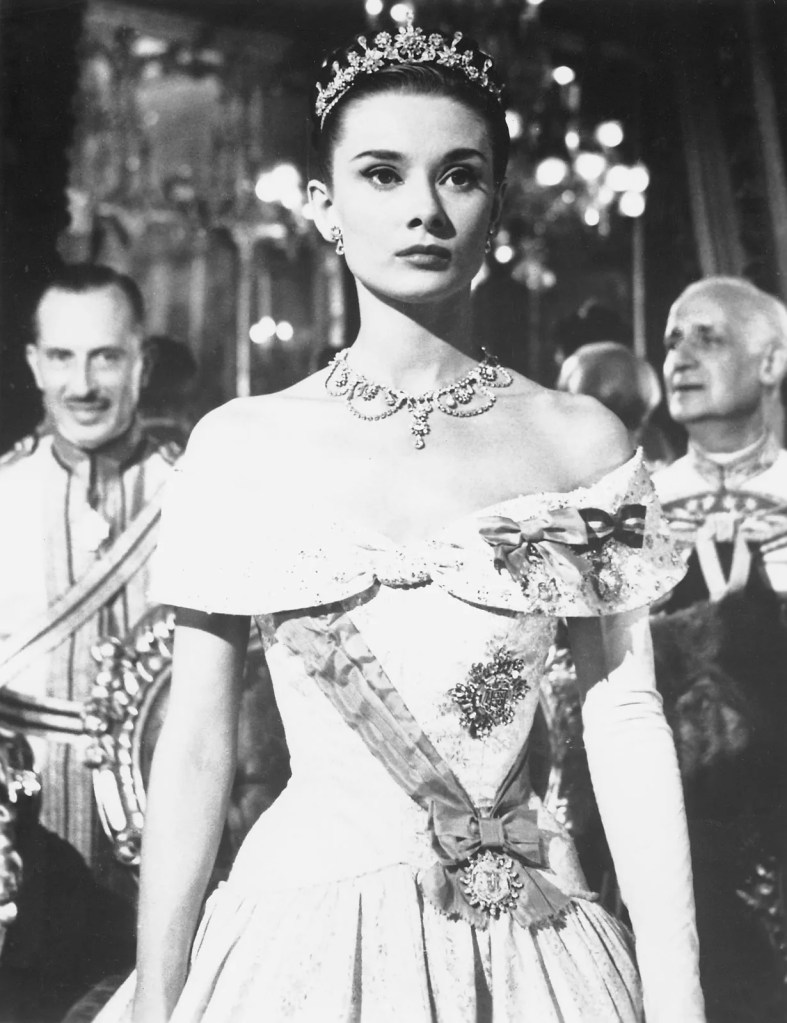
Audrey Hepburn was a special kind of star. Not a classy bombshell, but someone more accessible. In every Hepburn performance she is all charm and innocence; softened by pure affability. Her face and manner made men fall in love with her and women wanted to be her. She was the sort of woman where words like “sexy” or “hot” would be a pathetic waste and a clear miss of the mark. She was the sort of woman men write poems about.

Even in her bad films (like Funny Face) Audrey Hepburn is always likable and remains a highlight that elevates the piece if even by a margin. In her good films (like this one or My Fair Lady) she is a worshipful dream. She was one of the last stars to come out of the Golden Age of Hollywood; and if she is not definitively the best, she is still my personal favorite.

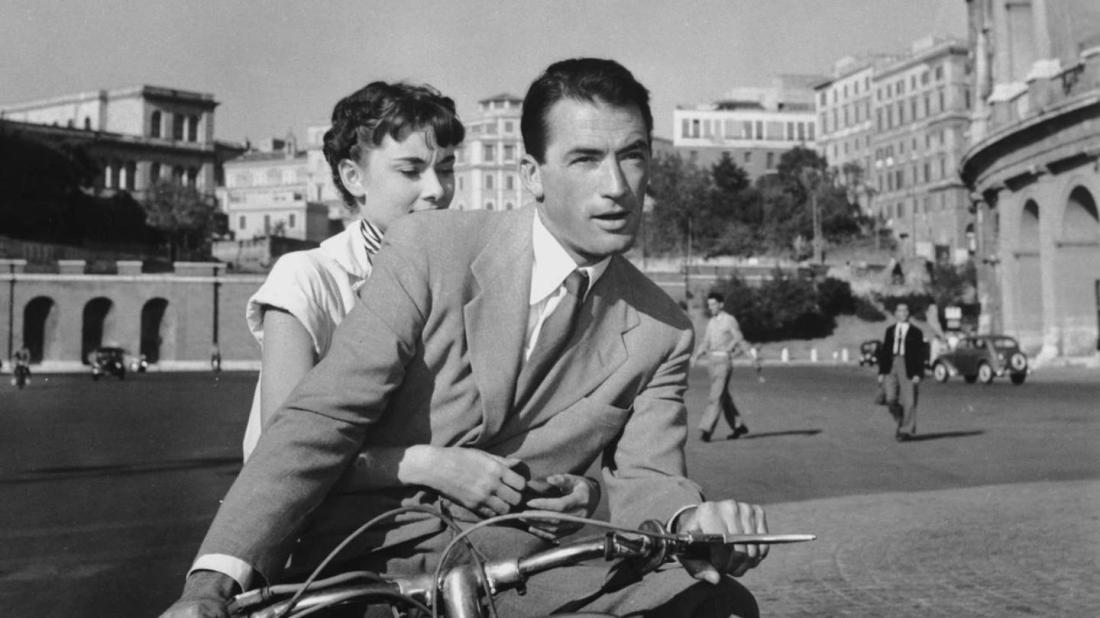
Director William Wyler’s (Ben-Hur) Roman Holiday may very well be the best of Hepburn’s movies; it certainly utilizes her screen persona to its fullest. She plays a bored royal named Princess Ann who, after a bad reaction to a drug meant to calm her nerves, runs away from her tight-knit existence and drunkenly wanders the streets of Rome (shot on location throughout) before meeting American journalist Joe Bradley (Gregory Peck). He doesn’t know who she is and innocently takes her to his apartment to sleep off the episode. Peck plays the complete gentleman, painfully aware of the potential for scandal; and even when she implies that less savory attention wouldn’t be unwelcome, he keeps distance out of respect for her drunken state. Peck strikes me as a sort of anti-Robert Mitchum, powerfully male, but clean cut and highly noble.
When he sees her face in the morning newspaper Bradley learns who she is and he sees an opportunity for an exclusive interview and an easy payout from his editor. This is easier said than done while Princess Ann keeps herself hard to pin down as she enjoys a new carefree freedom. Away from the pampered structured life to which she had hitherto been accustomed she soaks in Rome as a wide-eyed tourist rather than a VIP. She goes dancing, buys ice cream, gets her haircut, and gives Peck a near heart attack in the film’s most memorable scene when she wildly wrecks havoc through the Roman streets on a Vespa.
Of course, the pair eventually fall in love. The moment comes at a perfect time in which the audience has had time to fall in love with her as well. It’s clear that the few days that they spend together will remain in memory as the happiest time of their lives. When the film ends the time they had is tragically short and neither Bradley or Ann will quite replicate those feelings again. First love is like that.
At the end there is pain, but not misery. Back in her proper ceremonial place she and Peck must pretend to meet for the first time and not know each other. Their final departure is bittersweet, but there is no bitterness.

While watching Roman Holiday I was overwhelmed with a personal sense of nostalgia for the days when I was a youth and in love for the first time. Like with the characters in the film, there is a lingering ache tempered with positive experiences that will carry into the remainder of my days.
The best films leave us with real feelings. They bring out our emotions without manipulation and outrageous pathos. Romantic comedies often fail in this regard, but Roman Holiday happily does not. Even when it is being silly it recalls to mind sincere feelings of lost youth and how love at that age is an adventure, best remembered but not to be recaptured. The movie made me sad as well as happy. The mark of an excellent film is its way to evoke different feelings depending on the age of the viewer. When I was younger Roman Holiday would have been a reflective bit of charming fun. Now that I am a little older it recalls to mind feelings that are more real.

I look forward to revisiting Roman Holiday as an elderly man and see how it makes me feel then.

Mad Max: Fury Road (2015)

4/4 stars

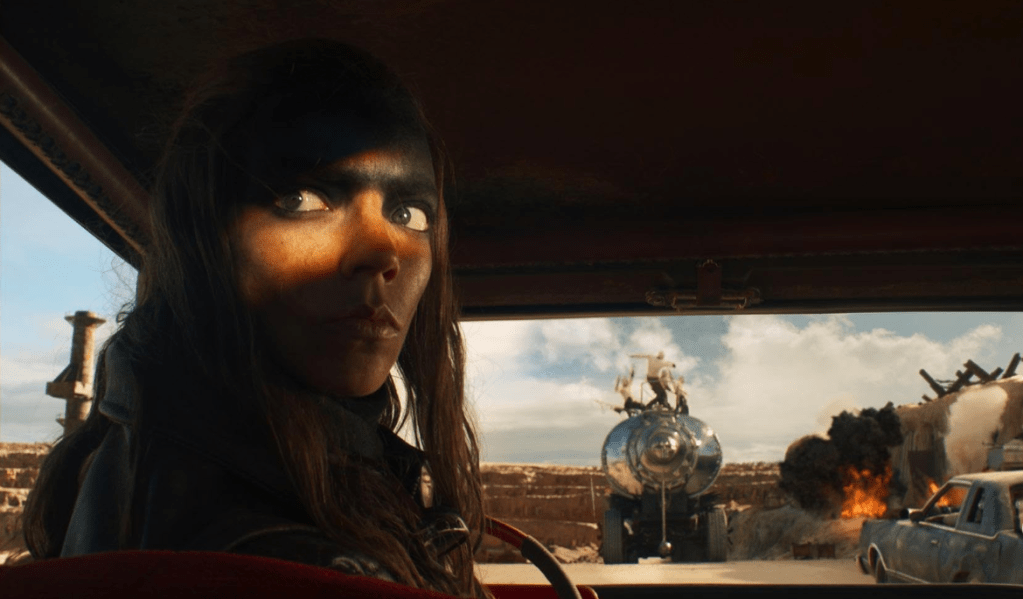
The Mad Max series continues to improve with each passing entry. The first film was little more than a bit of roughneck ozploitation and lacked the sense of good fun that characterized the sequels. As the films have come along director George Miller hones his skill framing sustained sequences of nonstop action and in Fury Road he has brought his craft to perfection.

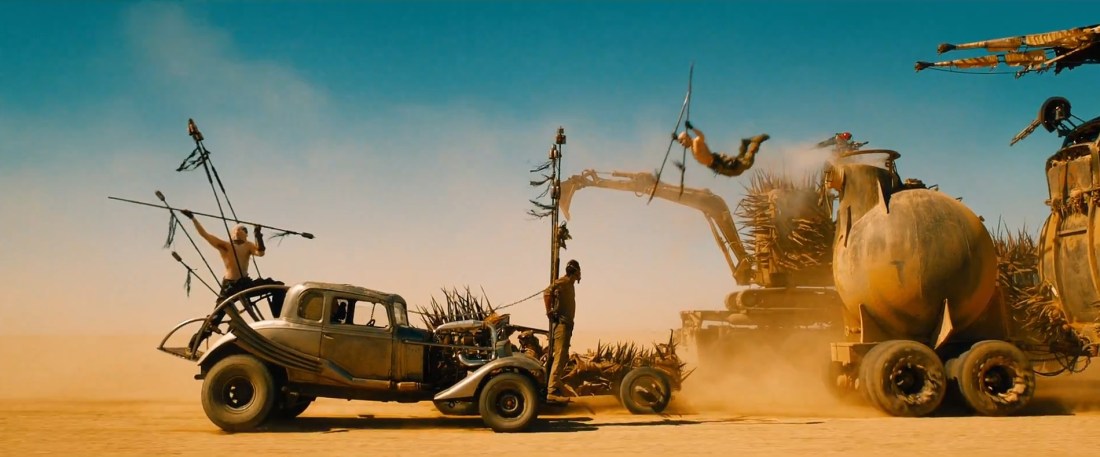
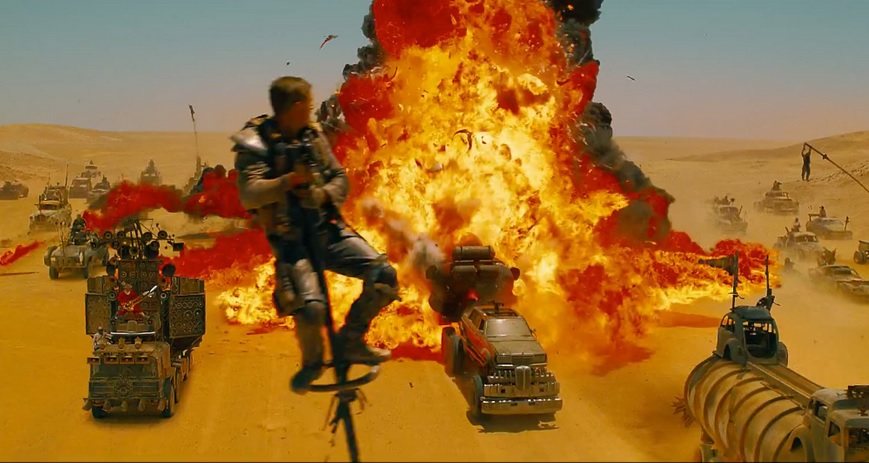
Mad Max: Fury Road is essentially a two hour chase picture; simply plotted and finely choreographed. Nonstop action can be quite dull in a lot of movies, but this movie has such brilliantly tuned pacing that my investment in its story never became fatigued. It takes a fine hand to make movies like this so good and this is one of the best of its kind; proudly standing among Terminator 2 or Aliens as one of the greatest action movies ever made.

The movie sees Mad Max (played by Tom Hardy replacing Mel Gibson) run afoul of a gang of bandits who take him prisoner to their Citadel, a massive canyon fortress ruled by an asthmatic albino warlord named Immortan Joe (Hugh Keays-Byrne). The ruler keeps his minions in religious awe of him and he controls access to a large reservoir of water by which he holds his subjects under his thumb. When his favored Imperator Furiosa (Charlize Theron) defects and smuggles his harem of “breeders” out of the citadel Max is dragged along as Immortan goes after her to get them back. While on the chase Max is handcuffed to one of Immortan’s feral soldiers named Nux (Nicholas Hoult). In the ensuing battle Max escapes his captors along with Nux as an unwanted addition. He makes contact with the fleeing Furiosa and their relationship opens with mistrust and mismatched priorities, but then develops into a friendship and an enjoined quest to bring Immortan’s escaping harem to a place of safety. The girls (Rosie Huntington-Whiteley, Zoe Kravitz, Riley Keough, Abbey Lee, and Courtney Eaton) are a sensual lot of macguffins whose combination of little personality and minimal attire makes them offset whatever feminist and anti-slavery themes the movie is trying to convey. There is something puerile about fantasies of “grateful” rescued women in distress that appeals to the audience, and I feel attempting to find social commentary in how these women are presented here would be dishonest. The girls are eye-candy and little else; and the “people are not property” message is best found elsewhere. If this be a serious flaw, it is a flaw that is participated in by its actresses and its being a testosterone-fueled action romp. And perhaps it can be forgiven. Fury Road makes up for it with a tight camaraderie between its three central heroes and a highly entertaining narrative that marries road pictures (an under-acknowledged genre) with riveting special effects and action. The film is more escapist than philosophical and works perfectly on that level.

The car chase which makes up the majority of the film’s runtime is a spectacle of blood, dust, chrome, booming voices, and good old-fashioned grit. Barely a scene goes by without burning rubber and blowing sand. It’s an aggressive escapade of rust, gasoline, battered metal, and roaring engines. The film is high on bravado and violent energy. It’s post-nuke desert landscape creates a visually arresting palette of reds and yellows while its kinetic pace never stoops to repetition. The use of color in Fury Road is essential to its aesthetic and I can only look at the black-and-white version that was released as a meritless gimmick that fails to understand the proper uses of black-and-white and what it is for. This movie along with Logan (another great picture bastardized with a black-and white version) was made with color in mind and is best seen that way.

Tom Hardy, in a role requiring minimal dialogue, fills Max’s shoes well enough; but he doesn’t quite have the charismatic appeal of Gibson and Miller made the right choice in making Furiosa the film’s main perspective throughout the majority of it. Hardy is left to do the physical gruntwork of the Max character without talking too much to make the recast uncomfortably stand out.
While I would have been happy to see Mel Gibson take on the role again as an older Max, Fury Road still remains, to my mind, the best of the Mad Max series. Miller tried with the first one and succeeded with the next two. With this one, he perfected.

Mad Max Beyond Thunderdome (1985)

3/4 stars

When Max (Mel Gibson) enters the Thunderdome he is introduced to the roaring crowd as “the man with no name.”
It suits.
Like the seminal Man with No Name trilogy that made Clint Eastwood famous the Mad Max series presents a singular hero against a singular backdrop without the need for any ongoing continuity. Their adventures can be viewed in any order with no appreciable loss of comprehension. Like tall tales of gods and folk heroes told around a fire, which story is chosen on any given day does not matter a great deal. By being introduced in this way what director George Miller is trying to tell the audience is that Australia now has its own modern day Eastwood.

A more striking allusion in Mad Max Beyond Thunderdome is made to Peter Pan and his Lost Boys of Neverland. In the film Max encounters a group of feral children who yearn for unclear memories of the past before the apocalyptic wastelands became their home. And like Wendy Darling in Peter Pan, Max must face off against the children’s naivete, delusions, and mistrust before leading them in a fight for freedom against some roguish grownups.

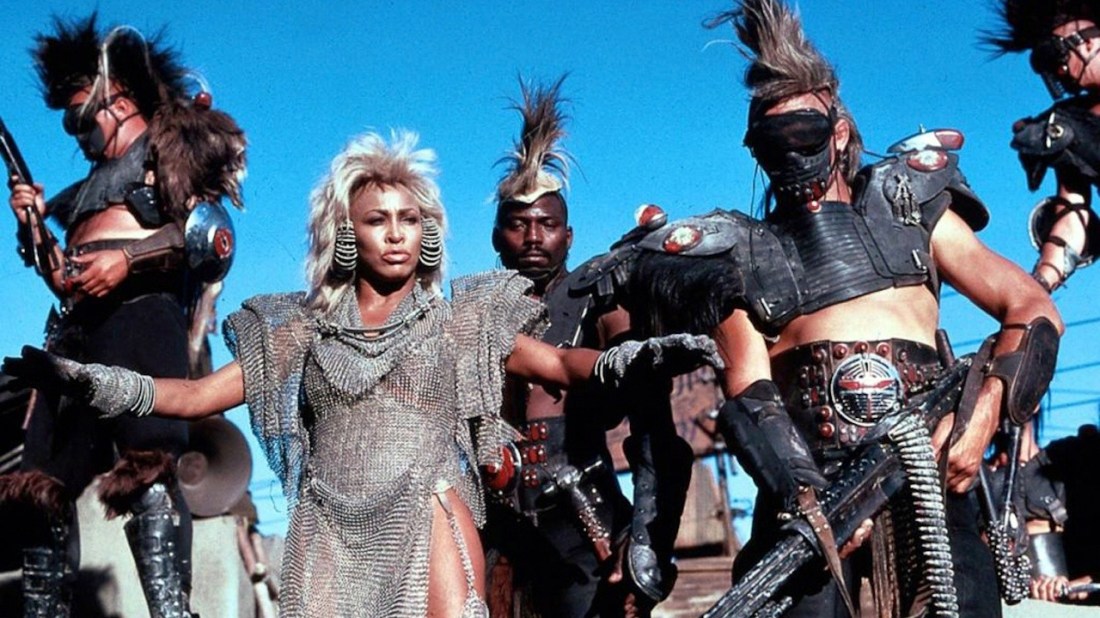
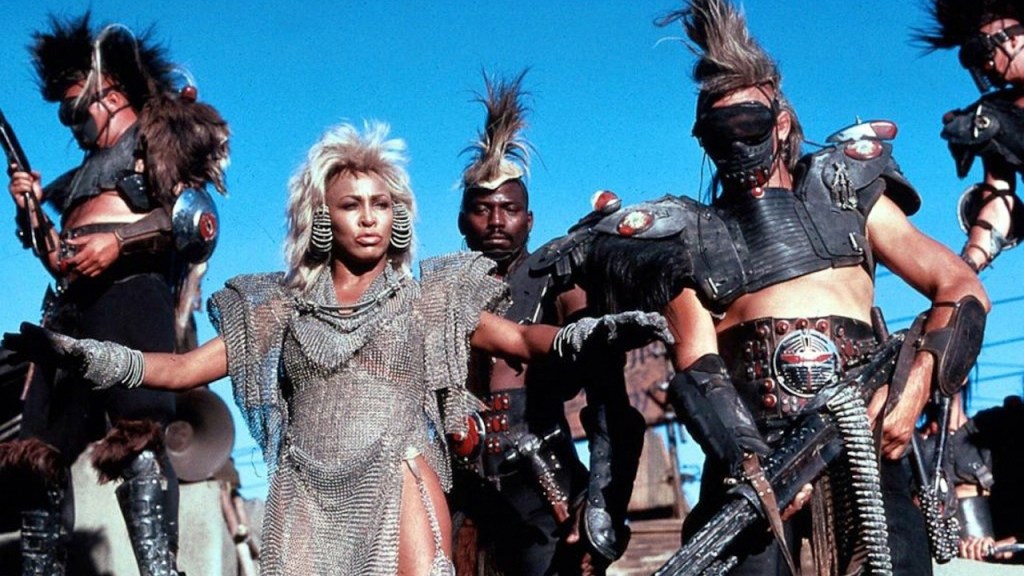
The movie begins with Max coming to a thuggish frontier city called Bartertown where resides the titular Thunderdome, a crude gladiator arena which sits in the center of town. What he finds there is an ongoing power struggle between a charismatic dominatrix named Auntie Entity (played by Tina Turner) and Master Blaster, an odd couple consisting of a child-minded brute (Blaster) and the brains of their unit (Master) who is a dwarf that rides Blaster’s back.
A deal is struck between Auntie and Max that in exchange for resources he must fight and kill Blaster in the Thunderdome. He agrees and what follows is one of the more memorable action set pieces of the film.
The Thunderdome is taller than it is wide and its combatants are attached to suspending harnesses that allow them to bounce around the arena grabbing a variety of weapons attached to the dome. The environment is not flashy, but the fight is exciting.
When Max discovers that Blaster has the mind of a child he refuses to kill him and reveals the deal to Master. Enraged, Auntie has Max sent out into the desert to die. There he is rescued by a clan of young children who mistake him for a legendary captain who featured heavily into their myths. He denies the messianic role and at first wants little to do with the group. But soon he takes on a protective paternal role and leads them to the film’s climax in a faceoff against Auntie Entity and the villains of Bartertown.

Sadly the relationship between Max and the kids makes for one of the weakest points of the film and lacks proper development. Much is rushed and I wanted to see more. Some more time getting acquainted with the group and scenes of Max preparing them for the battle ahead would have gone a long way and the absence of such scenes robbed me of emotional investment. I would have preferred the Lost Boys motif better explored, but pacing and marketable film length are often at odds when crafting an action picture and the movie suffers from prioritizing its action scenes.
The action scenes, however, are quite good if not quite up to the standards of Mad Max 2. The previous film featured a sustained chase scene in the desert that is replicated here, but not as effectively. I felt that I had seen much of this before in the last film; Tina Turner’s gravitas and the good-natured fun of the whole thing being the chief highlight of the final sequence.

I genuinely liked Mad Max Beyond the Thunderdome, but I wanted more of it.

Gilda (1946)

Rating 3.5/4

“Hate can be a very exciting emotion. There is a heat in it, that one can feel. Didn’t you feel it tonight? It warmed me. Hate is the only thing that has ever warmed me.”
Ballin Mundson (George Macready) is sincere when he says this to his wife and she doesn’t disagree. She repeats it herself to her lover Johnny (Glenn Ford) and he doesn’t disagree either.

Charles Vidor’s 1946 film noir, Gilda, is not a love story. It’s a hate story. It’s a story of people using love to cruelly punish and destroy each other.

Gilda (Rita Hayworth) hates Johnny for walking out on her years ago. Johnny hates her for humiliating him and making him feel less like a man. Her husband Ballin hates everybody and carries it wherever he goes so much that no one notices anymore. What comes of this hatred is one of the most unhealthy love triangles out of classic Hollywood.

Johnny makes a crude living as a cheating gambler in Argentina who believes “a dollar is a dollar in any language.” I looked it up and he’s right. What he’s wrong about, though, is that he can keep getting away with cheating. After he’s caught doing it at a Buenos Aires casino Johnny comes face to face with the understandably offended Ballin Mundson who owns the joint. Ballin takes a liking to the kid and instead of smashing his fingers with a hammer he offers him a job as personal security.

Their partnership is surprisingly a happy one although it is apparent that Ballin is keeping secrets from him. Things become more complicated when Johnny is introduced to Ballin’s new wife, the one and only Gilda, his ex. Ballin who has made hate so much a part of himself that he can recognize it begins to sense something is wrong right away. He doesn’t suspect that the two know each other, but he amazingly recognizes hatred coming from Gilda to Johnny immediately. Johnny and Gilda’s “introduction” is extremely cordial and lacks even the slightest innuendo of hostility. But Ballin picks it up all the same even when he cannot understand it.
The movie provides the viewer none of their backstory up to this point letting us see the scene from Ballin’s eyes. We are as perplexed as he is when he questions Gilda about her hatred and she coyly denies it. Not until she and Johnny meet each other later that the truth comes out. It is almost soap opera-like when she is suddenly introduced in this way. Johnny makes no previous mention of her in the film, not even in the frequent voice-overs that are true to film noir fashion. This way of bringing Gilda into the story is effective in making sense of Ballin’s actions later in the movie. He is an extremely complex character and very little of this film is given from his perspective. By doing so here is masterful screenwriting.

Ballin slowly begins to realize their history and starts becoming more possessive and watchful of her. Johnny does so to, but even more aggressively and he deceives himself by saying it’s for his boss’s sake.

Ballin’s dealings with German mafia adds more tension to the situation as Gilda and Johnny meanwhile begin an affair that is both hateful and passionate. For the both of them it is driven purely by sexual passion and they bitterly try to use it overpower the other.
The various twists and turns of the plot lead them closer and closer to each other and Johnny unleashes cruel emotional abuse to bring her down to the humiliation he once felt and which he believes she deserves. Power obtained, Johnny reveals himself to be an awful and vicious man who has resented this woman’s independence and confidence from the very beginning.

At the end we see them at the absolute lowest they can be and Johnny’s empire comes crumbling down around him. Ultimately the film robs us of any emotionally poignant resolution by providing a tacked-on happy ending that undermines the message. An unbelievable twist ending followed by no tragedy ruins the experience.

Overall Gilda is a great film that could have been better concluded. The movie made Rita Hayworth a Hollywood icon and sex symbol. It also launched a long affair between her – married to Orson Welles at the time – and co-star Glenn Ford.

The cinematography was done by Rudolph Maté also known for his work on Dreyer’s Vampyr. In Gilda he plays with light and shadow with the characters emotional states often masking their faces during moments when they are at their most honest.
Jack Cole’s choreography of Hayworth’s dance numbers are legendary and “Put the Blame on Mame” became a staple reused in other films noir.
The movie was produced by Columbia film producer Virginia van Upp who was only one of three women producing films at the time. She was also an accomplished screenwriter who had helped coach Hayworth for this role who was mostly known for doing musical comedies at the time.
The movie has a keen understanding of male emotional abuse in relationships and I think Virgina’s involvement shows.

King Kong (1933)

Rating 4/4

King Kong is the most influential movie monster put on screen save for perhaps Godzilla. Every child knows who Kong is even if they haven’t seen the movie. He’s on lunchboxes, been made into toys, and is even the namesake of a beloved Nintendo video game character. Kong is also one of the earliest icons in the pantheon of Hollywood heroes and villains preceded by only a few like Dracula and Frankenstein. Whole books could be written about his cultural impact and importance without bothering to even discuss the film itself.

The 1933 classic is a technically impressive spectacle achieved in a time when computer visual effects were wholly nonexistent. Despite their outdatedness the effects in this film required more talent and creativity than can be found in the average VFX artist working on movies today. Lacking the tools and software of the modern era the movie-magicians of 1933 pushed stop-motion animation to its limits alongside other techniques such as matte painting, rear screen projection, and composite shots. The images put on screen are truly a marvel for the time and what I find even more impressive than the effects achieved is the restraint put into their use by the filmmakers. What too often was the case for later b-movies produced in the following decades was an exploitative use of special effects that failed to impress their audiences but succeeded in providing insight into the films’ budgets.
Stop-motion pioneers Willis H. O’Brien (Harryhausen’s future mentor) and Buzz Gibson and cinematographer Frank D. Williams had a firm grasp on the limitations of the methods they were using. When the characters are attacked by a brontosaurus it’s introduced in the background rising out of the water under low-key lighting and masked in mist. All of the stop-motion effects in King Kong are shot in varying degrees of distance and never in close-up. For close-up shots of Kong a full-sized mechanical model of his head and shoulders was used.
Williams achieved the composite sequences of the actors seemingly performing in front of the monsters by using an optical printer to combine the animation, matte paintings, and actors in the foreground into a single shot. The result is staggering, and although it looks nothing like we can achieve on computers today; it took more imagination and broke more ground than what’s being done now which is largely safe, patented, and takes no risks. The last time computer effects succeeded in impressing me was back in 2009.

The film was directed by Merian C. Cooper and Ernest B. Shoedsack, who already had experience with monkeys when filming silent documentaries like Chang: A Drama of the Wilderness (1927) and Rango (1930). The trashy bestiality themed film Ingagi (1930) born out of the trends set by these pictures was enough of an exploitative hit that it was largely based on its success that RKO provided financial backing for King Kong.

The film’s lead is a documentarian jungle filmmaker named Carl Denham (Robert Armstrong) who casts Ann Darrow (Fay Wray) to add sex appeal to his next picture; something his critics had found lacking. She is taken to the infamous Skull Island where Denham wants to capture footage of the big ape. She is kidnapped by the natives who want to sacrifice her to Kong. Instead he becomes infatuated with her. Denham makes frequent allusions to Beauty and the Beast interpreting beauty as the beast’s only weakness and cause for eventual downfall. This becomes realized when the woman is rescued and Kong goes apeshit (if you’ll pardon the expression) and attacks the natives’ village. He wrecks their homes, stomps on anyone and everything, and brutally chows down on the locals. Tame by today’s standards, much of the violence in this film is decidedly brutal for 1933 and would not be seen in mainstream cinema again for many years after the Hays Code was adopted by Hollywood a year later. In one earlier scene Kong battles a T-Rex also brought to life by stop-motion. The fight ends with a victorious Kong ripping apart the dinosaur’s jaw with dripping gore and gruesome cracking sounds added for good measure.

After Carl Denham gases Kong what follows is cinema history. He’s showcased at a fair in Manhattan only to break loose and terrorize the city. His climb up the Empire State Building with Ann in tow and being shot by airplanes is an iconic image achieving a fame scarcely less than that that of famous real-world photographs. Denham’s exclamation after Kong’s death, “No, it wasn’t the airplanes. It was Beauty killed the Beast,” is equally iconic.

The film was a massive success and a sequel was rushed into production and released the same year called Son of Kong. He also became the subject of two Japanese kaiju films of the 60s in one of which he fought the legendary Godzilla. King Kong was remade twice in 1976 and then in 2005 and later became a key player in the now ongoing MonsterVerse series of films. None of these later pictures were as innovative as this one. King Kong tried and succeeded in doing things that had never been done before. I don’t think it would hurt much if more blockbusters coming out nowadays tried doing the same.

Now something should be said about the more problematic elements in the film that have aged even worse than the effects. I will not deny that these elements are there and I am not going to defend them. The movie is explicitly sexist and racist in many of its themes and dialogue. Ann Darrow is not a character, but a plot point to simultaneously titillate the camera and provide abysmal commentary on women’s roles. When she is being held terrified by Kong Ann doesn’t hesitate to pose in a way that brings more attention to her legs than a woman in peril actually would. She is also subject to condescension and patronizing from the crew which she takes with only marginal protest and the most sexist character in the film becomes her love interest. The island’s natives are presented as superstitious savages and virtually no anthropological and social interest is taken in them in the film’s script.
I believe the film’s historical context should be explained before being shown to younger views. I don’t think cutting these elements out for later releases is appropriate and is as damaging to it artistically as colorizing it was in 1989. I am quite fond of what Disney Plus has been doing by presenting its older films with these elements unedited with a mere disclaimer that explains that these attitudes are outdated and are as wrong then as they are now. Much of our accomplishments in art and literature is sadly mired by these issues and I think we as a society have matured enough to look at them and accept them for what they are without resorting to censorship and erasure. Looking at it I can praise the film for its accomplishments and condemn it for its flaws.
King Kong like any piece of art is several things. It’s an entertaining adventure story reminiscent of the works of H. Rider Haggard and Burroughs. It’s a special effects pioneer. And it’s a sad document of 1930’s sexual and racial attitudes. It is not an ethical failing to praise a film for its high points while also condemning its low ones.