
The Secret of NIMH (1982)

4/4 stars

Don Bluth’s The Secret of NIMH is my favorite animated movie of all time. And, I like to think, for good reason. For one, it is one of the most accessible movies for general audiences ever made. There is more to it than being a kids’ movie. It’s a movie for everyone.
The Secret of NIMH is often called an example of children’s fantasy, but I find the reasoning for this flimsy at best. The movie is called a children’s fantasy because children can watch it without being exposed to elements too mature for them to handle. It’s also called a children’s fantasy because it is a cartoon. And that’s pretty much it.
But, assuming that the absence of sex and vulgar language as well as the presence of animation is not a bar to adult engagement, there is little cause to consider The Secret of NIMH a kids’ movie. A family movie may be closer to the mark. But, the film’s story is sophisticated and engaging enough to attract an adult viewer without the presence of a child at all. I would just call it a movie. And a pretty damn good one too.

Don Bluth saw his first successes working as an animator for the Walt Disney Studios lending his talents on such movies as Robin Hood (1973), Pete’s Dragon, and The Rescuers. But, eventually he grew despondent over the direction he thought the studio was going and went off to work on his own animation production company. The 70’s and 80’s did not see Walt Disney at its best. It was a fairly stagnant period in which the company was churning out mostly forgettable projects that saw more status as cult favorites than as all time classics. It was during this period that Don Bluth began making his own animated films that brought new life and creativity into animation. The first of these was The Secret of NIMH. Throughout the remainder of the 1980’s he followed it up with other classics such as An American Tail, The Land Before Time, and All Dogs Go to Heaven.
But, it is The Secret of NIMH that will forever remain his best.

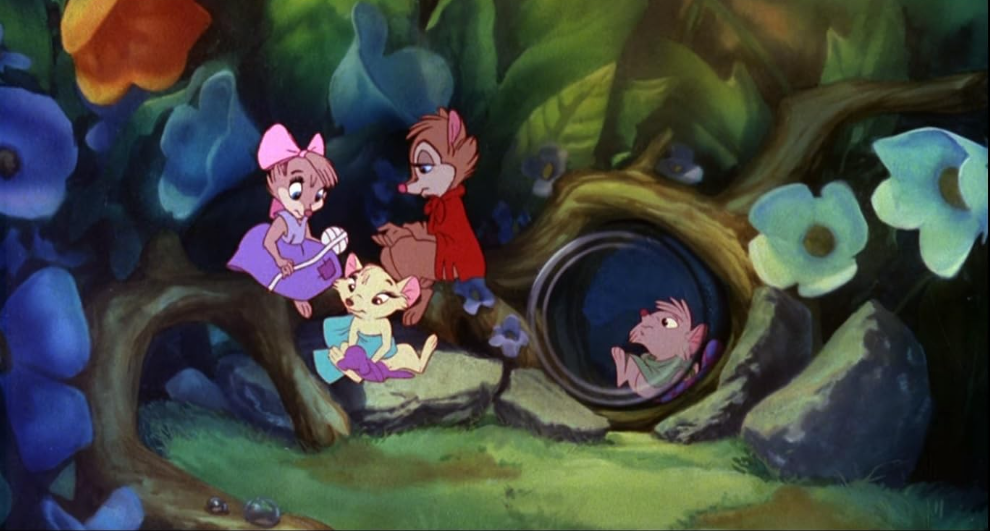
The Secret of NIMH perfectly balances visual artistry and excellent writing with a keen respect for its audience’s intelligence. In this modern era where cartoons are all safely nestled in the genre of comedy, there is sadly little coming out quite like this movie anymore. The film contains some of the most appealing hand-drawn images to date. It’s painted backdrops are reminiscent of the beautiful images seen in Lady and the Tramp or Pinocchio. Those films had backdrops more like Christmas cards, whereas here there is something more pastoral that echoes the paintings of Andrew Wyeth. The colorful animated characters in the movie mix with the painted backgrounds surprisingly well. The hand-drawn cels contain a vibrance and liveliness unseen in the computer animated images of today and every movement and every frame is full of grace and character; and are vigorous in emotional expression.

But, what makes The Secret of NIMH most special is its story. It’s not much in the way of a deep analysis of the human condition, but is rather a simple tale of survival elevated by its heart and writing.
Mrs. Brisby (Elizabeth Hartman) is a widowed field mouse who lives in a cinder block in the middle of a cornfield. The season where the farmer, Mr. Fitzgibbons begins to plow has come sooner than late and the animals who live in the field are expected to flee before their homes are destroyed. However, one of Mrs. Brisby’s children, Timothy, is sick with pneumonia and would not survive a move in the chill air. She manages to sabotage the plow, but this only serves to delay the inevitable. She meets a crow named Jeremy (Dom DeLuise) whom she rescues from the farmer’s cat and he suggests they visit The Great Owl for advice. Jeremy is a ton of fun as a clumsy oaf who dreams of one day building a love nest for two. DeLuise provides a lovable voice performance that makes Jeremy the sole source of comic relief in the picture. His infatuation with the idea of love has him falling head over heels (literally) in his efforts to find items to build his love nest with. These efforts often causing him more trouble than the items are worth. When Brisby first meets him he is tangled up in some string that he thought pretty and tried taking home with him. The comedy his character adds doesn’t detract from the movie’s overall serious tone. Unlike, say, Jar Jar Binks, Jeremy is a character who has purpose rather than just being a shoehorn for laughs. He represents the little people in this story, like the nosy Auntie Shrew (Hermione Baddeley), who know little and can do little, but will do what they can if the cause is good. There are times in which Jeremy is Mrs. Brisby’s only source of encouragement, offering what little aid he can simply because it is the nice thing to do. You can’t hate a fellow like that.
They meet the Great Owl (John Carradine) in a deep, shadowy part of the forest where he lives alone. He is a figure of awe and terror, wiser than any other being in the movie, and perhaps the most dangerous given his placement on the food chain. Like a god in heaven he is above direct involvement, but not above giving words of wisdom. He is hoary and become awesome in his elder age. He is every bit the creature of the night, flying from his tree to hunt, brushing off cobwebs and old bones with glowing eyes like a vampire flapping into the dark. Brisby is petrified of him at first, but her maternal instincts for her son muster the courage she needs to request help. He tells her to go to the rats who live in a rosebush by the farmer’s house. “They have ways” he tells her and he leaves with no further guidance to offer.
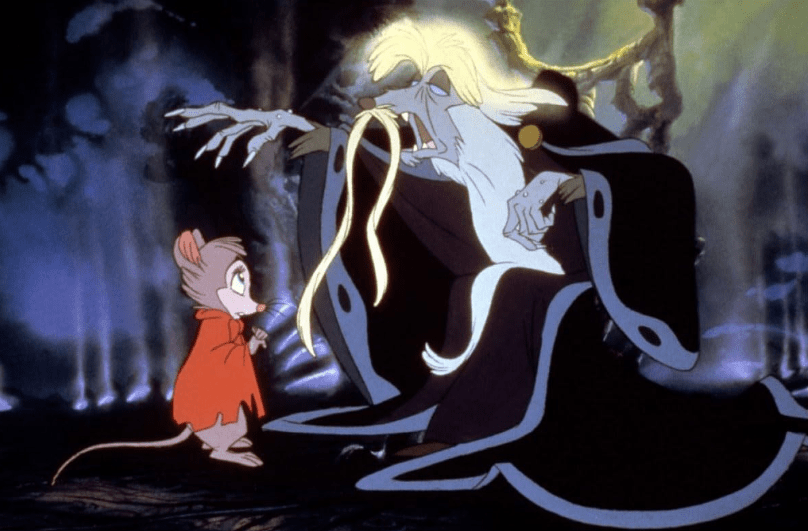
The rats live up to their reputation for problem-solving when she meets them as they are highly intelligent and power their hidden city with lights and electricity stolen from the farmer. Their leader is Nicodemus (Derek Jacobi), an ancient rat with a long beard with powers akin to wizardry. From him Mrs. Brisby learns of the origin of not just the rats, but of herself and all the animals gifted with speech and intelligence. They were the products of a human-led experiment that escaped from their lab leaving the scientists none the wiser to what they had created. The injections they are given by NIMH (the National Institute of Mental Health; a real place) do more than make them intelligent on a par with Man, but also have the side effect of putting them in touch with magic and spirituality. Nicodemus summons a staff like he is Gandalf or something, consults a magic mirror to see what is happening around him, and possesses a bejeweled necklace with mysterious abilities that he gives to Brisby. None of this is explained in the movie and what we are left with is a statement about the nature of science and the unknown. There is nothing in NIMH’s plans that accounts for the sudden contact with the supernatural and it raises questions about animal intelligence and their relationship with us humans and the environment that is not answered. Had the magical elements been removed from the story entirely it would have made little difference, but their presence and the questions they raise adds a layer of potential depth to what is going on.
But, Mrs. Brisby’s quest for aid doesn’t end here and she is soon caught up in an intrigue involving rival parties in the rats’ society. They are not interested in helping Brisby at all and are in a war of words with Nicodemus and his followers regarding their future. At the forefront of the naysayers is the evil Jenner (Paul Shenar), a rat who wants to continue living in the rosebush and stealing electricity from Mr. Fitzgibbons. But, Nicodemus has a plan for the rats to move all of the animals to another location where they can fend for themselves in good conscience without resorting to stealing. Personally, I think this is awfully big of Mr. Nicodemus given that the farmer is the same man who uses a plow to kill the local wildlife and destroy their homes once a year and owns an evil cat named Dragon who roars like an ogre. Nicodemus’s moralizing breaks down to not wanting to raise the farmer’s light bill, which is kind of him I guess. There is something to be said about a story that keeps its ethics basic while all this intrigue and interwoven backstory works its charm on us. Stealing is still wrong, the movie tells us, and I like that. Moral greyness in a lot of stories ends up being a thin excuse for avoiding having anything important to say. Goodness in the midst of institutionalized badness is a theme in need of a revival in this century.

While these events unfold, The Secret of NIMH’s multilayered story never becomes convoluted, but is easy to follow and engage in without the need to dumb down its themes and plot details for the younger audience. While being a cartoon, it takes itself as seriously as any live-action drama would which contributes to its timelessness not a little. As I noted above the plot is appreciable by both children and adults. As a fantasy adventure I would stack the film less with movies like The Sword in the Stone or The Wizard of Oz, but more with The Lord of the Rings, Star Wars, or Harry Potter. These are stories that carry heady weight and dramatic tension alongside their universal accessibility. As a cartoon it challenges pre-conceived notions of what animation is and whom it is for. Like black & white or color cinematography, animation is a legitimate form of visual art that holds boundless potential for story, not limited to a single demographic.

Shameless blurbsters like to toss phrases like “fun for the whole family” with a sincerity that I find suspect when it is lauded at any and all kinds of crap aimed at kids. With that in mind I can say that The Secret of NIMH is the sort of film I honestly believe children will love. But, the adults will love it even more.

Star Wars: The Mandalorian and Grogu (2026) [spoiler-free]

2/4 stars

On Facebook this afternoon I read a comment from someone gushing over The Mandalorian and Grogu, saying it was like “sitting through an entire season” of the TV series. I am afraid I cannot help but agree. The movie very much feels like an extended episode of the Mandalorian TV show, with a narrow unexpansive story that doesn’t justify the silver screen.

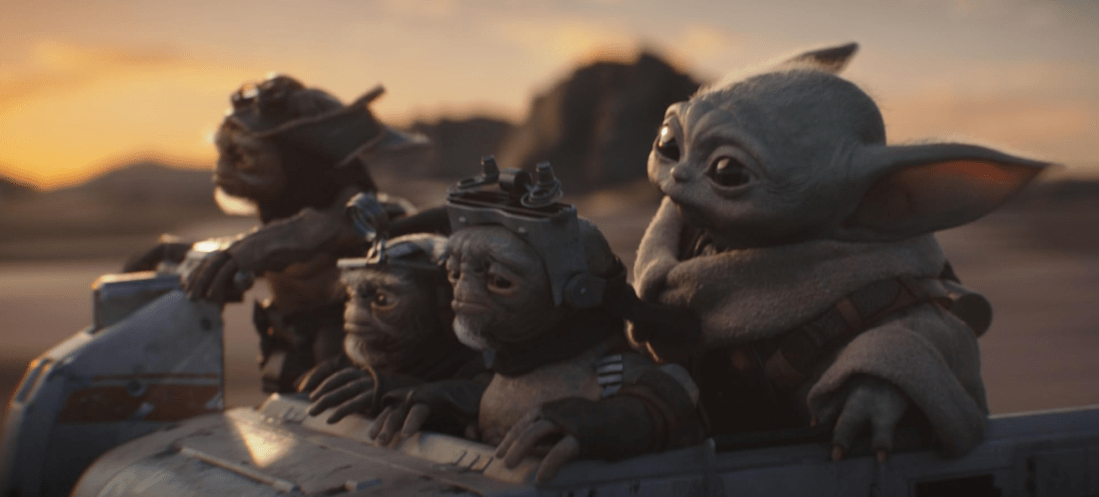
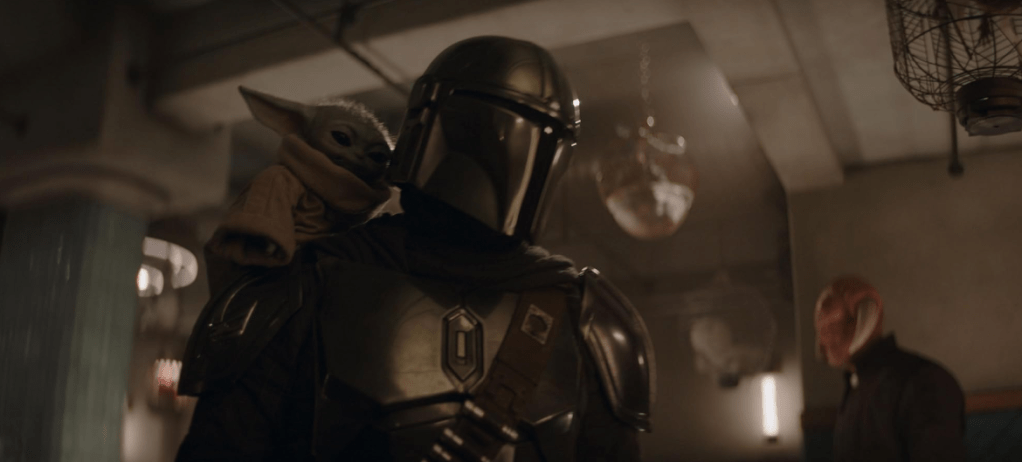
“Baby Yoda” has become a cultural icon for a lot of people; his casual appearances not limited to merchandise, but also memes and fan art much in the same way as Betty Boop or Tinker Bell a few decades ago. I suspect that the movie was mostly made for Baby Yoda fans in mind. The film certainly doesn’t bother much with any loose ends or plot arcs of the TV series and it can be approached without having seen the show at all. What we get instead is a barely significant side adventure featuring the Mandalorian (Pedro Pascal) and, of course, Baby Yoda himself, Grogu. But there is nothing here that expands the Star Wars galaxy an inch. The current intrigues of the New Republic after the fall of the evil Empire are not touched upon and the personal lives of the two leads are not altered in any way that future seasons of the TV show need worry about. All in all, The Mandalorian and Grogu is the sort of story best suited for TV or one of the innumerable comics and novels set in the Star Wars universe. There is nothing here that merits a theatrical experience and I personally suggest saving your 15 dollars and wait for its release on Disney+.

I shall spare plot details for the spoiler-conscious save to say that the main plot involves The Mandalorian, now working for the New Republic, taking orders from Rebel navy pilot, Colonel Ward (Sigourney Weaver). She wants him to track down remaining Imperial warlords, but one of his targets is elusive and info on his whereabouts is known to the Hutts who want a favor in return. The Mandalorian and Grogu will cross paths with one Rotta the Hutt (Jeremy Allan White) whom the Hutts want returned to them. But, Rotta has ambitions and dreams of his own and conflicts of interest soon turn the Mandalorian’s mission into something much more complicated.

But enough about all that. The movie is only a few days old and Star Wars mixed with spoilers tends to explosive results on the internet. What I can say is that White’s voice acting as Rotta is nothing to write home about. In his defense, the dialogue he is given is the sort of uninspired, depthless, on-the nose junk given to characters in adventure-oriented cartoons. Jeremy Allan White conjures no enthusiasm in the role and he felt entirely out of place every time he speaks.

The weakest elements in the movie are the action sequences and special effects, which is a damned shame when speaking about a Star Wars movie. The effects are nothing we haven’t seen before on any of the Star Wars television series and there is not a memorable shot or anything groundbreaking to be seen in its over two hour runtime. The action sequences come and go entirely too often, with the Mandalorian plodding through the plot from one fight to another each following a pattern of minion fighting, boss fight, and deus ex machina. I felt I was watching a video game more than a movie. All of the sequences are shot extremely fast and often under murky lighting so that I was never able to get a good look at any of the creatures and droids that our hero battles with. The fight scenes are all a visual blur and they unfortunately make up about 80% of the film. After leaving the theater I felt that I still could not say what any of the baddies looked like.
I saw the movie at a local theater in my hometown which makes me hesitate to comment on the film’s sound design as it is possible the issues lay in the theater’s setup rather than the movie itself. But some of the things I heard weren’t pleasant. The movie is heavy-handed with explosions and they are so loud that they drown out the music and other sounds in the mix. This may be a failure of the film’s sound-mixing or something that will improve when I rewatch it at home. But, my local cinema’s fault or not, this ended up being one of the loudest Star Wars movies I have seen and not in a way for the better.
By the end, the movie had me feeling exhausted with nothing interesting to reward me for having seen it.

I would like to say the movie isn’t all bad though. There are moments I genuinely liked. Grogu, for one, is given a great deal to do compared to the TV show and the scenes that focus entirely on him are some of the movie’s best. There is also a small cameo of Martin Scorsese playing a four-armed monkey that I found delightful and I sorely wished for more of him. The obligatory bits of comedy found in these sorts of pictures were put to good use here and, indeed, the small moments between the Mandalorian and Baby Yoda when things are quiet were when the movie was most entertaining.

But the movie’s story and action set pieces are nothing but a load of ho-hum. Traditionally Star Wars movies, even the weaker entries like Solo or Rise of Skywalker, manage to sweep the viewer off on a grand adventure that moves the Saga in new directions and treats our starving eyes to new images and places in the imagination. The Mandalorian and Grogu does none of these things. I wanted the film to take me to a galaxy far, far away. Instead, it took me to a galaxy not much farther than my living room.

The Truman Show (1998)

4/4 stars

“Was any of it real?” Truman asks. His “creator” doesn’t provide a satisfactory answer and he is left to work out his reality on his own. This is not unfamiliar to the human experience and there is something relatable here that is starkly put in The Truman’s Show allegory.

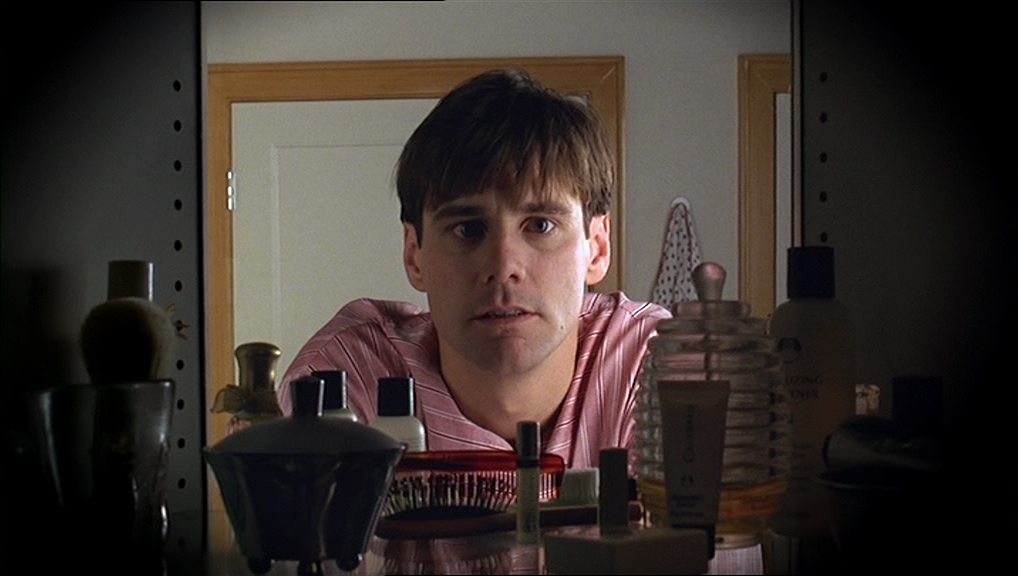
Truman Burbank (Jim Carrey) lives in the idyllic suburb of Seahaven, which, he is constantly reminded, is a nice place to live. It’s a place where everyone knows his name and everyone likes him. He has everything a man could want: a successful and comfy desk job, a best friend always equipped with an encouraging word, and a doting wife who smiles constantly as if she is posing for a Sears catalog. The only thing that keeps Truman from being perfectly happy is his wanderlust. While everything else continues to get handed to him his desire to travel and see the world remains unfulfilled. It is, in fact, largely discouraged by everyone; even his grade school teacher tells him incredibly that he is too late to become an explorer because “there is nothing left to explore.”
His fear of the ocean doesn’t help. After his father apparently drowns during a fishing trip his phobia of water is capitalized on by everyone who seems hellbent on keeping him from leaving or even thinking about it.

What Truman doesn’t know, but everyone else does, is that his life is carefully and painstakingly scripted. Everyone he meets are actors and the world of Seahaven is a massive TV film set with thousands of cameras running 24/7. Outside in the real world millions of viewers from around the world are watching The Truman Show, the ultimate in reality TV broadcasting. Truman’s life is the subject of constant analysis. He has no privacy and everything is being quietly manipulated behind the scenes by Christoph (Ed Harris) who is the creator of the Truman Show. Christoph is an artist of the avant-garde type who proudly claims that Truman is the first person to be legally adopted by a corporation.

Truman begins to suspect that his existence is being contrived by outside influences after a studio set lamp suddenly falls from the sky. One thing after another follows. His car radio mistakenly taps into a walkie-talkie feed that is describing all of his movements and later he finds a craft table behind an elevator surrounded by grips and cameramen before he is dragged away by security.
He is treated like he is being paranoid while everyone around him seems more and more obvious as performers. Christoph tells his critics that if Truman truly wanted to leave he could do so if his will was strong enough, but he quickly becomes aggressive in trying to stop Truman from leaving when this notion is tested. With the power of the weather and natural disasters at the push of a button Christoph is more than confident that Truman is going nowhere.

There is an indictment that can be found here in The Truman Show against the dehumanization that reality television offers. His many fans consider his humanity and feelings secondary to the soapish drama with which the show entertains them. To them he is a character in the same way that the Bachelor or the Real Housewives of where-the-hell-ever are characters. They and Christoph’s staff feel a cynical appreciation for dramatic gravitas. This is most keenly felt when the showrunners “kill off” Truman’s dad to boost ratings only to bring him back several seasons later with an unbelievable amnesia storyline. The manipulation is cruel and I had genuine feelings of anger provoked at the means in which these things are done to him. In one of the most disheartening moments Truman’s “best friend” Marlon (Noah Emmerich) tells him that he cares about him and that he would never lie to him. All of these lines are being fed to him by Christoph via an earpiece.
Truman is soon come to the realization that his “wife” doesn’t like him, his closest friends don’t care about him, and everyone he once trusted has only ever “loved” him from 9 to 5 for a paycheck.

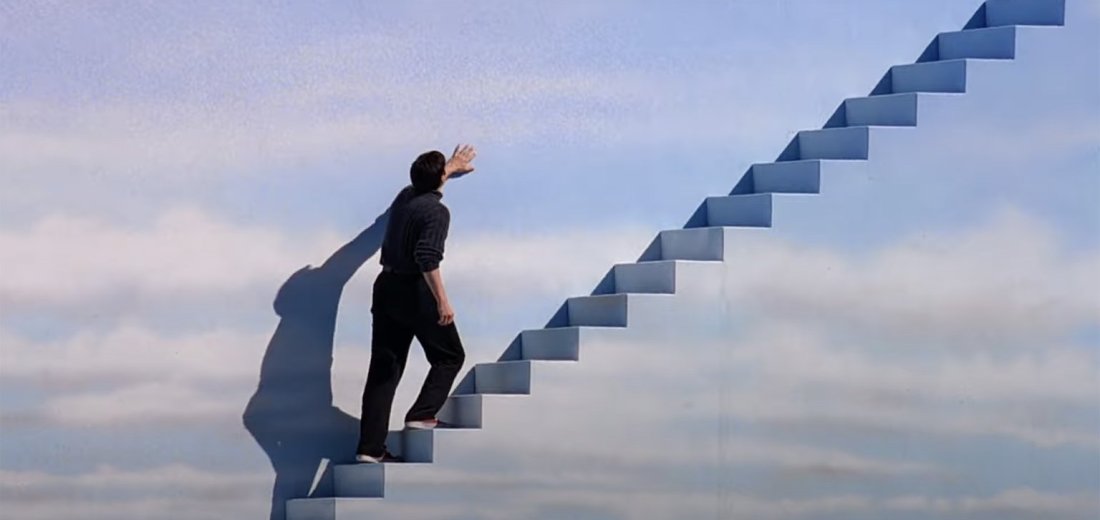
Reality TV has only got worse since 1998 and in today’s day and age the satire has only become more poignant. But there is more than a satire of reality TV to be found here. Beneath that surface lay bigger questions about free will and the freedom to define oneself. When Christoph first reveals himself to Truman it is only after the fraud has been fully exposed and Truman is inches away from exiting Seahaven forever. Christoph’s voice booms godlike from the sky and he identifies himself as “the creator.” Whether Christoph believes in God himself is not made clear, but he clearly believes that there should be one if there isn’t. For Truman he has tried to take on the role himself, making what he believes to be a perfect existence for Truman to live in. Writer, Andrew Niccol seems to be someone who has grown up on claims that all trials are tests and are designed by God to direct us where we should go. In favor of human-directed destiny Truman rejects this to push back against the confined beliefs that had shaped his reality.

Truman, throughout the film, is full of questions, but it is his last, “Was any of it real?”, that is the most important. It’s difficult to say after so many lies and deceits, but what is clear is that, if nothing else, Truman himself was real. Every expression, every thought, and every affection from him was hundred percent real. And Truman deserves to be around people who are just as real. What Christoph offers in the final scene is not fulfillment, but stagnation.
Real life, independent and free, is uncertain and full of vagaries. But it is more rewarding. Happiness found in it is earned and pain is far from meaningless. What The Truman Show says is that a life needs some sense of meaning. It requires self-direction to be healthy. Should Truman remain in Seahaven, his life would be perfect, but it would not be happy. Nor would it be a life.

Furiosa: A Mad Max Saga (2024)

3.5/4

Furiosa: A Mad Max Saga is a thoroughly entertaining movie that doesn’t quite reach the kinetic energy of the previous film. Mad Max: Fury Road was a well-sustained action sequence from beginning to end, but here there is more room for introspection. Director George Miller doesn’t try to top what he had achieved with Fury Road and I cannot say I blame him. That movie represents the height of his craft as an action director and with his latest he attempts to do something different.
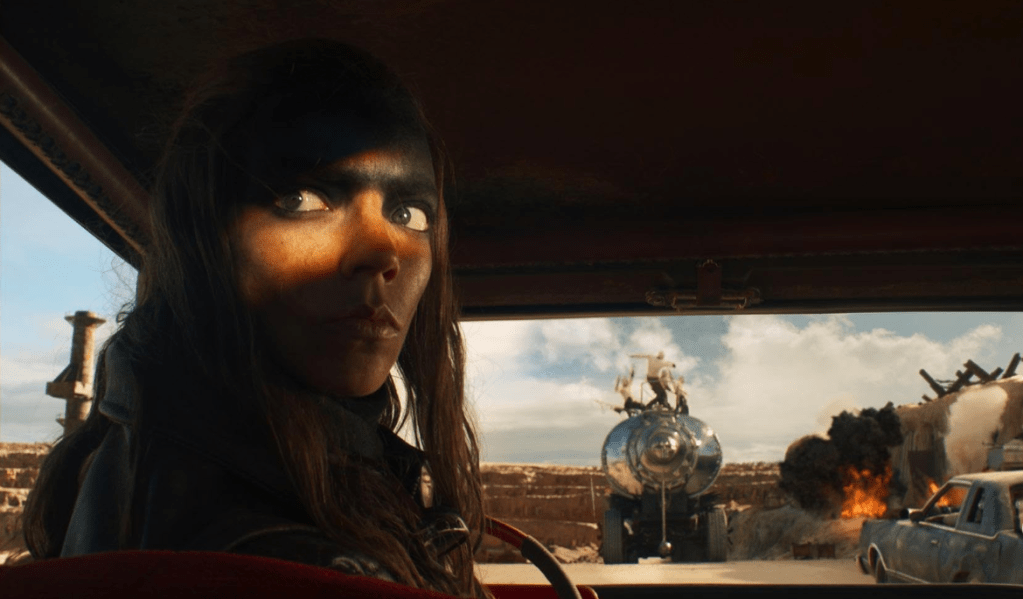
The previous Mad Max entries were more or less one-offs that could be viewed in any order. They all exist on a floating timeline and each creates its own world and aesthetics. Furiosa, however, doesn’t look at all that different in style from Fury Road and, indeed, this should more deservedly be considered a companion piece. It expands upon the world Fury Road created, revisiting much of same locations and characters. But, this time with no Mad Max. The absence is not greatly missed and it goes to show that this world is interesting enough to tell stories in without him. Instead, the film is a prequel exploring the early life of Imperator Furiosa, originally played by Charlize Theron in Fury Road. Miller, to avoid overusing de-aging techniques recasts the role with the lovely, but much less charismatic Anya Taylor-Joy.

We first meet Furiosa as a young girl (Alyla Browne) who is kidnapped from her home by raiders. When her mother (Charlee Fraser) rescues her they are caught and Furiosa’s mom is killed by the bandits’ leader, Dementus (Chris Hemsworth). Hemsworth’s performance is one of the biggest draws in the picture. He is affably wicked, playing the role like a soft-headed child turned bully. He throws deadly tantrums when he doesn’t get his way, clutching a teddy bear like a totem throughout. He strikes me as someone who in their childhood was given too much sugar and not enough spankings.
Dementus strikes a deal with warlord Immortan Joe (Lachy Hulme) that leaves him in control of Gastown, one of three major ramshackle cities in the wasteland. Part of the exchange involves handing over Furiosa to Immortan, who is to join his harem when she comes of age. She, understandably, wants no part of this and she flees. She disguises herself as a warboy (one of Immortan’s foot soldiers) and pretends to be mute.
Following a quick transition in time (a first in the series) Furiosa is older and one of Immortan’s most trusted enforcers. In the sequences where we see her grow from child to adult George Miller makes impressive use of AI tools to blend Anya Taylor-Joy’s face with Browne’s. He is a director who understands the limits of CGI and, while the film is the most CGI-laden of the Mad Max films, he doesn’t become overambitious. The use of AI here is subtle enough to escape notice and far more convincing than what we have seen in the last Indiana Jones or The Mandalorian. He keeps her body and head shrouded completely in these scenes allowing only the face to be seen resulting in none of the usual unnatural movements that characterize AI tools most of the time.
Furiosa befriends a war-rig driver named Jack (Tom Burke) who shares in her dream of escaping from Immortan Joe’s Citadel. He teaches her everything she knows setting her up for her role as war-rig driver in Fury Road. If Jack is somewhat lacking in personality it can be forgiven. He is introduced to the audience as incentive and encouragement to Furiosa, but obviously meant to die before the story is over. Is that a spoiler? Perhaps, but he is not in the previous film so…
A pathway for revenge against Dementus soon opens up when Immortan declares war on him for going rogue. The climax is not quite the action spectacle that graced Fury Road’s final act, but the film has a satisfying conclusion that gives surprisingly meaningful insight on the psychology of revenge. Her dialogue with Dementus at the end airs out intelligently what vengeance can achieve and what it cannot. He tells her that she can do him in slowly or quickly, but it won’t matter either way. His death is only merciful oblivion and faced with his lack of remorse there can be no pain that she can inflict that will justly match her own. Dementus, like any good Mad Max villain, is absurd and over-the-top. But in his final moments when he is weak and vulnerable there is something more menacing in his words. He gives full expression to how frustrating seeking revenge really is. His tolerance for physical pain is high and there is no room in his heart for seeing the error of his ways. He can be killed. But he is untouchable. The eventual choice she makes at the end may not be understood by everyone, but they are her own to make and moral judgment is left to the viewer.

Furiosa: A Mad Max Saga is an engaging revenge story packed with action and impressive special effects. But, I wanted more from Taylor-Joy’s performance. She is given very little dialogue throughout the picture which grates against the more talkative portrayal of her in Fury Road. Especially given that the film ends exactly where Fury Road begins, showing unnecessary clips from that movie during the end credits. The recap is gimmicky and only insinuates a dependence on the other film that I don’t believe is there. This is only a mild gripe, and my main issue remains the disappointing use of Furiosa as a character. She is not very interesting, which is frustrating given Anya Taylor-Joy’s talent as a performer. The best written character by far is Dementus which diversifies Chris Hemsworth from his more typical heroic roles. He is a great deal of fun to watch and he is my favorite of the many villains that have come and gone in the Mad Max series. He is, of course, ridiculous, but underlying his absurdity is a genuine menace.

The movie is good, but mostly for the reasons that made Fury Road good. There are a number of impressive shots, but nothing transformative enough to elevate it to greatness. I would recommend the picture, but with the added warning that it is not the same experience as watching Fury Road.
Miller has said he intends to make at least one more Mad Max film after this one and I am optimistic. Furiosa shows he has not lost his touch and I am hopeful that the next will be another elevation in quality we had seen before. Furiosa: A Mad Max Saga as a side story is an excellent diversion while we wait. But, I expect the next to be much better.

The Father (2020)

4/4 stars

The Father is one of the most compassionate movies I have ever seen. Dementia is a serious subject that the film treats with a deep empathy that is brilliantly artful.
Director Florian Zeller’s writing (he also wrote the original stage play) is subtle and meditative and very brave in its honesty. Instead of taking the easier road of Oscar-bait where emotions are constantly elevated and every scene drips with melodrama, there is a quiet sincerity in the dialogue and performances that resonated with me as a human being. In years to come this film will be regarded as one of the best movies about mental illness ever made.

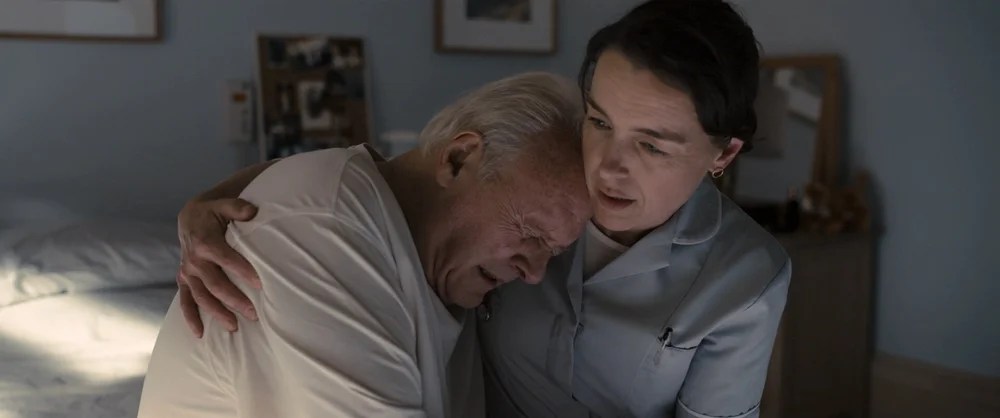
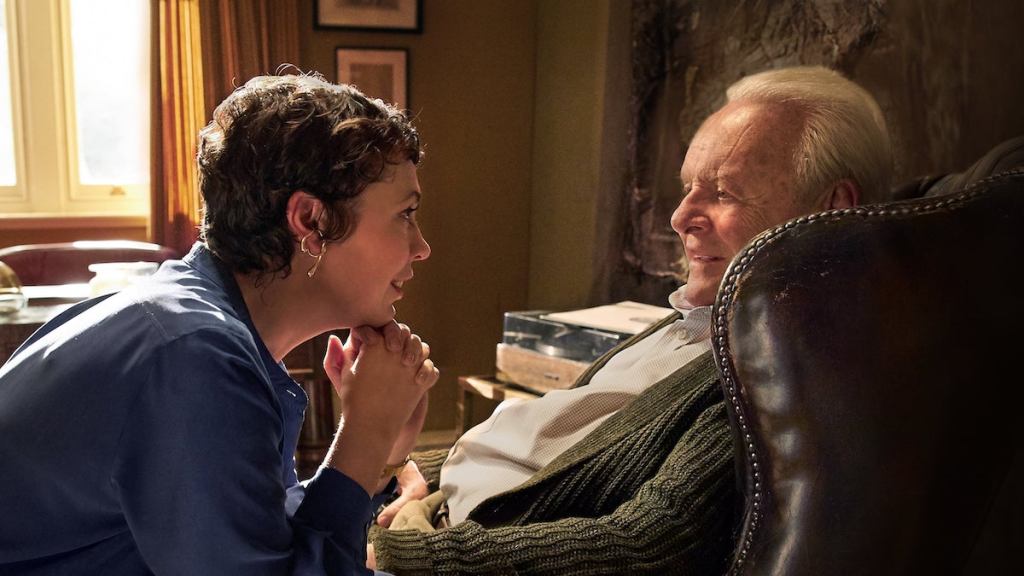
Anthony (Anthony Hopkins) is an octogenarian living with his daughter Anne (Olivia Colman). He has become well-advanced in dementia, struggling to recognize those around him and he requires constant care. Anthony frequently forgets that the apartment they share is hers and not his and he becomes confused as the many faces that come and go seem to blend together and are hard to identify. He lives a frustrating and frightening existence where each passing moment seems to come with wild changes in circumstances he cannot make sense of. Anne tells him she is moving to France with her husband and he is to be left in the apartment by himself. The next day a strange man named Paul (Mark Gatiss) appears claiming to be Anne’s husband. Anthony doesn’t know who he is and when he mentions France, Paul has no idea what he is talking about. He tells Anthony that the apartment is his and Anne’s and that she is just on her way back home from shopping. When she returns she looks like someone else and he, at first, doesn’t recognize her. She hands a bag of chicken to her husband and he leaves to go dress it in the kitchen. Anthony starts asking her about Paul and Anne tells him she hasn’t been married since she got divorced and that there is no one else there except for the two of them. When she leaves the room Paul reappears to ask him why he is being such a burden to everyone. The entire sequence is brilliantly portrayed in real time and to Anthony these contradictions occur minutes or even seconds apart. These sorts of moments happen frequently throughout the film and there is a sense of passing in and out of different realities that leaves Anthony feeling confused and vulnerable. There are days when Paul is there, who now also looks like someone else (Rufus Sewell); and some days he doesn’t exist at all.
Anthony takes a liking to Laura (Imogen Poots), a home health aide hired by Anne. She strikingly resembles his other daughter Lucy whom he hasn’t seen in some time and there are days when Lucy and Laura are indistinguishable. He misses Lucy a lot and wonders when she will stop by again. Her tragic death in a car accident years ago is largely forgotten. His frustration nearly reaches its peak when after gleefully waiting for Laura to come a completely different aide named Catherine (Olivia Williams) arrives at the apartment and he is told Laura had stopped working for them awhile ago.
I could go on, but it is best to see the film than read about it. Anthony’s story develops along to a climax that is heartbreaking and an exemplar of some of the finest acting I’ve seen in recent cinema.

Anthony Hopkins’ performance earned him his second acting Oscar following his 1991 win for The Silence of the Lambs and it is well-deserved. He goes through every possible emotion on the spectrum, each time doing it with care and subtlety. While he goes from impotent rage to laughter to childlike weeping for his mother it’s all performed as if I was witnessing a real person struggling with dementia.
The film is supported by a minimal cast all of which give performances resembling real people acting as people really do. Contrasts between the sympathetic, annoyed, and overwhelmed are deftly portrayed without aggressive pathos. The directing shows a highly reflective familiarity with human behavior.
The movie is set primarily in a singular setting inside the apartment where Florian Zeller maintains a simple structure in showing each passing day while crafting these skillful and complicated scenes where Anthony’s reality seems to shift in real time. It’s an exceptionally directed picture, impressive in that this is Zeller’s film debut. His knowledge of stagecraft is perfectly translated to film showcasing undeniable talent for direction and introspective writing.

Throughout The Father I was overwhelmed by how kindly its realism is. There is not an ounce of preachiness or sentimentality to the picture and, yet, it doesn’t become raw or cynical in its approach. There is a genuine compassion and kindliness in its writing that cannot be faked. Without being overly cheerful or nihilistic, not a single moment rings false or hollow. Hopkins’ portrait of a man struggling to rationalize his increasingly confusing life during the ravages of dementia is sympathetic and emotionally arresting. In the movie’s final scene Hopkins gives a performance that left me in tears. I was taken aback by how committed to honest feeling the movie was without being depressing or uplifting. Zeller’s screenplay goes beyond either sentiment, giving a solid bit of still-life that didn’t tell me how to feel. The film’s emotions come naturally to the viewer without contrivance or manipulation. When I watched The Father I saw real people, with real feelings, saying real things. And hanging over me the whole time was pure compassion, unadulterated by well-intended lies and triteness.

The Father is the kind of story that an author like Mitch Albom would render toothless with saccharine melodrama or a director like Sidney Lumet would elevate to nigh Shakespearean elegy. Florian Zeller meets us somewhere in the middle where simple empathy doesn’t take the sting out of sorrow, but gives it something we can relate to and find meaning in on our own. The Father is not a profound movie. It’s a deeply human one.

The Ghost and Mr. Chicken (1966)

3/4 stars

Screwball comedies are a difficult form of art. To put so much chaos on screen and to allow it to escalate requires a great deal of careful orchestration to pull it off effectively. In a word, portraying chaos demands everything but chaos in the screenwriters room. What’s needed is a lot of comedic timing, tight physical choreography, firm character establishment, and diligent direction for the performers.
The Ghost and Mr. Chicken is one of the best and most successful examples of the genre. Masterpieces like Bringing Up Baby and It’s a Mad, Mad, Mad, Mad World make for stiff competition as classics; while this film, like its hero, is unfairly forgotten and unappreciated for the comic genius that went into its writing.

Luther Heggs (Don Knotts) is an excitable, easily frightened newspaper typesetter who isn’t taken seriously or respected much by anyone around him. His closest friends love his personality more than his intellect and his coworkers look down on him. He wants to be an ace reporter someday but his circumstances make this unlikely. He is the ultimate underdog.
The movie vitally establishes his lack of credibility in its opening scene. Luther overzealously pursues a story involving the sudden murder of the town drunk. He takes half a dozen pictures, questions the murder’s sole witness, and rushes to the police station to report the killing. Luther knows this is his ticket to becoming a reporter in his own right and his excitement has him so animated that he is barely able to get a comprehensible word out. The only problem is that the “victim” isn’t dead and soon walks into the police station in the middle of Luther’s statement. Luther is laughed out and has to the endure the following day a barrage of jokes at his expense from his family and colleagues.
Fortunately, Luther’s own mishap opens up an opportunity for a second chance. An old mansion known to the locals as the Simmons House is about to be demolished the following week by the owner. The place is the subject of local legends as the previous owners had been killed a few decades earlier. Its reputation for being haunted has given rise for tall tales of organ music played at midnight and ghostly laughter from its long dead occupants. The newspaper wants to capitalize on the story before the building is bulldozed and Luther is chosen to spend a single night in the place. As one of the paper’s head writers puts it they want someone who is “a bit of a coward” and prone to superstition to sleep at the place. It’s an old formula to haunted house movies, but the film makes comic gold out of it.
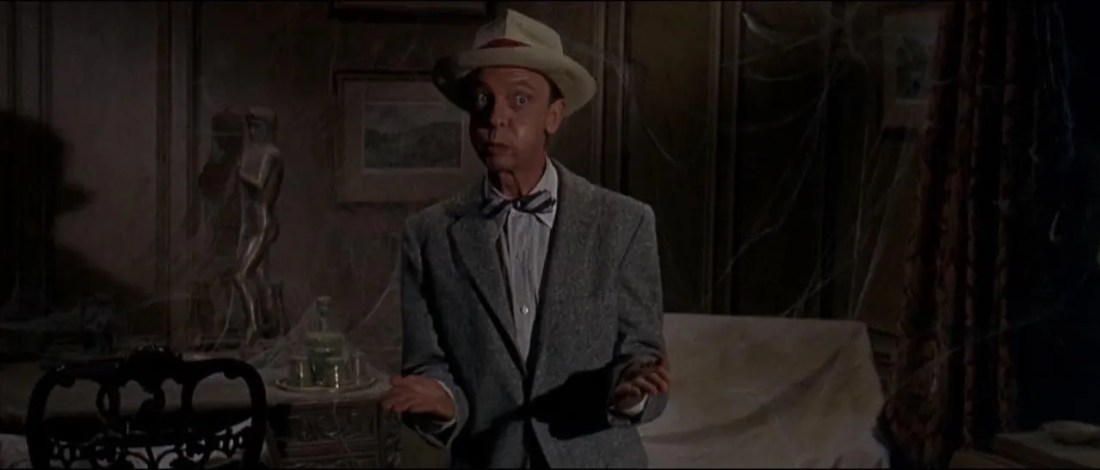
Luther reluctantly agrees and the night he spends there leaves him sufficiently traumatized. He hears cackling laughter in the walls, secret passages open before his eyes, a blood-stained organ plays by itself, and a portrait of the late Mrs. Simmons appears with a pair of pruning shears in the throat as blood flows from the canvas. While this sounds grim on paper, it is all played for laughs and Don Knotts’ physical and facial performance throughout the ordeal makes for some of the funniest scenes in the movie.
Luther’s story turns him into a local celebrity overnight. Everyone wants his autograph, men shake his hand, women fawn over him, and he gives painfully tepid and incoherent speeches to the crowds.
But, let me clarify this. Nothing that Luther saw and heard at the old Simmons place is what it seems. This becomes a serious problem when he and the newspaper are sued for libel by the house’s owner. Luther is impelled to prove in court that what he had witnessed really took place and he is forced to return to the house to recreate his movements and demonstrate what had happened. His own misapprehension over what he had seen works against him and he is made to look like a fool when he cannot replicate any of his claims to onlookers.
Of course, in the end Luther is vindicated in the midst of what becomes, surprisingly, a thoroughly engaging and interesting murder mystery.

Don Knotts, still fresh off his popularity on The Andy Griffith Show, brings to the role a hilarious portraiture of a man tightly wound up and intimidated by everything, including his own shadow. He can barely keep still as he fumbles around nervously trying to assert himself while nothing that happens to him seems to make sense. Knotts has a unique physicality to his performances in which he constantly reacts in sharp, jerky movements while his eyes are perpetually popping in fear. His is a role that I cannot picture any other comic actor of the time doing half so well. The Ghost and Mr. Chicken was made with Don Knotts clearly in mind and it remains one of his best and funniest movies.
I laugh at him, but root for him too. As an underdog he is innocent and good-natured, and his success at the end is satisfying and well-earned. Luther deserves to be happy and I was happy for him.

While classic Hollywood has plenty of superior screwball comedies to offer, The Ghost and Mr. Chicken remains a good one that merits more attention. It is uproariously funny, well-plotted, and cleverly performed throughout. While not overly ambitious or rife with social commentary, it is, nevertheless, an engaging simple story with plenty of laughs for any audience with a sense of humor. I recommend it highly. Tracking it down is worthwhile and it won’t disappoint.

Fly Away Home (1995)

4/4 stars

I am of the mind that there is no genre incapable of producing something good. Take the eco-conscious-child-bonds-with-a-wild-animal genre for instance. They were a dime a dozen in the 80s and 90s and the majority of its examples were utter dreck. Often over-sentimental and preachy, these kinds of movies too frequently end up saccharine and lacking in genuine human feeling. They aren’t hard to find. You can find them in any family movie pack in 5 dollar bargain bins.
Carroll Ballard’s (The Black Stallion) Fly Away Home is an example of the genre being treated with dignity and honest sentiment. The film is an emotionally moving picture that is not a mere environmental sermon or a cute animal movie. While these elements are there, Fly Away Home is more about the human experience. At its core, the movie preaches finding purpose after things we take for granted are taken away. This is a movie that keeps relatable human concerns at the foreground, supported by its green message instead of the other way around.

Amy Alden (Anna Paquin) is a 13 year old girl who, when her mother is killed in a car accident, is sent to Ontario to live with her father, Thomas (Jeff Daniels). She has not seen him in ten years and their interactions are awkward at first as she coldly tries to adjust to the sudden change in her life. Thomas is a socially-unaccustomed sculptor and aviation enthusiast who throws himself into his work. While he tries his best to keep his daughter comfortable there is a lack of connection and neither one of them is quite able to grasp the pain that each of them carries.
The first inkling of their developing bond comes when Amy discovers that he is involved with a local dispute with a real estate developer that threatens the wildlife community. At first, she claims to not care, but this quickly changes when she discovers a nest of goose eggs while playing hooky from school. The birds’ mother was killed by a bulldozer and Amy realizes that without her help the chicks will likely die. She hides the eggs in a drawer, but they are discovered by her father and his girlfriend Susan (Dana Delany) when they hatch.
The geese have since imprinted on Amy and they follow her everywhere believing her to be their mother. Thomas allows her to keep them despite the difficulties involved. His reasons for doing so are not stated explicitly, but I felt that he realized in that moment that Amy was overwhelmed by the loss of her mother and felt a kinship with the chicks on this basis. Amy is trying to live vicariously through the memory of her dead mom by being a mother herself to the birds in a way her own mother can no longer do for her. A forced separation would do only more psychological damage, and Thomas understands this.
But, caring for the fast-growing geese is not without complications. Geese have a natural instinct to fly south when winter comes, but require parental guidance to learn in which direction to go. Without parents geese under Canadian law must be rendered flightless by having their wings clipped, an operation that Amy strongly objects to.
Thomas, his brother David (Terry Kinney), and his assistant Barry (Holter Graham) hatch a plan to use airplanes to teach the geese to fly and guide them to South Carolina to migrate. This is complicated by the fact that the birds will only follow Amy and so Thomas decides to teach his daughter to fly and operate an airplane so they can make the flight together. There is a forgivable plothole here because, of course, all that needs to be done is craft a two-seater with Amy as a passenger. The birds would still follow. Ignoring this issue and moving on, two one-seater planes are built, both of which are fashioned to look like large geese.

Their flight is the highlight of the latter act of the film, bringing a highly emotional payoff to Amy and Thomas’s relationship with Caleb Deschanel’s gorgeous cinematography on full display. The natural Canadian landscapes are gloriously autumnal, shot in wide angles. The beauty of nature and its importance are ever-present in every shot of Fly Away Home and the fight for its survival is deliberately paralleled by the emotional drives of its human characters.
Mark Isham’s beautiful film score adds a sense of sadness and newfound joys to the film’s mood, with a recurring song (10,000 Miles) performed by Mary Chapin Carpenter that sets the movie’s themes of overcoming loss and finding hope afterward.
The film is a spiritual experience in which Man and Nature are not enemies at war with one another, but rather companions that share in and reflect each other’s griefs and influences. Environmentally-minded movies like this one are often angry or else limp and uninspired in presenting their message. Fly Away Home is neither. It takes the subject of human grief and gives us a place where it can be uplifted to new purpose. It doesn’t deny the reality of pain, but finds meaning in it.

While many family movies are cynically dumb and bankrupt of emotional depth, Fly Away Home demonstrates that they don’t have to be. There are too many good wholesome family movies to allow statements like “well, it’s a kids’ movie” to justify dimwitted schlock. I would encourage any parent the next time it is family movie night, instead of tormenting themselves with something obnoxious, loud, and thoughtless, to put this on. Children deserve good movies too.

The Fountain (2006)

3/4 stars

Visionary filmmaker Darren Aronofsky’s The Fountain is a visual marvel offset by a shallow and unsubtle story. It succeeds as a thoughtful meditation on grief, but ultimately fails as a meditation on death. The film aims to accomplish both, but in the end the rich images and Hugh Jackman’s heart-wrenching performance serve to mask a weak narrative that lacks the sort of depth the subject matter demands.
The Fountain has unique and arresting imagery rife with symbols and allegories that, while beautiful, do not give the audience much to think about. The attempts at allegory here are often obvious and over-explained throughout the film’s beats.

Tommy Creo (Jackman) is a doctor engaged in cancer research which, for him, involves a great deal of personal investment as his wife Izzy (Rachel Weisz) is dying of the disease herself. She is a vague figure; an idea whose personal substance has faded from his memories. Her scenes are typically recollections of moments with her that he regrets or quiet images of happiness he once had. She is writing a novel called The Fountain about a Spanish conquistador named Tomas (also Jackman) who, on behalf of Queen Isabella (also Weisz), goes on a quest to the Americas to capture a legendary Mayan temple wherein lies the fabled Tree of Life which promises fountain of youth like powers. The story is set against a backdrop of inquisitions and religious persecution that only feebly tie to his quest. Symbolically the predations of the Spanish Inquisition and the vicious palace intrigue align with the march of death that threatens the life of the real-life Izzy, but within her novel’s context they are under-explained and function poorly as an impetus for the hero. Like her book, the film has a similar problem. All of the visual feasts of allegorical imagery are only sensible when viewed allegorically, but defy logic when examined at the parallel literal level. A good allegory mixes both perfectly, but The Fountain is too obsessed with its symbolism to spend much time on story.
Mixed between the content of Izzy’s novel and the real-life events happening to her and Tommy there is a third parallel plotline involving a vision of Tommy inside a bubble hurtling toward a nebula called Xibalba which, according to the Mayans, contains the abode of the dead. With him, in the bubble, is the Tree of Life itself, dying slowly in conjunction with the passing of Izzy. The vision of Tommy desperately tries to keep the tree alive, occasionally consuming its bark for its rejuvenative effects.
What the movie does best is capture Tommy’s grief and the fear that comes with it. Jackman’s performance is among some of his finest. He evokes pain and loss in a way that is so profoundly real it almost brings me to tears. Another thing The Fountain does that I appreciate is showing the experience of hyper-focusing on random still things when we are frightened and aggrieved over a pending loss. He stares at a ceiling light soaking it in as if there is nothing else in the universe; and he does it again in an elevator creating a huge gestalten image of its interior paneling until it becomes everything. It’s an experience that is difficult to explain to someone who has not felt it, and Aronofsky has found a brilliant way to bring it on screen visually that I have not seen in other movies dealing with the subject.
On top of these excellent qualities is Clint Mansell’s beautiful, funereal score which is among some of his best compositions alongside Requiem for a Dream.

The Fountain’s visual language is highly poetical. It’s images are like music that recreates strong feelings. But, it is like music with bad lyrics. The moments in which Tommy purportedly comes to terms with his wife’s death and the onset of his eventual own are not convincing and are highly contrived by the aesthetics. The film tells me he is over his terror of death, but it doesn’t make me feel it in the slightest. Unlike Aronofsky’s other much better films, The Fountain suffers from the disingenuousness of pretension.
Behind the film’s production was a number of budgetary issues that during pre-production nearly killed the project. Inevitably, Darren Aronofsky, opted to make the film on a smaller budget and a smaller scale of ambition. What was intended to be an epic became a 96-minute art-piece severely lacking the director’s usual profundity and symbolic detail. There was a great picture in the works here during the film’s early planning that evaporated during its execution. Had he made the picture after Black Swan we may have had the masterpiece he originally intended. Alas, what is left is a beautiful and elegiac film, marred by limitations that robbed it off subtlety.
In the end, The Fountain is a good movie. But, it could have been a great one.

Robin Hood: Men in Tights (1993)

2/4 stars

Mel Brooks’ Robin Hood: Men in Tights is a movie that is good, but not good enough. It’s the sort of movie that a master comedian of Mel Brooks’ caliber cannot get away with. Not in the same way that the creators of Scary Movie or The Starving Games could have.
Against his previous offerings such as Blazing Saddles or Young Frankenstein, Men in Tights seems desperate in comparison. Comedy requires a skilled command of tight pacing or else the jokes start to live in a vacuum, like isolated entries in a joke book or a collection of comic strips. My experience of watching Robin Hood: Men in Tights was much like this. It opens at a breakneck rush before suddenly meandering into a collection of poorly interconnected gags that do nothing to serve the backdrop of the story or the characters. When the movie succeeded in getting a laugh out of me it’s always with a joke that could be placed in any other scene of the film, or even in another film altogether. Nothing funny in this movie comments on the story’s events or the characters’ flaws in any clever or meaningful way. The jokes are pure stitchwork. A collage of unrelated gags, arbitrarily placed and only occasionally funny. I feel that the humor in Men in Tights would have served better a more anthological piece like Brooks’ earlier History of the World, Part I.
Perhaps the most desperate of the jokes involves a mole on Prince John (Richard Lewis) that changes position in each of his scenes. The gag is a mild diversion that feels more like padding than anything clever.
Some of the jokes are overwrought. When we first meet Blinkin (Mark Blankfield) he is a blind man reading a medieval issue of “Ye Olde Playboy” in braille, the centerfold rendered embossed to aid his disability. There is simply too much going on here for the joke to work. A blind man reading Playboy in braille in a modern setting would have been funny. A man reading a copy of “Ye Olde Playboy” in medieval England would have been funny. A blind man reading “Ye Olde Playboy” in braille in medieval England is not funny at all.
There are comedic bits in the movie that did generate a chuckle out of me, but they suffer from the same desperate shoehorning that plagues the film. I especially appreciated a delightfully dumb bit where a formation of knights in armor are knocked over like dominoes in a highly contrived and circumstantial way that boggles respectable logic. I genuinely laughed at it. I was also tickled by a smaller scene where Blinkin somehow mistakenly thinks he can see again. It’s the sort of profound idiocy that made the Three Stooges and Beavis & Butthead so popular.
One of its best jokes involves a duel with staves between Little John (Eric Allan Kramer) and Robin Hood (Cary Elwes in a performance too imitative of Westley in the vastly superior The Princess Bride). Their incompetent attempts to adapt to the rods constantly splitting into smaller and smaller pieces is a riot and there is some mild amusement when Little John shows that he is unaware that the bridge he is guarding is over a shallow brook that a Lilliputian could cross with no effort.

But enough about the jokes. What about the story? Robin Hood is a folk hero ripe for parody. He was the subject of numerous renaissance ballads, popularized by novelists like Howard Pyle and Sir Walter Scott, and brought to life on the silver screen by the likes of Erroll Flynn and Walt Disney Studios. There is a wealth of material there to work with.
Unfortunately, Mel Brooks appears to solely target the Kevin Costner take (Robin Hood: Prince of Thieves) which the gap of a few years was enough to make this spoof untimely. Had Brooks set his sights more broadly perhaps he would have had more to joke about.
The movie opens with Robin Hood in prison in Jerusalem after helping King Richard fight in the crusades. There is a quick and shoddily paced build-up to a clandestine escape and afterward his rescuer, Asneeze (Isaac Hayes) sends Robin to find his son Ahchoo (Dave Chappelle, whose comedic talent is criminally underused in the movie) who is living as an exchange student (don’t ask) from Africa to England.
This turns out to not be much of a quest because Robin Hood encounters him almost immediately when reaching England. Ahchoo becomes the first of Robin Hood’s merry men and an adventure follows where the two of them recruit more members. None of these additions are particularly funny. There is Little John as mentioned above, but there is also Will Scarlett OHara (Matthew Porretta), whose only quality is an unfunny name and an apparent skill with throwing knives that is barely used in a movie overcrowded with other underused competing characters. There is also Rabbi Tuckman (Mel Brooks) filling in for Friar Tuck (haha, I guess) and, of course, Maid Marian (Amy Yasbeck) who is presented as an easy woman frustrated by virginity, vigorously enforced by a chastity belt.
The chastity belt is the subject of an absurd prophecy that the bearer of its key will be the man who shall marry her. Vying for her affections is the unimpressive Sheriff of Rottenham (no, that’s not a typo) played by Roger Rees as a foppish and vaguely effeminate coward.
The plot continues to meander with jointless plots and counterplots supplemented by random gags and groan-inducing puns. The archery tournament, winning of Maid Marian, and ousting of Prince John come late in the final act after the movie’s pace has already been firmly eviscerated.

Perhaps I may seem too harsh on Robin Hood: Men in Tights. The movie altogether is passably entertaining and watchable and its mood is amiable enough, I suppose. There is a sense of fun to it and it is clear that no one involved in it took the source material seriously. That is acceptable after all, but I was hoping that the comedy would have been taken seriously at least. Much of the jokes fall flat and do not carry the story along an inch. The desperation and randomness of its jokes left me wishing for more. Coming from Mel Brooks, Robin Hood: Men in Tights is disappointing. It doesn’t live up to the standards of his earlier work and the dearth of clever, memorable dialogue is hard to forgive.
It’s a movie that is just okay. I’ve seen better.

Roman Holiday (1953)

4/4 stars

Audrey Hepburn was a special kind of star. Not a classy bombshell, but someone more accessible. In every Hepburn performance she is all charm and innocence; softened by pure affability. Her face and manner made men fall in love with her and women wanted to be her. She was the sort of woman where words like “sexy” or “hot” would be a pathetic waste and a clear miss of the mark. She was the sort of woman men write poems about.

Even in her bad films (like Funny Face) Audrey Hepburn is always likable and remains a highlight that elevates the piece if even by a margin. In her good films (like this one or My Fair Lady) she is a worshipful dream. She was one of the last stars to come out of the Golden Age of Hollywood; and if she is not definitively the best, she is still my personal favorite.

Director William Wyler’s (Ben-Hur) Roman Holiday may very well be the best of Hepburn’s movies; it certainly utilizes her screen persona to its fullest. She plays a bored royal named Princess Ann who, after a bad reaction to a drug meant to calm her nerves, runs away from her tight-knit existence and drunkenly wanders the streets of Rome (shot on location throughout) before meeting American journalist Joe Bradley (Gregory Peck). He doesn’t know who she is and innocently takes her to his apartment to sleep off the episode. Peck plays the complete gentleman, painfully aware of the potential for scandal; and even when she implies that less savory attention wouldn’t be unwelcome, he keeps distance out of respect for her drunken state. Peck strikes me as a sort of anti-Robert Mitchum, powerfully male, but clean cut and highly noble.
When he sees her face in the morning newspaper Bradley learns who she is and he sees an opportunity for an exclusive interview and an easy payout from his editor. This is easier said than done while Princess Ann keeps herself hard to pin down as she enjoys a new carefree freedom. Away from the pampered structured life to which she had hitherto been accustomed she soaks in Rome as a wide-eyed tourist rather than a VIP. She goes dancing, buys ice cream, gets her haircut, and gives Peck a near heart attack in the film’s most memorable scene when she wildly wrecks havoc through the Roman streets on a Vespa.
Of course, the pair eventually fall in love. The moment comes at a perfect time in which the audience has had time to fall in love with her as well. It’s clear that the few days that they spend together will remain in memory as the happiest time of their lives. When the film ends the time they had is tragically short and neither Bradley or Ann will quite replicate those feelings again. First love is like that.
At the end there is pain, but not misery. Back in her proper ceremonial place she and Peck must pretend to meet for the first time and not know each other. Their final departure is bittersweet, but there is no bitterness.

While watching Roman Holiday I was overwhelmed with a personal sense of nostalgia for the days when I was a youth and in love for the first time. Like with the characters in the film, there is a lingering ache tempered with positive experiences that will carry into the remainder of my days.
The best films leave us with real feelings. They bring out our emotions without manipulation and outrageous pathos. Romantic comedies often fail in this regard, but Roman Holiday happily does not. Even when it is being silly it recalls to mind sincere feelings of lost youth and how love at that age is an adventure, best remembered but not to be recaptured. The movie made me sad as well as happy. The mark of an excellent film is its way to evoke different feelings depending on the age of the viewer. When I was younger Roman Holiday would have been a reflective bit of charming fun. Now that I am a little older it recalls to mind feelings that are more real.

I look forward to revisiting Roman Holiday as an elderly man and see how it makes me feel then.