

4/4 stars
“We must love one another or die” – W. H. Auden, “September 1, 1939”
On the evening of September 7, 1964 about a hundred million Americans sat down to watch TV. It’s a Monday night and David and Bathsheba (1951) is the NBC Monday Movie. It’s 7:30, a school night; their children are tucked safely in bed. The adults settle in, a bowl of popcorn between them, and they relax. It’s another election year and a lot is being talked about. The country is still reeling from Kennedy’s assassination a year ago, the Vietnam war is as unpopular as ever, and the names Johnson and Goldwater are on everyone’s lips. Nuclear weapons are on a lot of people’s minds. The movie starts. It’s an old one, from a different time. It’s biblical, it’s wholesome. It’s enough to sit down and enjoy while taking their minds off the troubling times for awhile. Their world is changing a lot. The Civil Rights Act had been passed only a few months ago, eliciting a lot of joy and a lot of unrest. It’s now 9:50 at night. The movie is nearly over, the bowl of popcorn is empty. Gregory Peck and Susan Hayward, glamorous but living in sin, are suffering the consequences of their infidelity. The viewers, enjoying their moment of escapism, see something they did not expect. Something, perhaps, they didn’t want to see. Something that will forever alter the course of the oncoming election. It’s a commercial.
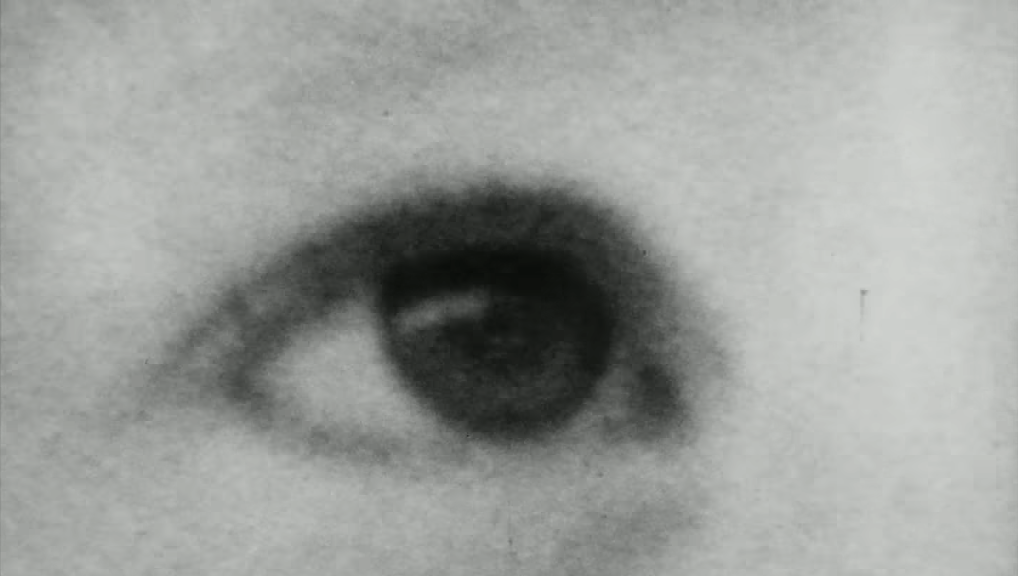
An adorable three year old girl is standing in a field. She is holding a daisy and counting the petals as she pulls them off one by one. She counts as well as most three year olds do. The numbers are out of order and a few are repeated. When she gets to nine the film becomes a still image that zooms into her right eye. The cold, somber voice of a man counts down from ten and the mushroom cloud of a nuclear explosion fills the screen. Acting President and nominee for the Democratic Party, Lyndon B. Johnson’s voice speaks over the footage: “These are the stakes! To make a world in which all of God’s children can live, or to go into the dark. We must either love each other, or we must die.” The ad cuts to a black screen with white letters which read: “Vote for President Johnson on November 3.” Chris Schenkel’s voice finishes off the piece, reading the words and then adding, “The stakes are too high for you to stay home.”
The images are powerful. In the morning the White House’s switchboard will become inundated in calls protesting the ad. Johnson says to his Press Secretary, Bill Moyers, “Jesus Christ, what the hell happened?” When he wins the election in November, his question will be answered.
Propaganda as an art form is a touchy subject. Riefenstahl and Griffith took their hand at it and the results were visually artful, groundbreaking, effective, and ultimately morally reprehensible. Politically-minded Bill Moyers, who commissioned the Daisy ad, and the Doyle Dane Bernbach advertising agency who made it, had motivations no more noble than Riefanstahl’s or Griffith’s, but they appealed on the surface to more noble sentiments. And like the creators of Triumph of the Will and Birth of a Nation, Johnson and Moyers and the times they lived in are now long gone. But, sixty years have given us some distance between Daisy and the political climate that put it on television. It’s images are still powerful and their is something contemporaneous about its emotional effect.
The ad effectively painted Johnson’s opponent, Republican nominee Barry Goldwater, as a warmonger whose open advocacy of nuclear weapons was a short-sighted threat to future civilization. To Goldwater, this was a vicious insult, as he felt that nuclearization was in the interest of American security. I imagine he must have felt that a pro-nuclear stance was a deterrent from foreign threat and he was thinking of the same innocent lives that Johnson was. Like many Republican candidates, from before and since, Goldwater is a practical man, if not a little cold. Cutbacks on social programs were also on his agenda. His message was a strong economy and a strong defense. “In your heart, you know he’s right” was his campaign slogan. A jaded economical use of words punctuates the most successful political ads and it’s hardly shocking that the Johnson campaign shot back with, “In your guts, you know he’s nuts.”
Conversely, Lyndon B. Johnson was a liberal’s liberal. During his presidency he signed the Voting Rights Act of 1965, signed the Fair Housing Act of 1968, declared war on poverty, oversaw the creation of Medicare, lifted immigration restrictions, supported funding for education, and was one of the most environmentally conscious presidents in American history. It was the Vietnam War that was his undoing. Operation Rolling Thunder was hardly a success and the Viet Cong’s own Tet Offensive, while a failure, only further galvanized American sentiment against the war. Johnson suffered in the polls during the latter half of his administration and in 1968 Richard Nixon took office. Lyndon B. Johnson was unable to end the war, and he is best remembered for his championing of the poor and disenfranchised at home than for his foreign policy.
Daisy, which played a large role in Johnson’s election in 1964, only aired once. It was the right decision. Repeated airings would have jaded the audience, dampening its effect. It would have, otherwise, become another “Where’s the Beef?”, subject to parody with its edge dulled to nothing.
But, a generation later, the ad still manages to get under the skin. Its depiction of a child is not unctuous, but far more familiar in its portrayal of childish innocence. She doesn’t whimper or appear sad like a dog in a “adopt-a pet now” commercial, nor does she say anything at all about the scary stuff on the news. By simply being a little girl counting flower petals (badly) the conversation remains firmly between the adults. The imagery suggests that a child shouldn’t even know what a nuclear weapon is, let alone be evaporated by one. Too often, propagandists use children as ventriloquist dummies, giving a child-like take on the puppeteer’s own views. People can see through the act and they resent the manipulation. Instead, the viewers, wrapping up their Monday night movie, saw in her one of their own children, currently safe in bed.
The images remain powerful. In a way, the separation between its original political context and the current times has only enhanced its effect. The simple juxtaposition of a child playing with flowers against the cold calculations of Mankind’s bellicosity contains a message far more universal than its intentions back in 1964. Nuclear weapons are still a problem of today and the powerful still wage war as much as they did in the days of Rameses or Caesar. And children still die because of it. Ukrainian children, Palestinian children, Iranian children, Israeli children, Russian children, and all the rest have something in common with the little girl in Daisy. If I have to explain to the reader what that is then they are a part of the problem. It was someone’s children in 1964 as much as today and as much it will be someone’s children tomorrow. The borders shift, what we call ourselves change, the technology progresses, and old ideas give way to new. But children remain the same. You don’t have to dance on their graves to be evil. All you have to do is not care.
Director: Sidney Myers
Writer: Stanley Lee
Cast: Robert Dryden (Self/countdown voice), Lyndon B. Johnson (self/voice-over), Chris Schenkel (Self/announcer), Monique Corzillius (Little Girl)
Producers: Aaron Ehrlich, Tony Schwartz
Cinematographer: Drummond Drury
n.b: The film is easy to track down and for those interested in viewing it, it can be found anywhere on Youtube and on the ad’s own Wikipedia article.

