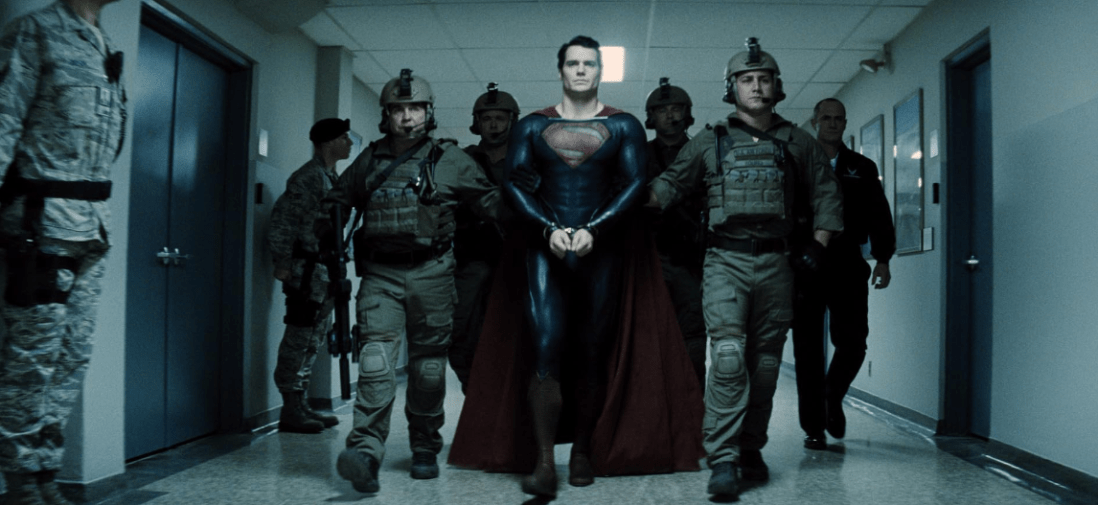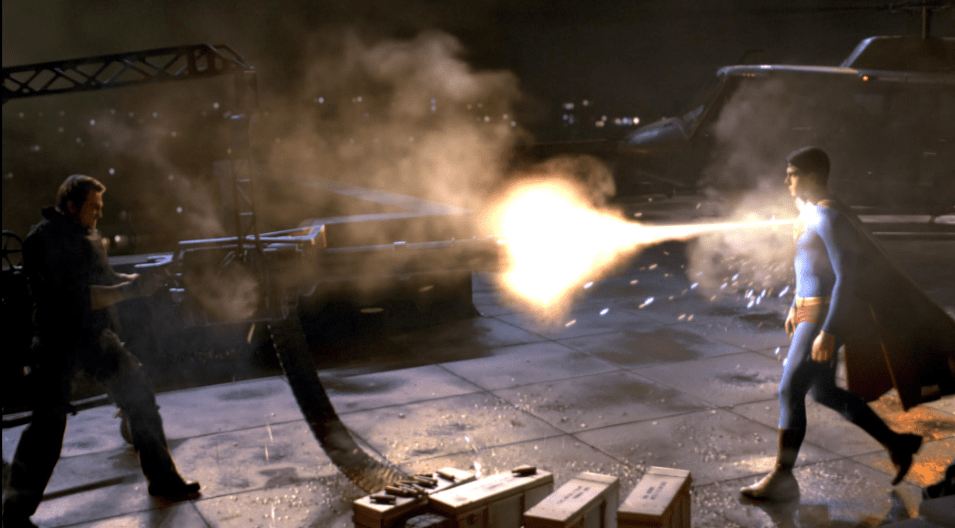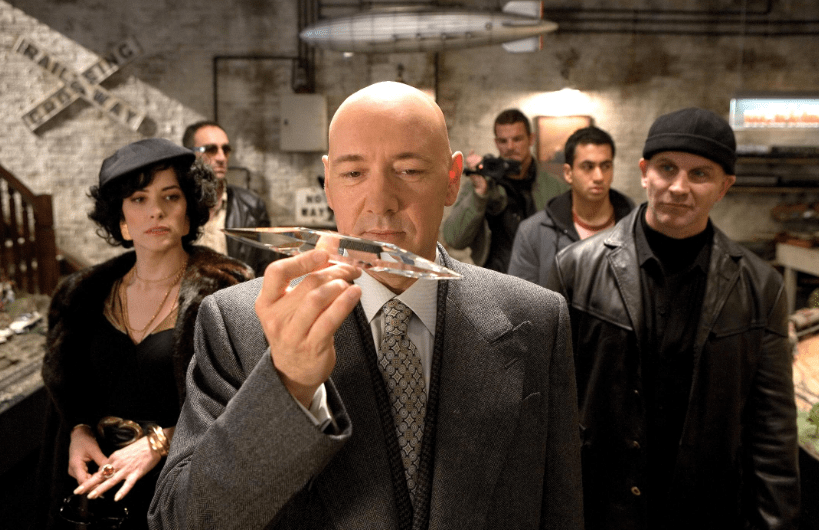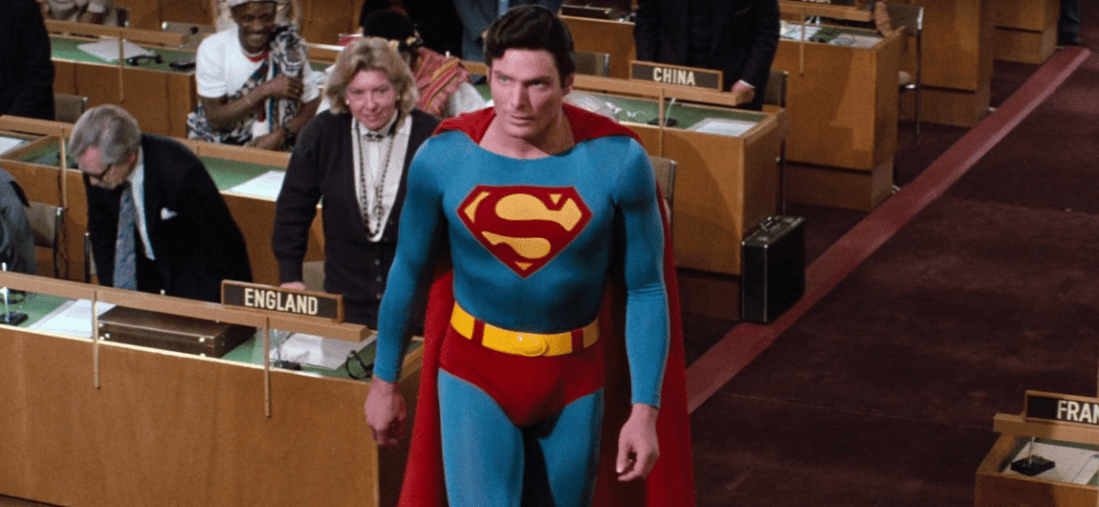

Superman III (1983)

2.5/4 stars

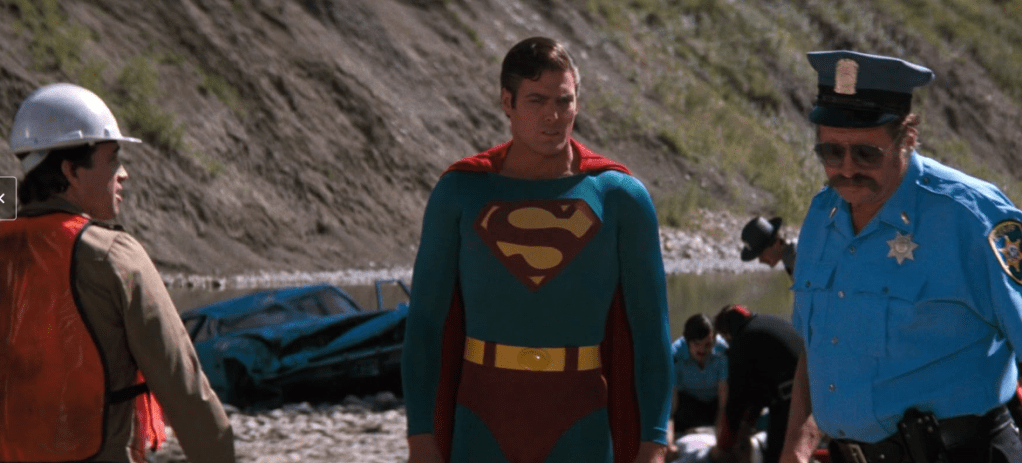
Director Richard Lester (Superman II, Superman III) is a talented filmmaker, but he wasn’t right for Superman. There is no denying that he liked the character. But, Richard Donner – the director of the first film – respected him. Superman II, while still a decent movie, was an early sign that something was going wrong with the series’ original vision. Superman III confirms it.
Donner was fired from the production of Superman II with a little under half of its footage, then, complete. Lester, who took over, managed the salvage well enough; and all considering Superman II could have been much worse.
But, Superman III is all Richard Lester and it is clear from its start that he didn’t share Donner’s vision. He has, in fact, practically boasted of this in the past. Lester compared Donner’s style unfavorably with the epics of David Lean. Speaking for himself, he cited his own more lightweight style as his preference. To me, what this boils down to is that Richard Lester apparently thought Donner was making the series too good.
What a strange time the 80’s must have been for cinema! Producers are notoriously out of touch when it comes to understanding what audiences want, but Superman III is just insulting. The producing team, Ilya and Alexander Salkind as well as Pierre Spengler, handled the Superman movies terribly. Superman (1978) was a huge success and a critical darling still heralded as the greatest superhero movie of all time even to this day. It was the most expensive movie made at the time, largely due to director Richard Donner allowing its budget to balloon out of proportion. Obviously, the producers made their money back, but that didn’t stop them from having an acrimonious split with Donner and replacing him with Lester on Superman II.

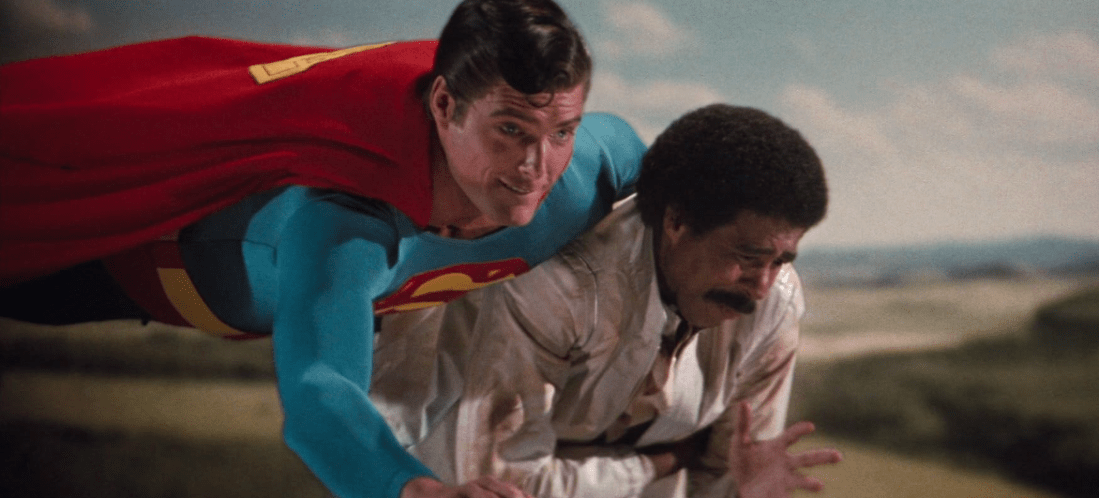
But enough history. What about the movie itself? Taking 100% of the directing duties this time around, it is amazing how little Richard Lester accomplishes with it. Superman III waters down everything in the first two movies that made them significant. Lois Lane (Margot Kidder) is given nothing more than a few small cameos and Gene Hackman’s Lex Luthor is missing from the movie entirely. He is replaced with another criminal mastermind named Ross Webster (Robert Vaughn) who is nothing but a discount stand-in for Luthor. Webster has an over-convoluted scheme involving a computer hacker named Gus Gorman (Richard Pryor) he uses to take control of weather satellites and the world’s oil reserves. Unlike Luthor, Webster merely plots and provides exposition when necessary. But, he has no personality of any kind. Gus, a henchman, is the central focus whenever the villains are on screen. He is introduced as an out of work welfare recipient who is forced to find a real job when the unemployment office declares him ineligible for any more handouts. He gets an entry-level position as a computer programmer for Webster’s corporation (which is implausible bull) and discovers that he has an innate talent as a computer genius (also bull). Computer programming doesn’t work this way. It’s not like discovering you are a fast runner or even that you are good at math. It’s a trained position that requires clear understanding of what one is doing. Gus impresses his boss by accomplishing some programming feat and then sheepishly says he doesn’t know how he did it. Utter nonsense!
After Gus is caught hacking the company’s payroll to increase his wages, Webster recruits him to manage all the necessary computer programming needed to hatch his scheme.
Pryor known for his comedy work is not much fun in this movie. He bumbles about playing at being in over his head, but there is no enthusiasm to his performance. Superman was not an appropriate vehicle for his career and he seems to have discovered that too late once shooting began.

Elsewhere, Clark Kent (Christopher Reeve) is given a much flimsier story than previously seen. In the first two movies Lois Lane was at the center of his balancing act between being Superman and Clark. With Lois now largely out of the picture the writers clearly struggled to make anything out of Clark’s relationship with Superman and a number of odd choices are made for both.
Clark attends his high school reunion where he becomes reacquainted with his high school crush, Lana Lang (Annette O’Toole). Never having left Smallville and now a single mother, Lana wonders at her past life choices and thinks about moving to Metropolis. In Clark she sees something that she didn’t see in high school and they begin dating. As strange as this subplot is, it is actually the strongest part of the movie. I am of the controversial opinion that the budding romance between him and Lana is much better written and is more convincing than what we saw between him and Lois. Their outings to the bowling alley and on picnics is genuinely charming and pleasant to watch. We see several scenes where Clark is able to bond with Lana’s son, who just happens to be a big fan of Superman. I would have been happier had they shown more of this. The moments, while good, are sporadically paced, giving space way too often to Pryor’s soulless goof-balling and Vaughn’s complete lack of charisma or interesting traits. The villains are simply not strong enough to hold the amount of scenes with them that the movie forces upon us. The scenes with Clark and Lana are well-executed, but poorly balanced.

Later in the second act, Gus gives Superman some tainted Kryptonite that makes him evil. And by evil, I just mean annoying. He leaks oil tankers, blows out the Olympic torch, and straightens the Leaning Tower of Pisa. We also see him get drunk, misbehave around women, and claim that he isn’t in the helping people business anymore. The whole thing is absurd, but to the movie’s credit its resolution is quite well done. His emotions take a jolt when he sees Lana’s son disappointed in him and his spiritual struggle culminates in a literal battle between himself and his alter ego, Clark Kent.
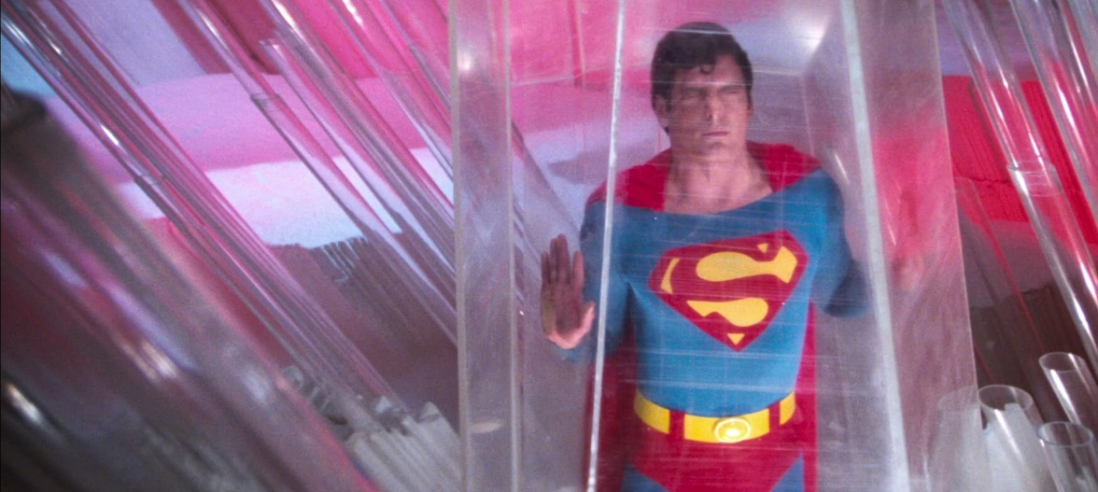
Superman III pushes terrible, braindead premises, but manages to execute them better than I initially would expect. But none of the good moments last long enough before the movie’s idiotic plot commits further outrages. The final fight involves a super-computer that Gus built to kill Superman. It becomes self-aware, creates an evil robot out of Webster’s sister, and uses an interface resembling an Atari arcade game complete with scoreboard and a point counter. The movie feels like a bad Doctor Who episode.

Superman III is a horrendous, dumb movie that constantly teases us with something interesting before pulling the rug from under it to focus on its much less intelligent story. A key example is Webster’s mistress Lorelei (Pamela Stephenson). Like Lex Luthor’s Ms. Teschmacher she is played as a dimwitted floozy, but the film drops hints of something deeper beneath the surface that is never explained. She reads Immanuel Kant when no one is looking and displays a surprising understanding of computers, all of which she hides behind her exterior as a bimbo. It’s suggested that Lorelei may very well be the smartest person in the room, but it’s not developed beyond being a gag.

The movie has a number of good ideas in its brain, but they rattle about like loose marbles and nothing is properly placed. There was a good movie in here somewhere, but the filmmakers did not have the confidence to find it.

Director: Richard Lester
Writers: David Newman, Leslie Newman
Producers: Pierre Spengler, Alexander Salkind, Ilya Salkind, Robert Simmonds
Cast: Christopher Reeve (Superman/Clark Kent), Richard Pryor (Gus Gorman), Jackie Cooper (Perry White), Marc McClure (Jimmy Olsen), Annette O’Toole (Lana Lang), Annie Ross (Vera), Pamela Stephenson (Lorelei), Robert Vaughn (Ross Webster), Margot Kidder (Lois Lane), Gavan O’Herlihy (Brad)
Composer: Ken Thorne
Cinematographer: Robert Paynter
Editor: John Victor Smith

Superman II (1980)

3/4 stars

Superman II has all the excitement and visual spectacle of the original Superman film, but lacks its wit and plausibility. As a superhero movie it’s about as good as Tim Burton’s Batman or the first Avengers. But there isn’t much here of what made the 1978 Superman movie special.

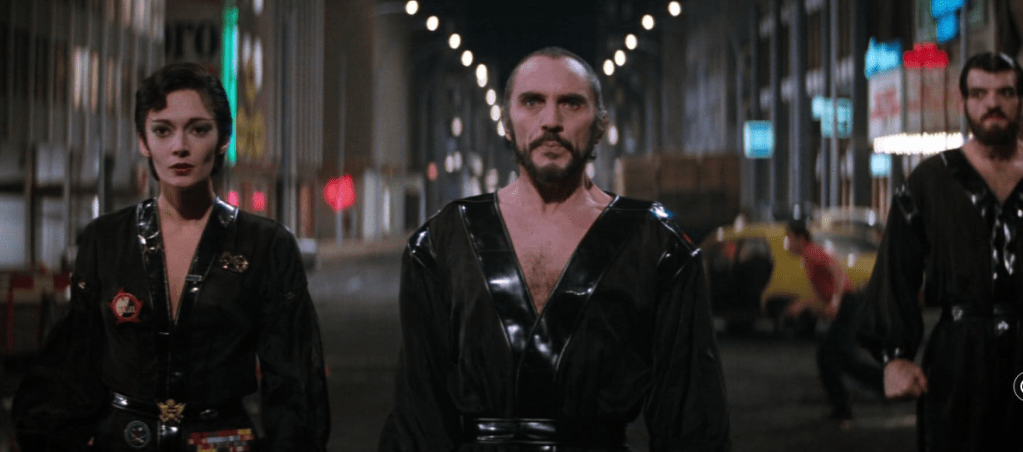
In the first film it opened with three Kryptonian criminals being charged with sedition. General Zod (Terence Stamp), Ursa (Sarah Douglas), and Non (Jack O’Halloran) are condemned to dwell inside a floating disc called the Phantom Zone which floats off into space just as baby Superman’s escape pod leaves the planet. Now, in Superman II we find out what happened to them.
The sequel opens with Superman (Christopher Reeve) rushing to Paris after a group of terrorists with a hydrogen bomb take control of the Eiffel Tower. Superman saves the day by rescuing hostages and flying the bomb up into outer space where it explodes harmlessly. Unfortunately, the Phantom Zone just happened to be flying by and the shock waves shatter it, releasing Zod and gang. Ursa murders a couple of astronauts on the moon, and then the trio land in Houston, Texas. Zod wants to rule the planet and be worshiped by its denizens, but upon hearing stories of Superman he realizes that there is one threat to him and his ambitions that must be removed if he is to succeed.
The three villains have only a low kind of cunning and rely mostly on brute strength and their powers to get what they want. As movie bad guys go they have none of Lex Luthor’s (Gene Hackman) charisma and act more like playground bullies than anything else. Much of their scenes consist of wrecking havoc, causing property damage, and making comments about puny earthlings. Lex is regrettably given less to do. He joins forces with the Zod gang in the hopes of getting revenge against Superman, but he is forcibly sidelined by the new villains; his scenes little more than standing in a corner uttering some witticism.

Superman II’s subplot involving Clark Kent’s growing romance with Lois Lane (Margot Kidder) is slightly more interesting. Lois, who has been growing increasingly suspicious of Kent’s true identity, finally uncovers the truth. Superman is in love with Lois, but he discovers that for the two of them to be together he must sacrifice his powers and immortality. We are not told why and Superman accepts it without question. The time they spend together as a human couple is sweet and hopeful, but is sadly short-lived. Zod and his friends threaten Metropolis and it becomes clear to Clark that the world needs Superman. Clark and Lois’s breakup, however, represents one of several different failings that Superman II has in its writing. The movie does not convincingly establish that Clark Kent and Lois Lane are in love at all. Their interactions throughout the majority of the film is not much different than the simple infatuation they had in the first one. That they are deeply in love is something we are told more than we are shown. Break-ups can take a serious emotional toll on a person, and for a moment in the movie’s final scenes it appears that something poignant will be made of it. Lois tells Clark that he is “a tough act to follow” after he tries to suggest that someday she may meet someone else. I think a lot of people following a break-up feel as Lois does, even when their boyfriend isn’t the Man of Steel. But, the film cops out of any further dramatic tension by Superman implausibly wiping her memories clean with a kiss.
This kiss is just one of several stupid moments in the movie. I cannot abide arbitrary powers being lazily introduced to get the main characters out of a bind, and Superman II is full of moments like this. In the original film, Superman’s powers, while impossible, are at least explicable to the audience. We understand that he has super strength, laser vision, and can fly. We also know why he has these powers, being an alien living on a planet with a different sun and atmosphere. But, in the sequel his powers expand beyond any plausibility. Instead of changing into his costume with super speed he now makes his civie clothes magically vanish as the Superman garb materializes out of thin air. When Non charges at him Superman pulls an S off his chest and throws it at him. The material expands into a sort of plastic wrap that temporarily takes Non out of the fight. These moments are pure dei ex machina, lacking any sort of explanation and occurring from a standpoint of quick convenience.

In the final act, Superman and the Zod gang do battle in the streets of Metropolis and later in the Fortress of Solitude. The Metropolis scenes as action set pieces are not very exciting. There is little energy to them, with most of the fight just smashing things one by one at a slow rate and some petty taunts from Zod. There is a sense of city-wide chaos one would expect that is lacking here. The fight feels more like an elaborate street brawl while the rest of the city remains asleep or dully watches on.
The real purpose of the Metropolis battle seems to be product placement. There is an annoying scene in the first Superman involving Cheerios, but it is brief enough to not detract from that movie’s greatness. In Superman II, though, we are fed a whole marching gallery of products obnoxiously shot to hold the viewer’s attention. In the span of a single minute I counted about four or five products strutting their stuff while Metropolis is under attack. These include, but are not limited to, KFC, Coca-Cola, and even Marlboro cigarettes. I doubt Superman would have approved.

When all is said and done I find Superman II to be a sufficiently entertaining movie. I was not bored by it by any means. And I can get behind its plot and adventure, if not so much its execution. But, as Lois said of Superman himself, the first movie is a tough act to follow.

Directors: Richard Lester, Richard Donner
Writers: Jerry Siegel, Joe Shuster, Mario Puzo, David Newman, Leslie Newman, Tom Mankiewicz
Producers: Pierre Spengler, Ilya Salkind, Alexander Salkind
Cast: Gene Hackman (Lex Luthor), Christopher Reeve (Superman/Clark Kent), Ned Beatty (Otis), Jackie Cooper (Perry White), Sarah Douglas (Ursa), Margot Kidder (Lois Lane), Jack O’Halloran (Non), Valerie Perrine (Eve Teschmacher), Susannah York (Lara), E. G. Marshall (The President), Terence Stamp (General Zod)
Composers: Ken Thorne, John Williams (Superman Theme)
Cinematographers: Robert Paynter, Geoffrey Unsworth
Editor: John Victor Smith

Superman: The Movie (1978)

4/4 stars

Superhero movies tend to have a distinct formula these days. They often open in the middle of the action where the heroes, already familiar to the audience, are on some unrelated mission that goes south. They take a brief break for some funny dialogue before the movie’s main conflict is introduced and they are then whisked away on some adventure. What follows for the next two to three hours is constant action, displays of special effects, and witty banter. The fans are familiar with the characters, and it is that familiarity that carries the movie rather than the plot. It’s akin to seeing a circus performance. You’re there for the clowns and the elephants. No one cares what the ringleader and lion trainers have to say.

But, Superman: The Movie, the film that jump-started the genre, defies that formula. It takes its time establishing its characters and their motivations. It’s also well-performed, artfully photographed, and cleverly written. It is, in fact, what a lot of superhero flicks are not. It’s a movie.

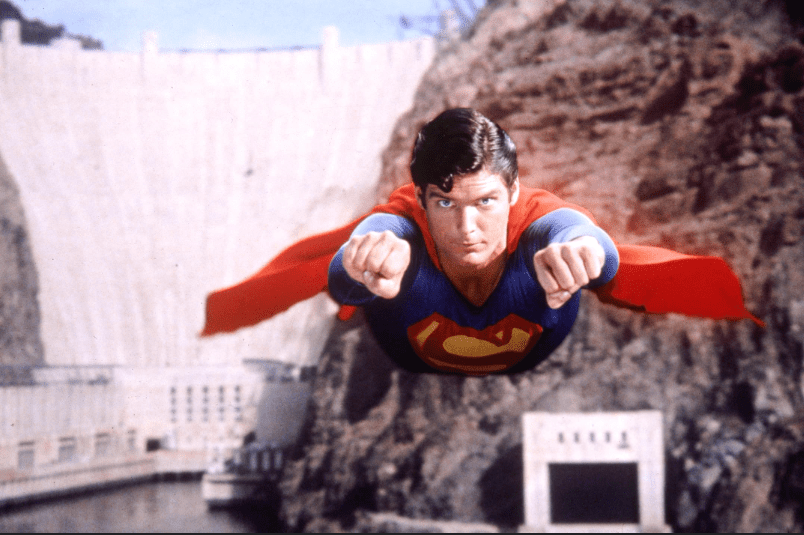
Superman was made in the old Hollywood tradition, playing much like the rousing screen epics that preceded it. Clark Kent’s path to becoming Superman occupies much of the film’s first hour and when he finally does we understand his character completely. Christopher Reeve’s Superman is more than a costume fighting bad guys. He is a personality we get to know and root for. Superman is the classic story of a man born to become something greater. As his adopted father Johnathan Kent (Glenn Ford) puts it, he was put on this Earth for a reason. Clark Kent follows in the tradition of screen epics like Ben-Hur or Gone with the Wind where the situation and conflict serve the characters rather than the other way around. The movie is not a spectacle of human action figures playing out a scenario, but the story of a man growing into his potential.

The film opens on the planet Krypton, a place millions of light years from Earth where crystalline architecture is all the rave and the people wear glowing costumes that anticipate the special effects of Tron. The planet is about to be fatally engulfed in a solar flare, and Superman’s father, Jor-El (Marlon Brando), tries to warn Krypton’s elder council that they need to evacuate. They don’t believe him, so he builds a small spacecraft in secret to send his infant son to Earth where he will be safe.
When he gets there he is found by a childless couple in Kansas, the Kents, who adopt him. It is Johnathan Kent’s values that make Clark Kent the man he becomes. During those years as a teenager on the Kent family farm, Clark learns that his powers are a gift to help others weaker than himself and that selflessness and restraint are the highest obligation of the strong.
Clark Kent’s rearing in Smallville, Kansas make for the strongest scenes in the movie. Everything that Superman believes in and is sent to protect are established there in rural Americana – a setting of open wheat fields and country roads, gorgeously shot in wide-angles.
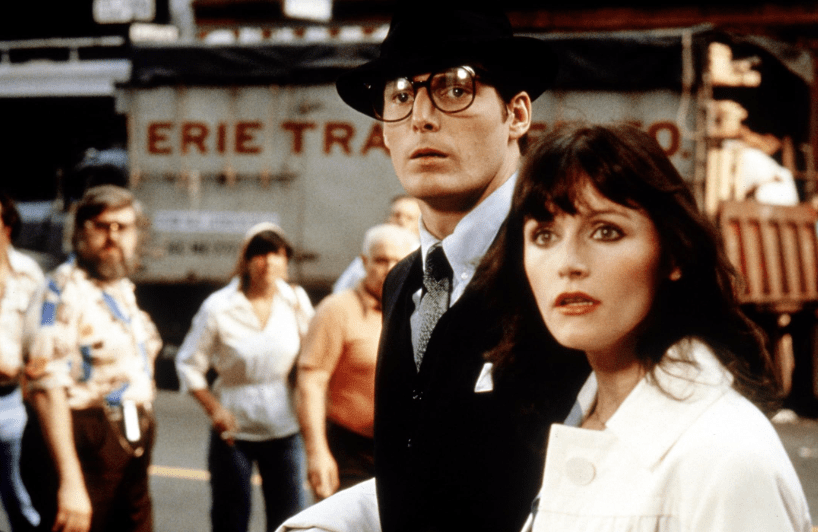
After Pa Kent dies of a heart attack, Clark learns more about his history and where he comes from. He decides to move to the big city of Metropolis and gets a job as a writer for the Daily Planet. It is here that his persona as Clark Kent fully takes off. Christopher Reeve is a great Superman, but he is an even better Clark Kent. He presents himself as bumbling and clumsy as well as a trifle naive. Clark Kent largely represents the people that Superman is there to protect. Like them, Clark is played as easily taken advantage of, but has something in him that kinder souls want to shelter and keep out of trouble. In a way, the alter ego of Clark Kent is closer to who Superman truly is. He abhors violence and has a love of justice and peace. He is the sort of man who just wants everyone to get along. By contrast Bruce Wayne is more of a mask that hides his true identity as Batman. In Superman the reverse is true, with Clark Kent being the true core of his being, while Superman is his mask.

At the Daily Planet he meets a reporter named Lois Lane (Margot Kidder) who finds Clark affable enough, but cannot abide his apparent lack of spine. When they are mugged in an alleyway, Clark insists in non-resistance, but Lois scoffs and tries to struggle with their assailant. The mugger’s gun goes off which Clark surreptitiously catches with his hand, but then pretends to faint. Lois not seeing the trick and assuming the mugger only missed, is disgusted.
Clark is infatuated with Lois, but she has her eyes on Superman after he rescues her from a near accident in a helicopter. On top of this Superman has already begun to make a reputation for himself stopping heists, apprehending criminals, and rescuing cats stuck in trees. She gets an opportunity to interview Superman for the paper and their sexual chemistry is clear from the start. The interaction is flirtatious and Lois finds herself stumbling into innuendos when she tries to speak. She and everyone else doesn’t see what the audience sees, which is that Superman is just Clark Kent with his glasses off. It’s the sort of logical discrepancy that I would call an elephant in the room if it wasn’t for all of the jokes that have been made of it over the years. It’s more of a dead horse than an elephant really.

But, no good superhero movie is lacking in a good villain. In Lex Luthor (Gene Hackman) we get a character who is everything that Superman is not. Luthor is greedy, selfish, indifferent to the suffering of others, and always ready with an insult. His first bit of dialogue is “It’s a wonder that brain can generate enough power to keep those legs moving,” referring to his henchman, Otis (Ned Beatty). Otis follows the old tradition of super-villain henchman. He’s comically dimwitted and so incompetent that Luthor’s continual employment of him raises a lot of questions. I wouldn’t trust this guy to lay down and sleep without screwing it up somehow. Perhaps Otis is a relative or something.
Hackman’s performance as Luthor makes for the greatest super-hero villain of all time. His narcissism and constant sarcasm make him infinitely quotable. Luthor lives in awe of himself while holding everyone else around him in disdain. He is the sort of man who has no idols and heroes more impressive to him than himself. His personality is more of perpetual bemusement than anything threatening. He doesn’t wax philosophical or justify his wickedness with dark monologues. Nor is he governed by hate or revenge. He is more like Jabba the Hutt or Ooogie-Boogie. He is aware of what he is and he doesn’t care.
Lex Luthor has a wild scheme to use navy missiles to target the San Andreas fault line. By destroying much of the West coast he hopes to corner the real estate market in what remains. The only thing standing in his way is Superman who is naturally outraged by the sheer loss of life Luthor’s plan entails. Superman asks, “Is that how you get your kicks? Planning for the death of millions of people?” Luthor responds, “No. Causing the deaths of millions of people.” What a guy!

The climax is satisfying and exciting with an ending that sets the stage for more adventures to come fighting Luthor and worse. Superman’s father, Jor-El, left him with instructions to not interfere with human history. During the final act Superman is faced with the consequences of this command and the decision he makes at the end is decidedly un-Kryptonian, but it is certainly a human one.

Superman is the best of the superhero movies and it is the best-looking. It was the most expensive movie made up to that point, and it was done when CGI was in its infancy. Instead of relying on its special effects (still impressive for the time) it is shot in the classic Hollywood tradition of wide-angle lenses and beautiful natural cinematography sadly missed in blockbuster movies of today. It’s paced like a real movie, focusing on the growth of its main character and performed with convincing dramatic effect.
Superhero movies nowadays are often made with their scripts being the last thing on the filmmakers’ minds. They go into production with little more than a planned set of story beats that get hammered out in the course of their making. When a film of this genre starts life with a tight script, it results in something special. Something not typically seen in superhero movies. It results in an actual movie.

Director: Richard Donner
Writers: Jerry Siegel, Joe Shuster, Mario Puzo, David Newman, Leslie Newman, Robert Benton, Tom Mankiewicz
Cast: Marlon Brando (Jor-El), Gene Hackman (Lex Luthor), Christopher Reeve (Clark Kent/Superman), Ned Beatty (Otis), Jackie Cooper (Perry White), Glenn Ford (Pa Kent), Margot Kidder (Lois Lane), Valerie Perrine (Eve Teschmacher) Phyllis Thaxter (Ma Kent), Susannah York (Lara), Jeff East (Young Clark Kent), Marc McClure (Jimmy Olsen)
Producers: Charles Greenlaw, Ilya Salkind, Pierre Spengler, Richard Lester, Alexander Salkind
Composer: John Williams
Cinematographer: Geoffrey Unsworth
Editors: Stuart Baird, Michael Ellis

The Straight Story (1999)

3.5/4 stars

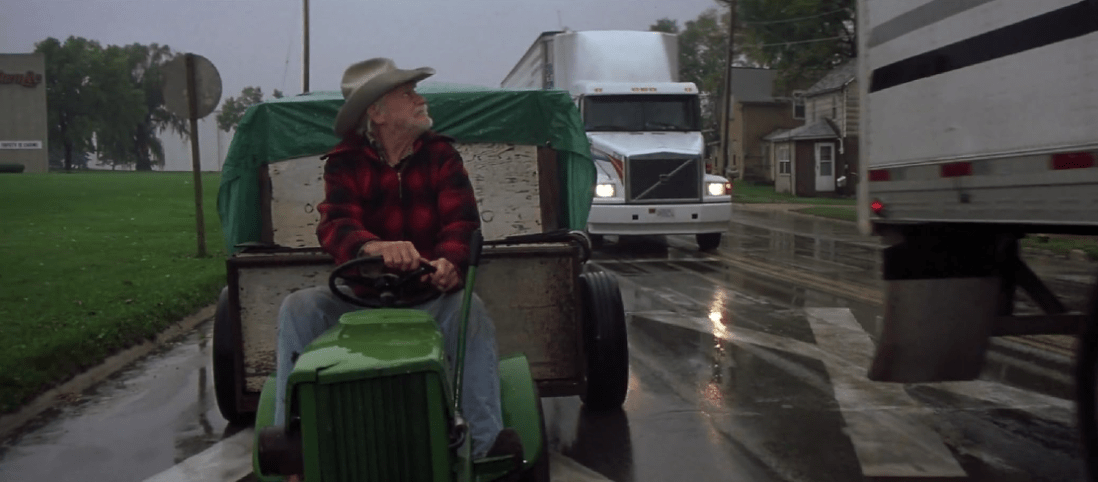
In the Summer of 1994 74 year-old Alvin Straight drove 240 miles from Laurens, Iowa to Blue River, Wisconsin on a riding mower. His older brother Henry had suffered a stroke and Alvin, too old to hold a driver’s license, decided to make the trip to see him on his John Deere. At 5 miles an hour the trip took six weeks. To sustain himself he packed the mower’s trailer with food, camping gear, clothes, and other amenities; while camping out in corn fields and woods at night.
Why an ailing, elderly man with diabetes and emphysema would do this is not a mystery to me as a native of the Midwest. The old timers in my neck of the woods are notoriously stubborn when it comes to self-preservation, but to them family is everything. They are also always working. After retirement they often take a new lease on life, buying farms, renting properties, or pouring their remaining time onto their vehicles. I’ve met a lot of men like Alvin. None of them did what he did, but they are all quite capable of it and they most certainly would do it if a similar situation arose.

David Lynch’s The Straight Story perfectly captures the rural Midwestern spirit. As a Michigan native much of the imagery and personalities that the film portrays are familiar to me. People in the Midwest, especially among the quiet life of retirees, are very much like the people in this movie. Shot on location, The Straight Story accurately presents in its road movie format the long stretches of road along cornfields that sit between towns. Not on a lawn mower, of course, but I have been on many such trips.

I am uncertain what drew David Lynch, a filmmaker known for his surrealism and fascination with body horror, to this story. But, by taking on the project the film’s title takes on a double meaning. The Straight Story naturally refers to the story of Alvin Straight, but it is also out of all of Lynch’s films the most straight story of his career. What typically characterizes his work are unreliable narrators, non-sequential narratives, and bizarre imagery. None of these elements, however, are here and, what’s more, it is the only Lynch film to be rated G and to be distributed by the Walt Disney Company. To the more adolescent David Lynch fans the film might come across as saccharine and hokey. But, to me, the film is just another example of Lynch’s fascination with human behavior and how it connects to the mystery of what life is about and what it means. Unlike his other films it asks no questions. Instead its characters have either since come up with answers of their own or have given up bothering with the questions at all. Their lives have been lived already. Alvin and the other characters in the movie are not seeking anymore, but only doing. Art is often about making sense out of the human experience. But, it is nice to have a change of pace with a movie that is about simple, plain old-fashioned living and carrying the values we learn without constantly questioning them. Questioning values is a young man’s game. The Straight Story, I suspect, speaks most to those who have gone on long enough to have their lives and values figured out. The Straight Story speaks to young and old alike, but it is to the old that it is chiefly directed.

After Alvin Straight (Richard Farnsworth) suffers a fall in his home, his doctor tells him he has to make serious life-style changes if he is to regain control of his health. Like any rural Midwesterner of his generation he decides to ignore the advice. The sole compromise he makes for the doctor is agreeing to equip a second cane.
Alvin lives with his daughter, Rose (Sissy Spacek) who is understandably concerned about her father’s well-being. She has a severe learning disability that leaves her with the mentality of a ten year-old. To Alvin, calling her slow is far from the mark and he insists that she has shown a capacity for self-sufficiency that others do not understand. Due to her issues the State had taken her children away from her after one of them was injured in a house fire while being babysat. The incident was not her fault and she had nothing to do with it. But, the malicious disregard for the mentally ill and the itchy trigger finger people have for calling Child Protective Services is unfortunately systemic in this country and her voice was never heard. Alvin says not a day goes by when she is not pining for her children. Rose, like Alvin, has past trauma that they bear quietly in the present. It makes them who they are, but the trauma is long in the past and what is left are the lasting effects. Past trauma is often dealt with dramatically in movies. A lot of screaming, crying, slamming of fists, heart-wrenching dialogue, and other bits of Oscar bait. But, in reality people, like the people in this movie, cope with their past trauma quietly and it shapes their character. Neither Rose nor Alvin would be the people they are today without it, but the trauma is not the crux of the film’s story.

Alvin gets more bad news when he finds out that his brother (Harry Dean Stanton) has had a stroke. They had not spoken in years after they had had a spat, but the combination of his health problems and those of his brother gives Alvin a sense of borrowed time. Without being able to drive a car, he hooks a trailer to his John Deere mower and begins a six-week journey to meet his brother and hopefully make amends.

The journey is a celebration of rural and small town Americana. The odyssey is a visual feast of stretches of road, country fields, abandoned barns, and bonfires in woody glades. He passes through a modest number of small Midwestern towns where people gather and stare. The people he meets along the way amount to small episodes where his values and eccentric actions touch them in some significant way. Family is a big part of his value system and many of the folks he encounters aren’t quite there yet, but their meetings with him leave them a lot to think about. In Alvin is found something sweet and wholesome that to some may come across as trite. The triteness is an illusion, though, because for Alvin what he says is very much real and true to life. These encounters frequently put the film at risk of uttering a false note, but I detect nothing disingenuous in the movie’s messages. Even when he encourages a teen runaway to go back home or lectures a couple of bickering brothers about loving one’s family, The Straight Story, never rings false like a Hallmark TV movie. The film proves that jadedness is not a necessary quality of being real, and that wholesome values do not have to be faked in drama.

The real life Alvin Straight never did what he did to garner praise or fame. In fact, he never was much comfortable with the media attention and he had declined offers to appear on Leno and Letterman. I doubt he gave it much thought that driving 240 miles on a lawn mower was unusual. He was just a man like anybody else. A man with an ailing brother he wanted to see and the mower was the only means to get there. He was tenacious, but not special; and that is apparently how he wanted to be remembered.
His story could easily have been the subject of a TV movie – come and gone, and then forgotten. I am glad it was not. By giving it a theatrical release and under the guidance of a talented filmmaker it’s inspiring message is more broadly accessible than something aired on a Friday night. The Straight Story’s radical idea that wholesome values and being real do not have to be exclusive is a message people need to hear more and more.

Director: David Lynch
Writers: John Roach, Mary Sweeney
Cast: Richard Farnsworth (Alvin Straight), Sissy Spacek (Rose Straight), Everitt McGill (Tom), Harry Dean Stanton (Lyle Straight)
Producers: Pierre Edelman, Neal Edelstein, Michael Polaire, Mary Sweeney
Composer: Angelo Badalamenti
Cinematographer: Freddie Francis
Editor: Mary Sweeney

Joker (2019)

3.5/4 stars

Joker is a movie that rarely shows a moment of compassion or kindness. And, yet, compassion is what the film is about. The absence of it creates a vacuum that emphasizes why kindness and warmth are so important. The pervasive images of cruelty and humiliation on display express the film’s ideals by negative example. The lasting impression when the movie is over is powerful.

When I first saw Todd Phillips’ Joker in theaters back in 2019 I had a strong negative reaction to it. I had felt at the time that the film was being disingenuous and that it was catering to the depressive instincts of angry young men. I’m sure you know the type. They quote Nietzsche, wear black, listen to Nine Inch Nails, and casually say life is terrible on principle. But, seven years later, viewing the film a second time, I think I understand the movie a little more. Like Spike Lee’s Do the Right Thing it shows a series of conditions that escalate to terrible acts of violence. It grates against black and white thinking that patently condemns these events without considering the importance of recognizing their causes.

Arthur Fleck (Joaquin Phoenix) is a severely mentally ill man who has unrealistic dreams of becoming a famous comedian. He lives a lonely existence where the only figure in his life sympathetic toward him is his ailing mother Penny (Frances Conroy), But, she is oblivious to the severity of his problems, suffering from debilitating mental issues and delusions herself. She frequently says he was always such a happy boy even though he is far from happy and likely never was. He is on seven different medications and tells his social worker “You just ask the same questions every week. How’s your job? Are you having any negative thoughts? All I have are negative thoughts.”
Depression is a real bitch and combining it in a cocktail of emotional immaturity, cognitive difficulties, and social isolation is a recipe for disaster. He and his mother live well below the fringes of poverty which forces him to eke out a living in his condition. His job outsources him as a party clown, but his social awkwardness and odd behavior elicits scorn from his boss and coworkers. A part of his condition is a nervous tick where he flies into fits of uncontrollable laughter regardless of what he is feeling at the time. Despite his attempts to explain the condition he only gets mocked and he is frequently asked what he finds so funny. He is unable to connect or bond with anyone. Arthur looks wishfully on as others socialize and engage with one another, but only becomes off putting when he tries to do the same. He comforts himself with childish fantasies of positive social interactions among people he likes and admires. But, in his real life the only time people give him a second look is usually to say something mean.
The isolation he endures is the key to his slow descent into madness. Mental illness and isolation go hand in hand and it gives the sufferer a unique perspective on people. For most of us we can generally separate the mean people from the kind ones; the good from the bad. But, for people with severe mental illness this is harder to do since neither the good people nor the bad people seem capable of treating them very well. The rotten eggs, of course, take every opportunity to heap cruelty and bullying on mentally ill victims. But, there is also a profound failing among more upright people that cuts even deeper. Sidelong glances of irritation, limited empathy, refusing to listen or understand, and social ostracizing are inflicted on the mentally ill by the upright and wicked alike. An impression is given to men like Arthur Fleck that there is a free pass for otherwise nice people to be dismissive and unkind to them because no one really likes them anyway. It’s a road to resentment and painful consequences that often could have been evaded by one encouraging word at the right time that never came.
I think it is these themes that created the polarizing reactions the film got when it came out. The films plays like a dirge for all the school shooters and impassioned murderers who have plagued our recent history. In the wake of a terrible crime it is easy to justify hatred for the perpetrator given the severity of what they had done. And offering them any sympathy or understanding is a big no-no. But, no one wants to acknowledge the onus that is on people who don’t do those things to prevent them. I do try to avoid commenting on specific current social and political issues on this blog so without naming any names I am going to say that I have heard interviews with school shooting survivors who practically boast of the bullying they inflicted on the shooter prior to the event and justify it by what the killer had done. It is hard to blame them after what they had been through, though. There is no denying that what was done is terrible and there is especially no denying that the actions were morally egregious and unjustifiable. But, there is something ugly about normalizing ostracizing the mentally ill on this basis. The disproportion of their crimes too often leaves us unable to recognize that something morally wrong was being done to them regularly before they snapped. And it is these points that made a lot of people angry when they saw the movie. The filmmakers had something to say that many of us don’t want to hear or deal with. There is a reason that the now infamous Aurora, Illinois theater refused to show the film at all after the murders that occurred there during a showing of The Dark Knight Rises in 2012.

The film starts with Arthur working as a street clown twirling a sign to advertise a small business. A group of teenaged thugs steal the sign and beat him up when he tries to chase them down. What follows is one emotional betrayal after another. His boss is angry over the loss of the sign and doesn’t care that he was injured. The social worker he talks to spends their hour staring at him not listening to a word he says. She asks the minimal textbook questions she is required to ask and does little more. Any attempt he makes to express his emotional state usually ends up getting talked over by others who get angry and annoyed with him. They don’t hide their scorn and Arthur is not capable of understanding why he is being treated this way all the time. When pushed to frustration people scream at him for acting out. He writes in his diary, “The worst thing about mental illness is people expect you to behave as if you don’t.” In reality what they expect is for him to not defend himself. And he is swiftly villainised when he does. On a subway a group of three college aged youths begin to harass him and they physically abuse him when he tries to get away. He ends up murdering all three and flees the scene. Gotham City’s reaction is split. The privileged and powers that be condemn the shooting and characterize the dead students as innocent victims whose lives and potential were taken away by a maniac. Among the lower echelons there is a different sentiment. There is widespread sympathy given to Arthur, still currently unidentified as the killer, that galvanizes mass protests against the city government. The murders become a controversial talking point and the scenes eerily seem to anticipate the actions of Luigi Mangione a few years later.

Shortly after the killings Arthur goes to a local comedy club in the hopes of making it big with his act. His performance, however, is a colossal bomb. His laughing condition comes out in full force and he is unable to make any of the jokes land. The footage of his performance becomes viral after clips of it is shown on a talk show hosted by Murray Franklin (Robert DeNiro). Prior to this both Arthur and his mother were fans of Murray and Arthur fantasizes of impressing him someday. But seeing Murray Franklin publicly mock him and his comedy act on live television sends him spiraling deeper into depression and anger. Arthur’s issues escalate continually and he becomes a ticking timebomb. While he is subjected to abuse every day he is met with new tragedies that leaves his ability to cope any further untenable. His mother suffers a stroke and is hospitalized. It is, in fact, in his mother’s hospital room that he sees the episode of Murray mocking him. City budget cuts the funding to social programs leaving him no longer with a social worker and without any further access to his medication. The final nail in the coffin for his mental health is when he discovers revelations about his childhood and identity that steals away any last vestige of the things he values and cares about. Now the only thing that seems to matter are the ongoing riots that he inadvertently started. Outside there are rioters in clown masks who view his actions as that of some unknown local hero. He becomes a perverse symbol for the downtrodden and with that he and society part company for good. The result is violent tragedy and leaving Arthur behind to become the Joker is the only thing that makes sense to him anymore.

Joaquin Phoenix’s performance is spellbinding. His portrayal of a sociopath spiraling out of control is played without gusto and hamfistedness. He is far removed from the wide eyed silliness of Norma Desmond in Sunset Boulevard or the madcap wild insanity of characters like Renfield in Dracula or even the Joker in other media. He is more reminiscent of Travis Bickle from Taxi Driver who happens to be a primary inspiration for the film. He captures the vulnerability and loneliness of real life sociopaths so well to the point that watching him becomes uncomfortable. His physical posture and movements are nervous and uncertain and he emotes through affectation rather than responding naturally which is not uncommon to people with his conditions. What Phoenix accomplished and what earned him his Academy Award for the performance is a perfect character study of a person with mental problems slowly losing his grip on living normally. The systemic problems that wind him up end in events that, while violent and tragic, are not unexpected.

This movie sees the second acting win at the Oscars for an actor playing the Joker (first was Heath Ledger in The Dark Knight) and it is clear to me that the role of Joker has become something coveted. It’s a role like those of characters from Dickens or Shakespeare that gives an actor an opportunity to interpret a literary character who is challenging and complicated to pull off. After films like Logan and The Dark Knight trilogy somewhat of a trend of treating comic books as serious subjects has come about and it is no wonder we are seeing more serious actors pursue these sorts of roles.

Some critics of the film have gone so far as to label the movie dangerous. There was a genuine impression among a lot of people that the movie would incite a riot. To many it seems that Joker is a message to others who see themselves in Arthur Fleck that their anger and hatred for society is permissible. But the movie isn’t talking to them. It is speaking to those who are more like the people around him. It speaks to churchgoers who after Sunday services cuss out teenagers in drive-thrus. It speaks to decent folk who snub and dismiss weirdos in elevators trying to talk to them who smell bad. It speaks to family men who regale their loved ones with funny anecdotes of some crazy person they met at the bus stop. it speaks to honor roll students who make sure undesirables don’t eat with them. The film tells us that evil doesn’t have to be violent. Sometimes evil is just failing to see another human being when they sit right next to us.

Director: Todd Phillips
Writers: Todd Philips, Scott Silver
Cast: Joaquin Phoenix (Arthur Fleck), Robert DeNiro (Murray Franklin), Zazie Beetz (Sophie Dumond), Frances Conroy (Penny Fleck), Brett Cullen (Thomas Wayne)
Producers: Richard Baratta, Bruce Berman, Jason Cloth, Bradley Cooper, Joseph Garner, Aaron L. Gilbert, Walter Hamada, Anjay Nagpal, Todd Phillips, Emma Tillinger Koskoff, Michael E. Uslan, David Webb)
Composer: Hildur Guðnadóttir
Cinematographer: Lawrence Sher
Editor: Jeff Groth

Batman: The Movie (1966)

3/4 stars

I have heard it said that the 1960’s Batman television series existed in a more innocent time. I suspect that people say this to offer an explanation for the campy, childlike flavor of movies and TV in those days. But, I don’t think this is precisely true. The 60’s were no more innocent a time than the 2020s, but what made them different was the counterweight that superhero stories offered against the world, scary as it was at the time and continues to be today.
The first superheroes came on the scene in the late 30s when Hitler was rising in Europe, and their popularity continued through World War II, the counter-culture revolutions, the Cuban missile crisis, Vietnam, the Kennedy assassination, and Watergate. Hardly innocent times.
Instead the difference between Batman (1966) and the modern superheroes is not the times, but how they reacted to them. They are more cynical and reflective now, presenting the world as it really is and demonstrating morality as beleaguered and somewhat of a lonely companion. To stand against evil they must be tough, compromising, and angry.
But, in the Silver Age of comics books and comic book movies, people were more ready to accept goodness as an absolute that was capable of enduring scorn. It was a time when presidents and world leaders were respected figures, the police were more trusted, and antiheroes weren’t admired. It was not the times that changed. It was people who did.

The 1966 Batman movie starring Adam West was a product of the earlier time. This Batman (West) gets his moral values from Sesame Street. He is the sort who disapproves of gambling, believes in the potential for good in everyone, helps old ladies cross the street, goes to church on Sunday, and supports the local police. He is all about law and order, and even denies in one scene to being a vigilante. It’s explained that he and Robin, the Boy Wonder (Burt Ward) are formally deputized agents by the Gotham PD.

After narrowly avoiding a mishap involving a fake yacht and an exploding shark (a detailed explanation wouldn’t make it less ridiculous, I promise) he and Robin uncover a sinister plot to take over the entire world. Such a fiendish scheme, of course, could only involve the work of super-criminals and Commissioner Gordon (Neil Hamilton) discovers that not one, but four super-criminals are currently at large. With Batman’s superior detective skills (AKA improbably correct guesses a propos of nothing whatsoever) he realizes that all four of them must be responsible.
The four dastardly villains now working together are The Penguin (Burgess Meredith), The Joker (Cesar Romero), The Riddler (Frank Gorshin), and Catwoman (Lee Meriwether, replacing TV actress Julie Newmar who was recovering from a back injury at the time).
The movie juggles the four villains remarkably well during the 105-minute length, by simply keeping them together in the same room most of the time. They spend the majority of the movie bickering, laughing together, scheming excitedly, and then laughing some more. Singly on television or all together as in here, these characters are always a ton of fun. Meredith and Gorshin are my favorite actors to play Penguin and Riddler and I think a lot of it is due to the sheer level of enjoyment they have playing their roles. Riddler is constantly excited and laughing in high-pitched giggles. He is the most physical of the four, moving about like he has extreme ADHD. Penguin is laughably mean, squawking about and full of pure malice as he barks orders and complains on a regular basis. Meredith completely throws himself into the role and it is clear watching him on TV and in the movie that he absolutely loves playing it.
Joker contributes the least of all of them, generally going along with the plans and offering a funny comment here and there. Romero plays Joker like he is just happy to be here for the simple mischief of the whole thing, and to me that fits the character just fine; but he sadly gets a bit sidelined by the Riddler’s riddling and the Penguin’s masterminding.
Catwoman, however, plays a more central role this time around. She seduces Bruce Wayne by pretending to be a Russian journalist named Kitka in order to set him up for kidnapping. The wily scheme works and the evildoers wait for Batman to arrive to rescue him in order to trap and kill him. For obvious reasons this doesn’t work out very well and Wayne ends up escaping on his own. Meriwether’s role is fairly straightforward. She struts about in the catsuit all lithesome and seductive while moaning on occasion like a cat in heat. When she is playing Kitka it’s only a matter of silky tones in a fake accent and looking pretty. Catwoman’s eventual rise as a feminist icon is still a generation away.
Still, the combination of all four of them in one film pays off, and it shows that having multiple villains in a superhero movie can be done effectively if done right. A lot of other superhero flicks have struggled with this despite longer runtimes and less characters to juggle.

The super-criminals’ super-scheme to take over the world ultimately leads them to the United World Headquarters (an obvious stand-in for the UN) where representatives of several countries argue about world peace. The Penguin uses a diabolical machine to turn them into dust and it is up to the Dynamic Duo to reclaim the dust and restore the representatives to their original state.
The members of the United World Headquarters are only vaguely characterized. The hows and whys of world peace are not articulated, but is only spoken of in worshipful idealistic tones. There is a sense of moral naivete that is deliberate. Batman lives in a world where the buck stops at right and wrong and any thought of costs and necessary compromises are wholly alien to his philosophy. To him a spade is a spade. But, the Joker is wild and so are his companions. The nefarious villains are similarly single-minded in their badness. Without a touch of ambiguity they seem to be fully aware that they are bad people. The motivations of greed are only secondary to their childish desire to be a foil to Batman who is every bit as outlandish as they are. Without Batman these people would likely just go get desk jobs and give up on crime altogether because it wasn’t fun anymore. The 60s Batman show and the movie play more like an elaborate game of cops and robbers with each playing their respective roles with gusto.

Batman: The Movie is a highly innocent kind of film built up on the values of Dick and Jane and Mr. Rogers. As a straight-up adaptation of the TV series rather than an interpretation of the comics, it may very well be the most true to form Batman movie of all time. The comical tongue-in-cheek style adds to its charm and it is flawless in its intentions. It’s message of unambiguous morality is free and clear while it persistently goofs off. The gadgets are absurdly specific and convenient, the clue-finding is brainlessly non-sequitur, the characters are larger than life and costumed to match, and the action scenes are straight out of cartoons. The movie does more than capture the innocent moralizing of the Silver Age comic books. It also captures the fun.

Director: Leslie H. Martinson
Writers: Lorenzo Semple, Jr; Bob Kane, William Dozier
Cast: Adam West (Batman/Bruce Wayne), Burt Ward (Robin/Dick Grayson), Lee Meriwether (The Catwoman/Kitka), Cesar Romero (The Joker), Burgess Meredith (The Penguin), Frank Gorshin (The Riddler), Alan Napier (Alfred), Neil Hamilton (Commissioner Gordon), Stafford Repp (Chief O’Hara), Madge Blake (Aunt Harriet Cooper), Reginald Denny (Commodore Schmidlapp)
Producers: William Dozier, Charles B. Fitzsimons
Composer: Nelson Riddle
Cinematography: Howard Schwartz
Editor: Harry Gerstad

Batman & Robin (1997)

1.5/4 stars

Reportedly, before every shoot while filming Batman & Robin, director Joel Schumacher would remind the cast and crew to “remember, this is a cartoon.” Perhaps he should have said toy commercial. It is certainly with toys in mind that we see throughout the movie’s two hour runtime frequent costume changes, new gadgets, vehicles, and no less than three new villains. Even the characters seem to know they are in a two-hour toy commercial. Poison Ivy (Uma Thurman) mentions her own action figure in a scene where Batman tries to take her on only to find himself in the grips of Bane (sold separately).
This is a shameless picture with only one clear goal behind its making, and it is not to tell a story. Selling toys has always been an important consideration when making movies like this, but none are as cynical about it. The movie is practically a convention, every shot serving to show off the latest products at your local Toys-R-Us. In the climactic battle during the final act, Batman (George Clooney), Robin (Chris O’Donnell), and newcomer Batgirl (Alicia Silverstone) manage one last costume change before appearing to save the day. There is a sense of urgency in the previous scene that fails to justify this. But, remember, this is a toy commercial.

Schumacher’s claim that Batman & Robin is a cartoon is not entirely unjustified. It certainly explains the movie’s tone. The comical villains, slapstick violence, and gaudy visuals of Batman Forever are taken to the max here with even the gothic undertones from before now a thing of the past. Clooney brings none of the broodiness of Bruce Wayne to the character, instead playing the part like an older brother or someone’s cool uncle. As Batman, he is hardly intimidating. The role is written more like Adam West; falling into one obvious trap after another, making improbable public appearances for charity events, and never without the right gadget to get out of any mess.
Also reminiscent of the 60’s Batman show is the film’s set design. They are shot with the same slanted angles and the same neon shades of lighting that only highlight their fakeness. The only thing missing are all the BIFFs, POPs, and POWs splashing the screen during the many fight scenes in the movie.

Batman & Robin’s story is really just an after thought. Surely, it is enough to say that the new villains are up to something villainous and Batman must stop them. Knowing that the evil Mr. Freeze (Arnold Schwarzenegger) wants to freeze the entire world with a ray gun or that Poison Ivy wants to reseed the planet with man-eating plants is not that important. You could watch this movie on mute and lose nothing. There’s a simple formula of baddies making an appearance and Batman and friends fighting them that requires no introduction. Even the movie’s subplot about Alfred (Michael Gough) being ill and needing a treatment is sufficiently told through visual cues that would make a lack of sound no challenge to understand.
While Alfred is suffering from a seemingly terminal ailment a new character is brought to Wayne Manor through Alfred’s niece, Barbara. The movie’s dialogue tells us she has come all the way from England to visit her uncle and that she is a bit of a rebel. I’ll have to just take the film’s word for it. Alicia Silverstone makes no attempt to affect an English dialect and she is shown to ride motorbikes fairly well. She is otherwise played with no personality at all and I suspect that somewhere in the movie’s development she was intended to recall Robin’s youthfulness in Batman Forever. But these themes, had they ever been present at all, must have found themselves on the cutting room floor.
Chris O’Donnell, in the meantime, brings no maturity to the Robin character at all; but spends the majority of the movie arguing and whining to Batman about how he feels like he isn’t being treated like an equal. To me, this presents a missed opportunity for Robin to take Batgirl under his wing and counter her brashness with memories of his own. But, Barbara is left by herself throughout most of the movie, while Robin and Batman bicker in a directionless subplot that ends abruptly when they realize their movie is reaching its climax.
Poison Ivy creates a sort of love triangle between them thanks to powerful pheromones she blows around like a magical pixie dust. Robin becomes convinced that Batman is jealous of him because she is in love with him instead of Batman. Batman, reasonably tries to remind him that Ivy is in league with Mr. Freeze and that her manipulative behavior is obvious, but Robin refuses to listen.
Mr. Freeze, another potential action figure, is slightly more interesting. Like Penguin in Batman Returns, he is presented as a tragic figure; but this time he is much more sympathetic, where Penguin was merely repulsive. The movie explains that Freeze’s wife is kept perpetually frozen to halt the progress of an incurable disease. This is said to be the same disease affecting Alfred, but far more advanced. Freeze needs special gems to power the machinery he uses to research and hopefully discover a cure. After an accident leaves him unable to live outside of sub-zero temperatures, he builds himself a special suit to keep himself cold and turns to a live of crime to steal more gems. By the end, Mr. Freeze is given more empathy than Penguin who was treated as irredeemable. It’s a not a deep story by any means, and all the schemings and rushings to save the day are just a thin veil to disguise the movie’s real agenda. Remember, this is a toy commercial.

Turning a beloved franchise into a big toy commercial is unforgivable, and as such, I had low expectations for the movie to have much of a story. But, as a marketing gimmick, I would have hoped for a better display of special effects. Instead, Warner Brothers, sells its toys with one of the worst looking Batman movies of all time. The sets are garish and cheap with even icicles appearing to be made of rubber at times. Outside of the sets, blue screen is used unconvincingly. The Batmobile and Robin’s bike ride against CG backgrounds, thick matte lines and all, like images poorly pasted over on Photoshop.
Batman & Robin has all the appearances of a movie that was cobbled together quickly with little thought. The story and characters play like Saturday morning cartoons with acting and special effects too shoddy to even properly enjoy it as mindless popcorn entertainment. Maybe the film would have been easier to stomach had it actually been a cartoon. Perhaps, collecting the toys is a better investment. I wonder how much they are going for on Ebay nowadays.

Director: Joel Schumacher
Writers: Bob Kane, Akiva Goldsman
Cast: Arnold Schwarzenegger (Mr. Freeze/Dr. Victor Fries), George Clooney (Batman/Bruce Wayne), Chris O’Donnell (Robin/Dick Grayson), Uma Thurman (Poison Ivy/Dr. Pamela Isley), Alicia Silverstone (Batgirl/Barbara Wilson), Michael Gough (Alfred Pennyworth), Pat Hingle (Commissioner Gordon)
Producers: Mitchell Dauterive, William M. Elvin, Peter Macgregor-Scott, Benjamin Melniker, Michael E. Uslan
Composer: Elliot Goldenthal
Cinematographer: Stephen Goldblatt
Editors: Mark Stevens, Dennis Virkler

Daisy (1964)

4/4 stars

“We must love one another or die” – W. H. Auden, “September 1, 1939”

On the evening of September 7, 1964 about a hundred million Americans sat down to watch TV. It’s a Monday night and David and Bathsheba (1951) is the NBC Monday Movie. It’s 7:30, a school night; their children are tucked safely in bed. The adults settle in, a bowl of popcorn between them, and they relax. It’s another election year and a lot is being talked about. The country is still reeling from Kennedy’s assassination a year ago, the Vietnam war is as unpopular as ever, and the names Johnson and Goldwater are on everyone’s lips. Nuclear weapons are on a lot of people’s minds. The movie starts. It’s an old one, from a different time. It’s biblical, it’s wholesome. It’s enough to sit down and enjoy while taking their minds off the troubling times for awhile. Their world is changing a lot. The Civil Rights Act had been passed only a few months ago, eliciting a lot of joy and a lot of unrest. It’s now 9:50 at night. The movie is nearly over, the bowl of popcorn is empty. Gregory Peck and Susan Hayward, glamorous but living in sin, are suffering the consequences of their infidelity. The viewers, enjoying their moment of escapism, see something they did not expect. Something, perhaps, they didn’t want to see. Something that will forever alter the course of the oncoming election. It’s a commercial.

An adorable three year old girl is standing in a field. She is holding a daisy and counting the petals as she pulls them off one by one. She counts as well as most three year olds do. The numbers are out of order and a few are repeated. When she gets to nine the film becomes a still image that zooms into her right eye. The cold, somber voice of a man counts down from ten and the mushroom cloud of a nuclear explosion fills the screen. Acting President and nominee for the Democratic Party, Lyndon B. Johnson’s voice speaks over the footage: “These are the stakes! To make a world in which all of God’s children can live, or to go into the dark. We must either love each other, or we must die.” The ad cuts to a black screen with white letters which read: “Vote for President Johnson on November 3.” Chris Schenkel’s voice finishes off the piece, reading the words and then adding, “The stakes are too high for you to stay home.”

The images are powerful. In the morning the White House’s switchboard will become inundated in calls protesting the ad. Johnson says to his Press Secretary, Bill Moyers, “Jesus Christ, what the hell happened?” When he wins the election in November, his question will be answered.

Propaganda as an art form is a touchy subject. Riefenstahl and Griffith took their hand at it and the results were visually artful, groundbreaking, effective, and ultimately morally reprehensible. Politically-minded Bill Moyers, who commissioned the Daisy ad, and the Doyle Dane Bernbach advertising agency who made it, had motivations no more noble than Riefanstahl’s or Griffith’s, but they appealed on the surface to more noble sentiments. And like the creators of Triumph of the Will and Birth of a Nation, Johnson and Moyers and the times they lived in are now long gone. But, sixty years have given us some distance between Daisy and the political climate that put it on television. It’s images are still powerful and their is something contemporaneous about its emotional effect.

The ad effectively painted Johnson’s opponent, Republican nominee Barry Goldwater, as a warmonger whose open advocacy of nuclear weapons was a short-sighted threat to future civilization. To Goldwater, this was a vicious insult, as he felt that nuclearization was in the interest of American security. I imagine he must have felt that a pro-nuclear stance was a deterrent from foreign threat and he was thinking of the same innocent lives that Johnson was. Like many Republican candidates, from before and since, Goldwater is a practical man, if not a little cold. Cutbacks on social programs were also on his agenda. His message was a strong economy and a strong defense. “In your heart, you know he’s right” was his campaign slogan. A jaded economical use of words punctuates the most successful political ads and it’s hardly shocking that the Johnson campaign shot back with, “In your guts, you know he’s nuts.”

Conversely, Lyndon B. Johnson was a liberal’s liberal. During his presidency he signed the Voting Rights Act of 1965, signed the Fair Housing Act of 1968, declared war on poverty, oversaw the creation of Medicare, lifted immigration restrictions, supported funding for education, and was one of the most environmentally conscious presidents in American history. It was the Vietnam War that was his undoing. Operation Rolling Thunder was hardly a success and the Viet Cong’s own Tet Offensive, while a failure, only further galvanized American sentiment against the war. Johnson suffered in the polls during the latter half of his administration and in 1968 Richard Nixon took office. Lyndon B. Johnson was unable to end the war, and he is best remembered for his championing of the poor and disenfranchised at home than for his foreign policy.

Daisy, which played a large role in Johnson’s election in 1964, only aired once. It was the right decision. Repeated airings would have jaded the audience, dampening its effect. It would have, otherwise, become another “Where’s the Beef?”, subject to parody with its edge dulled to nothing.
But, a generation later, the ad still manages to get under the skin. Its depiction of a child is not unctuous, but far more familiar in its portrayal of childish innocence. She doesn’t whimper or appear sad like a dog in a “adopt-a pet now” commercial, nor does she say anything at all about the scary stuff on the news. By simply being a little girl counting flower petals (badly) the conversation remains firmly between the adults. The imagery suggests that a child shouldn’t even know what a nuclear weapon is, let alone be evaporated by one. Too often, propagandists use children as ventriloquist dummies, giving a child-like take on the puppeteer’s own views. People can see through the act and they resent the manipulation. Instead, the viewers, wrapping up their Monday night movie, saw in her one of their own children, currently safe in bed.

The images remain powerful. In a way, the separation between its original political context and the current times has only enhanced its effect. The simple juxtaposition of a child playing with flowers against the cold calculations of Mankind’s bellicosity contains a message far more universal than its intentions back in 1964. Nuclear weapons are still a problem of today and the powerful still wage war as much as they did in the days of Rameses or Caesar. And children still die because of it. Ukrainian children, Palestinian children, Iranian children, Israeli children, Russian children, and all the rest have something in common with the little girl in Daisy. If I have to explain to the reader what that is then they are a part of the problem. It was someone’s children in 1964 as much as today and as much it will be someone’s children tomorrow. The borders shift, what we call ourselves change, the technology progresses, and old ideas give way to new. But children remain the same. You don’t have to dance on their graves to be evil. All you have to do is not care.

Director: Sidney Myers
Writer: Stanley Lee
Cast: Robert Dryden (Self/countdown voice), Lyndon B. Johnson (self/voice-over), Chris Schenkel (Self/announcer), Monique Corzillius (Little Girl)
Producers: Aaron Ehrlich, Tony Schwartz
Cinematographer: Drummond Drury

n.b: The film is easy to track down and for those interested in viewing it, it can be found anywhere on Youtube and on the ad’s own Wikipedia article.

Batman Forever (1995)

2/4 stars

There are three kinds of Batman. Gothic Batman is the subject of the classic comic books and we see him stoically doing what he does best in the Tim Burton movies and the animated TV series from the 90s. The more introspective Edgelord Batman made popular in Christopher Nolan’s Dark Knight trilogy has been a favorite of comic writer Frank Miller, but largely exists elsewhere in memes. Campy Batman is best represented by Adam West back in the 1960s. Campy Batman’s Gotham City is a colorful world of colorful people where villains prance in clownish costumes and laugh maniacally. They are the sort of baddies who twirl their mustaches, tie damsels to railroad tracks, and scheme to poison the city’s water supply.
Director Joel Schumacher’s Batman Forever is a return to the old tradition of campy Batman, slanted camera angles and all. When Schumacher, taking over for Tim Burton, approached the material he aimed to make a live-action cartoon. For better or worse, he succeeded. As stupid and ridiculous as the movie is, it is everything it intended to be; its flaws by design and really a matter of taste.

A common complaint leveled at it is that it is too campy and too cartoonish. I hold to the opposite view. I believe it isn’t campy and cartoonish enough, and therein lies Batman Forever’s downfall. The heroes, given what they are up against, are too sullen for their own good. Val Kilmer, replacing Michael Keaton, in the role of Bruce Wayne commands no presence, adding nothing interesting to the part. As Batman he is stale, watering the character down to a fighting costume.
Robin, the Boy Wonder is brought in this time around, and if the fans had been waiting patiently through two movies for Batman’s trusted sidekick to finally appear they must have been sadly disappointed. Chris O’Donnell as Dick Grayson (Robin’s alter ego) has none of Burt Ward’s original energy and passion. O’Donnell plays the role as standoffish and angry. His character development is nothing more than a skin-deep paint-by-numbers expression of the old saw “revenge won’t make the pain go away” and “taking a life leads to a dark path.” There is nothing wrong with such messages of course, but no sincere effort is made to convince the audience of their truthfulness. It’s merely said and Robin comes to these conclusions only when the script finally says so.
Batman and Robin generate no charisma whatsoever, all of their energy being sucked into the two lead villains.

The movie opens with the dastardly Two-Face (Tommy Lee Jones) robbing a bank to lure Batman into a trap. He giggles and jumps up and down like a clown, firing machine guns at nothing in particular as police helicopters swarm above. The burnt side of his face is improbably symmetrical in relation to the other side: a purple bit of prosthetic rubber that appears more like a cartoon’s idea of a deformity than anything seen on a real burn victim. His suit is split in a similar fashion; formal and proper on one side and gaudy and colorful on the other. When we see his evil lair later in the film the interior decoration keeps to this pattern. One side looks like the very throne room of hell and the other is pure white and fit for a fairy tea party. His two sexy girlfriends, Sugar and Spice (Drew Barrymore and Debi Mazar) are bedecked to match.
When Batman arrives at the bank robbery, he is joined by Commissioner Gordon (Pat Hingle) and Dr. Chase Meridian (Nicole Kidman). Meridian is a professional parapsychologist who specializes in super-criminals and caped crusaders alike. She doesn’t look much like a psychologist. She stands next to Batman looking like a blonde bombshell, speaking in silky tones and saying nothing more insightful than what can be gleaned from a copy of Psychology Today. She is about as convincing a psychologist as Denise Richards was as a physicist in The World Is Not Enough. Kidman plays the role like a Bond girl. She feigns a professional interest in Batman that masks something more fetishistic.
We later see a love triangle develop between her, Batman, and his secret identity Bruce Wayne. The movie posits a theme where Dr. Meridian’s infatuation with Batman is something girlish and rebellious; her eventual favoring of Wayne being a moment of maturity. She directs her husky-toned flirtations toward both equally, however, and the point is not hammered home that deeply.

After Two-Face escapes he joins forces with The Riddler (Jim Carrey) whose wild performance is the front and center of the whole show. Carrey plays Riddler with no restraint at all. His acting reaches over the top and then goes only higher. He moves like he is cursed to dance forever and he never stops talking. The performance is loud and obnoxious; Carrey mugs the camera, making bizarre faces and dropping pop culture references and bizarre jokes whenever he is on screen, which ends up being a great deal. Jim Carrey has this way of punctuating his words with sharp turns of his head. He does it so much you could make a drinking game out of it. After Batman Forever I’d be fairly plastered. Try doing it while watching The Mask and you would need a new liver.
When we first meet him he is an excitable and neurotic employee of Wayne Enterprises named Edward Nygma who idolizes Bruce Wayne and wants to impress him with a new mind-control device he invented. Wayne’s predictable rejection crushes the already unhinged Nygma’s spirit and he becomes enraged and bitter. It’s probably the lamest super-villain origin story to date, but it fits the material Schumacher presents.
As Riddler he uses his mind control device to read the minds of everyone in Gotham so he can steal their credit card numbers and financial records. It’s a shockingly short-sighted plot. One man having access to everyone’s money would only crash the economy and more than likely the existence of his machine would force the world to adapt its methods of bookkeeping to counter-act it. But maybe I am overthinking the logistics of a villain scheme obviously reminiscent of a Saturday morning cartoon.

When the movie sticks to Joel Schumacher’s vision it works remarkably well even if Carrey could afford to tone it down a little. Gotham looks better than ever keeping the same Gothic Dr. Seussian aesthetic from before, but more lively and animated. The camera rides through the city like a roller-coaster, allowing the viewer to soak in the details. It reminds me of a professional haunted house made with money as no object.
Tommy Lee Jones and Jim Carrey’s antics are constantly energetic and off the wall. Reminding myself that this is supposed to be a live-action cartoon I can accept them, if not love them overmuch.
Where it fails is with its hero characters. Pat Hingle phones in his performance as Gordon, seeming to be painfully aware of what had become of the series. Kilmer is dry as a bone and O’Donnell is over-serious and undercooked as a character. Nicole Kidman brings to the movie the sort of character we should have had in Catwoman back in Batman Returns. Bond girls and Batman vixens alike are supposed to be somewhat innocent and prepubescent in their sensuality. They entice the man hidden behind the mask, but the boy that the mask represents ultimately wins out and keeps them untouchable. Kidman brings this to Chase Meridian well enough, but still never quite reaches the comic tone that the movie needs more of.

In Batman Forever Schumacher tries too hard to meld the 1960s era camp with the more mature themes of the Burton movies, and the result is an inconsistent mess. In the end I appreciated what the director has tried to do more than what he has done.

Director: Joel Schumacher
Writers: Bob Kane, Lee Batchler, Janet Scott Batchler, Akiva Goldsman
Cast: Val Kilmer (Bruce Wayne/Batman), Tommy Lee Jones (Two-Face/Harvey Dent), Jim Carret (Edward Nygma/Riddler), Nicole Kidman (Dr. Chase Meridian), Chris O’Donnell (Dick Grayson/Robin), Michael Gough (Alfred Pennyworth), Pat Hingle (Commissioner Gordon), Drew Barrymore (Sugar) Debi Mazar (Spice)
Producers: Tim Burton, Mitchell E. Dauterive, Peter Macgregor-Scott, Benjamin Melniker, Kevin J. Messick, Michael E. Uslan
Composer: Elliot Goldenthal
Cinematographer: Stephen Goldblatt
Editors: Mark Stevens, Dennis Virkler

Batman Returns (1992)

1.5/4 stars

Batman Returns is an ugly, unpleasant, and meanspirited film. There is something sick beneath its surface of gross-out grotesquerie, bondage-inspired sensuality, and gratuitous violence. Watching it, I felt there must have been a lot of anger behind its making. It’s the sort of movie that after viewing it I wanted to ask the filmmakers, “Who hurt you?”

Taking place a few years after the much superior Batman (1989), the film sees the Caped Crusader springing back into action after a group of rogue circus performers kidnap industrialist Max Shreck (Christopher Walken) during a public ceremony. He is blackmailed by the sewer-dwelling Penguin (Danny DeVito) who knows of Shreck’s illegal toxic waste dumping. Unlike the more balanced previous movie, the villains in Batman Returns take center stage leaving Bruce Wayne (Michael Keaton) more time to brood in front of his TV, I guess. The Penguin, far removed from the boyish aristocratic charm of Burgess Meredith, is a repulsive figure. He waddles in disgusting soiled long underwear, chows on raw fish with ill-manners that Gollum would have objected to, and lecherously leers at any woman he meets. His pasty, balding, hook-nosed visage only further elicits disgust in the viewer. In one of the films most disgusting scenes he chews on a raw fish, flesh dribbling from his mouth, right before biting a man on the nose causing it to gush blood. He then turns his attention to a female assistant and confides in Shreck his sexual fantasies featuring her. He flaps his deformed hands saying he wants to show her his “French flipper trick.” The scene’s comic tone only accentuates the rotten spirit that could have gone into writing it.
Added to the new rogues’ gallery is Catwoman (Michelle Pfeiffer) who starts out as a mistreated assistant to Max Shreck who pushes her out of a window when she discovers too much about his illegal activities. As Selina Kyle, Catwoman’s alter ego, she is a depressing figure. Selina is a misogynistic caricature of a sexually frustrated working woman living in a man’s world. The attempted murder causes her to snap and she returns to her apartment smashes it to bits and then makes herself a shiny black catsuit. As one does.
The character transformation is sudden and without much explanation. She adopts a sultry voice saying to herself, “Now I feel a lot yummier.” Her performance is sexually charged and out of place in a film made to cater to kids. When she allies herself with the Penguin he continually bombards her with unwanted sexual attention, his language vulgar and graphic. The game she plays with him is one of flirtation, innuendo, and rebuff (in that order). Her action scenes play out like a dance where suggestive comments contextualize a connection between sex and fighting. This sort of thing has been done before, but its application here in a movie for young people is disturbing. Catwoman as an archetype has always represented something prepubescent. She represents the growing confused feelings in young boys still overcoming their “girls are icky” phase. But that element is not here. In Batman Returns Catwoman fully embraces a dominatrix persona rife with explicit sexual dialogue. Every time she defeats a male opponent in a fight I kept waiting for them to take a quiet break for a cigarette.
I’ll let you in on a little secret. Pfeiffer’s Catwoman is my favorite Catwoman. She encapsulates the seductiveness of the character and my reasons for favoring her are undeniably male ones. But the writing’s on the wall when put in the movie’s context. This movie is neither The Batman (2022) or The Dark Knight Rises. There is an offset of cartoonish comic book action and storytelling that makes her raw sensuality inappropriate. I have objections to her representation here in a kids movie as both a man and a father, if not so much as a male. To put it more succinctly, a movie that has been marketed with Happy Meal toys really ought not to have elements of BDSM and sexualized violence in its plot.
If I had any sympathy for the movie it was completely lost when we get to the part where Penguin murders a beauty queen. To frame Batman she is kidnapped and pushed off of a tall building with a flock of bats. The woman’s skimpy costume remains well-photographed throughout the ordeal and when she lands she is in surprisingly good shape, if still dead. There is something I find inherently sick about scantily clad women being killed on film that is especially egregious in a movie like this one.
Further adding to my distaste for the film is Penguin’s plot in the final act to kidnap Gotham’s firstborn and drown them in the toxic waste in his sewer. I had hoped that this would remain discussed and that the movie wouldn’t bother with scenes of scared screaming babies being loaded into cages, but alas, no dice; and the film goes there. Of course, Batman comes to the rescue and nothing horrible happens, but still…

This is among some of the most unpleasant superhero movies ever made. I wish I knew what Tim Burton (a very talented director) was going through when he made it. It is definitely the most Burton-esque of his Batman films. Danny Elfman’s score is highly reminiscent of the style heard in Beetlejuice and Edward Scissorhands and the same Dr. Seussian sense of model design under a winter blue color palette that characterizes Burton’s films is present here. His movies look a lot like the inside of a snow globe.
But, there is a lot of anger and resentment in the film’s writing. Any and every opportunity to be gross, exploitative, and crass is taken throughout. The Joel Schumacher Batman movies that followed are notoriously stupid in their idiotic writing and cartoonish visuals, but Schumacher never juxtaposed the lightweight content with half-naked women being murdered, bondage-geared dominatrices saying “Don’t be too rough with me it’s my first time” before a fight, or vile depictions of gross-out violence. The movie is rated PG-13, but much of the sexual dialogue is more fitting for an R-rated picture. The ugly tone and foul attitudes that fill every scene contains no meaningful commentary, but simply exist for their own sake.
It’s a film where sex is firmly connected to violence, Batman kills people, and the downtrodden and discarded poor folk are, we are told, monstrosities of nature. Batman Returns is the most hate-filled superhero flick ever made, and if I was not clear, I didn’t like it much.

Director: Tim Burton
Writers: Bob Kane, Daniel Waters, Sam Hamm
Cast: Michael Keaton (Bruce Wayne/Batman), Danny DeVito (Oswald Cobblepot/Penguin), Michelle Pfeiffer (Selina Kyle/Catwoman), Christopher Walken (Max Shreck), Michael Gough (Alfred), Michael Murphy (Mayor), Cristi Conaway (Ice Princess), Andrew Bryniarski (Chip), Pat Hingle (Commissioner Gordon)
Producers: Ian Bryce, Tim Burton, Denise Di Novi, Larry Franco, Peter Guber, Benjamin Melniker, Jon Peters, Michael E. Uslan
Composer: Danny Elfman
Cinematographer: Stefan Czapsky
Editors: Bob Badami, Chris Lebenzon