Batman v Superman: Dawn of Justice (2016)

3/4 stars

note: This is a review of the Ultimate Edition, an expanded edition of the film not initially shown in theaters

When I first saw Batman v Superman ten years ago I hated it. A lot of people did. Many still do. But, having seen it for a second time a decade later I find myself in the awkward position of being one of its defenders. Bear in mind, the Ultimate Edition is the only cut of the film I have seen, so I can honestly inform the reader that the extra thirty minutes are not what made the difference to me.
No, what I think happened this second time around was a mixture of acceptance and comprehension of what the filmmakers were trying to do. Being dark is not necessarily an issue for me. What made Man of Steel a bad movie was that its darkness extended to its main character as well as the plot. Putting Superman in a dark story is fine. Wholesome, good people live in a dark world and how they adapt to it and learn to live in it is ripe for good storytelling. But, in Man of Steel Superman comes right off the bat as someone angsty and angry which suited him not a bit. The kinder more winsome Superman of old would have made that film more palatable since light versus dark is what he is all about.

Superman (Henry Cavill) is not much better in this movie either, but, perhaps I have got used to him. He is not as unsure of himself as he was in Man of Steel for one thing. And, also, Batman v Superman is not all about him. It’s not really about Batman (Ben Affleck) that much either. The angsty Superman is here to stay and the movie accepts this and moves on without dwelling on his character as much.
For me, BvS’s saving grace is that the dark tone is not just a gimmick like it was in Man of Steel. This movie has something to say for once. What made many people angry, I suspect, is that they purchased their tickets and expected to see a superhero movie. Can’t really blame them there. But, Batman v Superman: Dawn of Justice – an admittedly awful title – is not a superhero movie. It’s an epic social thriller that takes the subject of Superheroes (or meta-humans as the film calls them) seriously. It’s a commentary on what the ramifications of beings like this would have in a world that is post-9/11. In many ways I view the movie as a companion piece to Zack Snyder’s Watchmen.
Much of the film’s scenes are set in newsrooms, congressional hearings, and foreign lands falling apart under unstable regimes. The frequent cameos of real life figures like Charlie Rose, Nancy Grace, and Neil DeGrasse Tyson commenting on the existence of superheroes is just another way the film tries to posit how a world inhabited by meta-humans would react to them.

The film is set two years after General Zod wrecked devastation on Metropolis and now the world is questioning whether it needs another all-powerful Kryptonian living amongst them. Superman is a good man who is on the side of humanity, but that fact is not unquestionable to the many people who were maimed and lost their loved ones in the fallout. It was Snyder’s conscious decision to spend more time on this subject than on the pure unadulterated superhero flare we have come to expect in these sort of movies. Just before I rewatched it I read this comment from director Zack Snyder that he made about the movie in 2023: “I think that probably is what caused the movie to be so polarizing. I think a lot of people went into the movies for going like, “Oh, it’s the superhero romp, right? Let’s have fun with it.” And we gave them this sort of hardcore deconstructivist, heavily layered, experiential modern mythological superhero movie that … you really need to pay attention to. That was not cool. That’s not something anyone wanted to do.”
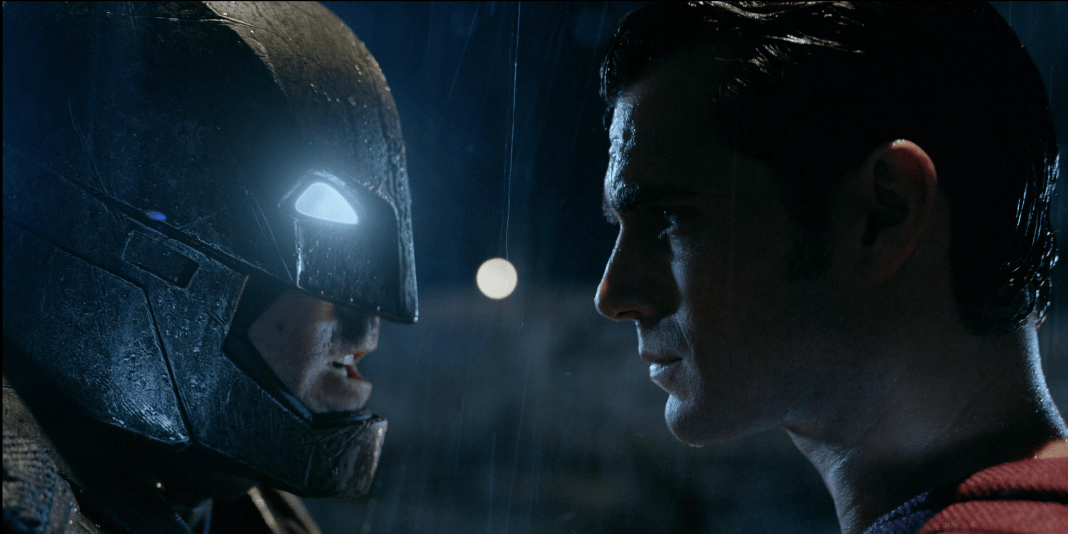
At first when I read that comment I got annoyed. I thought it patronizing and a failure to take ownership of the issues that people actually had with the movie. Watching it again, though, I hearken back to that comment and understand somewhat of what he was trying to say. I believe he was mostly right, but a few people did have other reasons for not liking it. The characterizations of Superman, Batman, and Lex Luthor (Jesse Eisenberg) are hardly traditional. The film still languishes under its fast-edited action sequences and unconvincing special effects. And a lot of people bristled at the reason for Batman sparing Superman’s life being that their mothers’ names were both Martha. The latter issue was meme’d and mocked to death back in 2016 and a lot of people still complain about it today. I am not as angry about it as they are. The scene intended to give Batman an understanding of Superman’s humanity that he had not seen before. He had a mother. The scene only failed because of a lack of subtlety and Batman’s animosity died down too quickly to be believable. I thought Batman’s issues with Superman were not wholly addressed here. Having a mom named Martha should not have been enough to convince him that Superman was not a threat and the movie should have resolved this concern a bit more. I also believe the addition of visual flashbacks to Bruce Wayne’s parents being shot was too on the nose and the scene would have been better received without them. But, the fact that Supes also had a mom named Martha being a turning point in Batman’s relationship with Superman didn’t bother me. It’s not as stupid as people say it is. It just needed some adjustments to its execution. But, people like their bandwagons, you know.

Batman is a big point of contention, and I do understand why. He is a bit hard to swallow. He is much more brutal and violent than any previous incarnation of the character we had seen on screen before. He also shows a shocking indifference to human life. Much of his actions are reckless and indirectly cause the deaths of the men he is fighting. The reason I still am able to accept him, however, is that the reinterpretation of the character is not so jarring as it is with Superman. Clark Kent and his alter ego don’t align at all with what he is supposed to represent, whereas Batman has always been a more edgy character. Making Batman this grim was the only logical thing the filmmakers could do if he is to contrast with Superman as he is presented here. It helps that he is not the movie’s main character. Batman serves the majority of the plot as an antagonist who has become misguided by suspicion and paranoia. The movie focuses most on the loneliness and the near sociopathy of the character which, let’s face it, has been with Batman since the beginning. Batman has always been the sort of guy whose trauma and internal rage at injustice had driven him to becoming a violent vigilante who beats the wicked and corrupt to a bloody pulp. Must I also point out that he dresses up in a vampiric bat costume and has the power of fear and the cover of darkness as his primary weapons? I can forgive the movie for knowing what everyone else knows that such a man in real life would likely be mentally ill.

The actual fight between the two is instigated by Lex Luthor. Instead of the usual self-congratulating Bond villain played by Hackman and Spacey, Jesse Eisenberg plays him…well…as Jesse Eisenberg. Eisenberg is not a bad actor, but he is a one-trick pony. He only plays one guy in all of his films and that is Jesse Eisenberg. His Luthor is neurotic, talks fast, and eats up attention like a child eats up sugar. He clearly loves the sound of his own voice and becomes grandiose and prone to demagoguery. He thinks of Superman as a sort of god in the classical sense and wants him dead on that basis alone. Instead of cutting his teeth on Sesame Street and Dr. Seuss like most normal people, he lives by cherrypicking the philosophies of Nietzsche and Ayn Rand. I’ve known people like this and they aren’t much fun at parties.
By staging a number of terroristic plots that are deliberately centered around Superman’s presence he turns him into a controversial figure. A vocal minority of the citizenry are now leery of Superman and Batman is convinced that the world will not be safe and secure until he is dead.

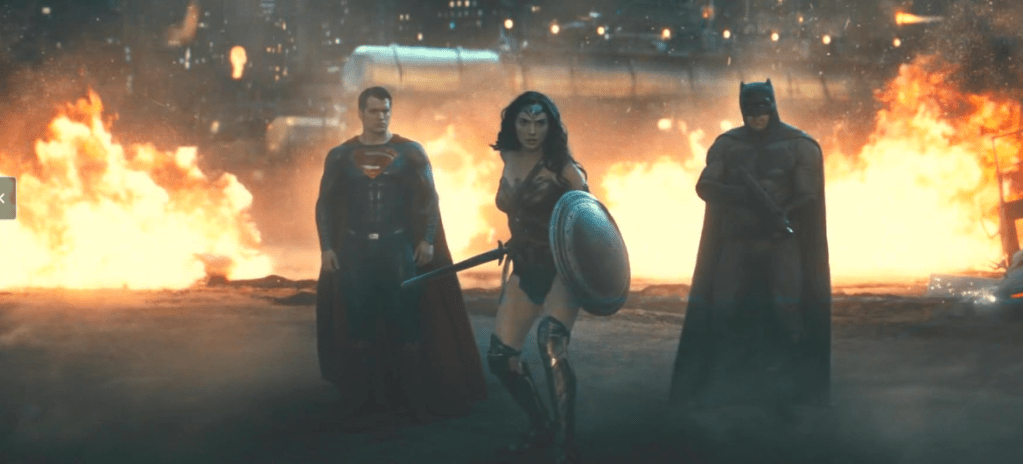
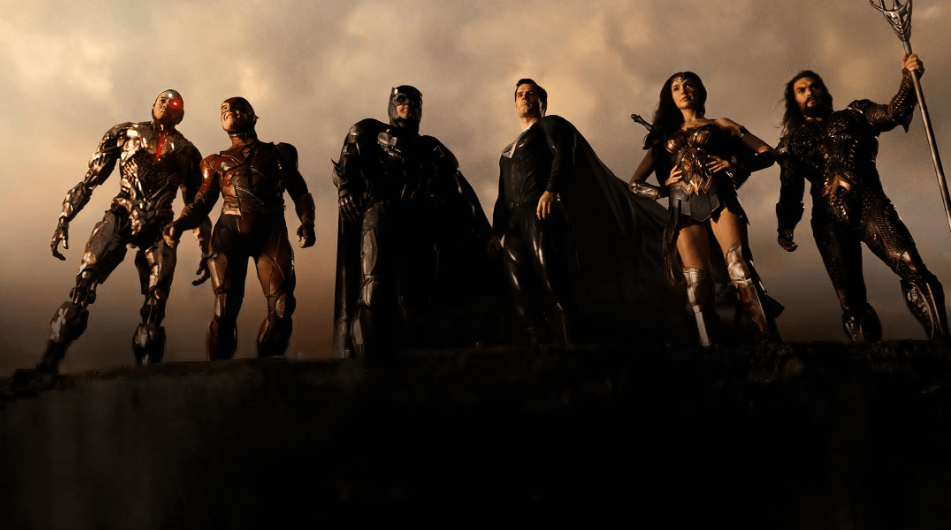
Another newcomer to the franchise is Wonder Woman (Gal Gadot) who spends most of the movie in disguise as Diana Prince. Her purpose in the film is limited and she is there by and large as a justification for the “Dawn of Justice” part of the movie’s title. She is meant to foreshadow the eventual rise of the Justice League. The Flash, Cyborg, and Aquaman also make very brief appearances, but they don’t inundate the movie with too many characters as a lot of superhero movies do with their villains. Secret archived footage is shown of them on computer screens to give us our first look at them before they make it to the main event.
Gadot’s performance is a bit bland, but she is not given a whole lot to do in her defense. As Wonder Woman she doesn’t spring into action until the final climactic battle and when she does she contributes little. Action movie directors must find writing for women hard or something, because I complain about this often.

The final battle is where the movie tends to fall apart. It’s a CGI-laden mess. The three heroes get tossed about frequently, transitioning from CGI models to actors when they land. CGI is supposed to be like a magic trick and when done poorly the trick is revealed to the audience and takes them out of the illusion. Doomsday, a monster made of kryptonite designed by Luthor, looks like a cartoon. It stomps about, roaring its head off and fighting the heroes in front of bluescreen that is so obvious it’s more like watching a video game.
The modern filmmakers have seemed to forget that fight scenes need personality as well as action. There is a lot of emotion involved when fighting someone. There needs to be a personal connection that has to be shown during the fight and not just in the moments leading up to it. This is done through simple emoting, facial expressions, and signs of physical exhaustion as the conflict becomes prolonged. What this movie fails to do is show us any of that. It’s all fast blink-and-you’ll-miss-it kinetics, explosions, loud noises, and whole shots where not a single thing on screen is real. All of which is dimly lit for reasons I suspect have to do with disguising the fakeness of the special effects. It’s more exhausting than entertaining.

Batman v Superman: Dawn of Justice is at its strongest when it is not trying to fulfill its obligations as a superhero movie. The social commentary is brilliant and the pacing of its first act is near perfect. It suffers during its action scenes, but provides a much more profound experience when it is being serious. It’s not perfect, but I rather liked it.

Director: Zack Snyder
Writers: Chris Terrio, David S. Goyer
Producers: Charles Roven, Deborah Snyder, Wesley Coller, David S. Goyer, Geoff Johns, Benjamin Melniker, Steven Mnuchin, Christopher Nolan, Emma Thomas, Michael E. Uslan, Trevor Christie, Curt Kanemoto, Bruce Moriarty, Jim Rowe, Andrea Wertheim, Gregor Wilson
Cast: Ben Affleck (Bruce Wayne/Batman), Henry Cavill (Clark Kent/Superman), Amy Adams (Lois Lane), Jesse Eisenberg (Lex Luthor), Diane Lane (Martha Kent), Laurence Fishburne (Perry White), Jeremy Irons (Alfred), Holly Hunter (Senator Finch), Gal Gadot (Diana Prince/Wonder Woman), Scoot McNairy (Wallace Keefe), Callan Mulvey (Anatoli Knyasev), Tao Okamoto (Mercy Graves)
Composers: Junkie XL, Hans Zimmer
Cinematographer: Larry Fong
Editor: David Brenner

Man of Steel (2013)

2/4 stars

I believe that movies are best viewed on their own and on their own merits without constantly comparing them to other movies that they were not intended to be like. So when Warner Brothers finally saw fit to reboot the Superman franchise there ought to be a little latitude for reinvention. But, while Zack Snyder’s Man of Steel is not beholden to the Christopher Reeve canon, it is still beholden to Superman as a character. And that is where the movie fails.
Superman is more than Christopher Reeve. By a long tradition of comic books, movies, video games, and television series Superman has entered the cultural mythos as an established character whose lore, values, and personality have become sacred.

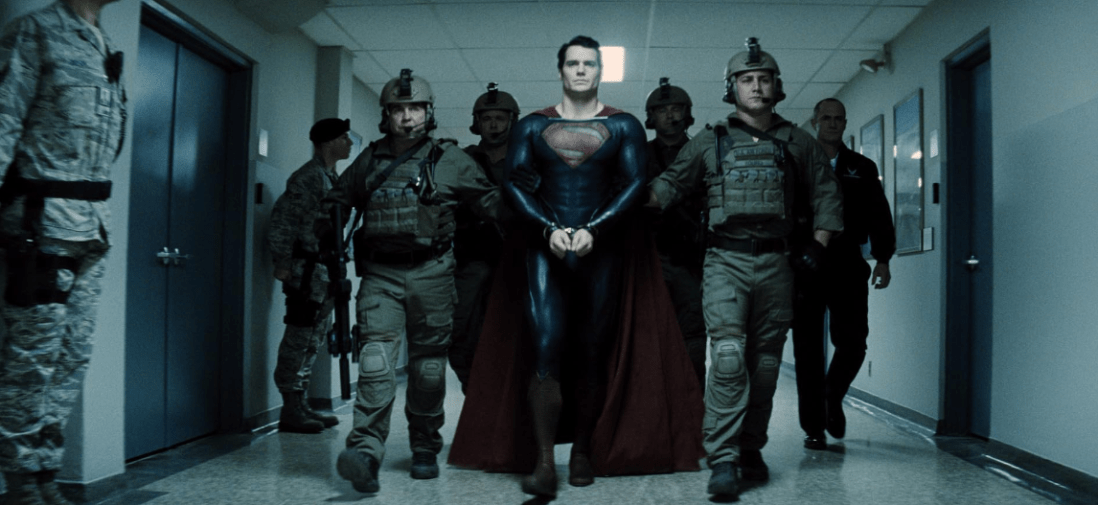
My objections to Man of Steel are not solely due to my preference for Christopher Reeve. What I object to is how the heart and soul of Superman has been so thoroughly sucked out. Even his costume is drab and colorless. Henry Cavill plays the role without personality. Instead of the idealistic boy scout we have grown to know and love, he is angsty and much too serious. His performance is like that of a robot. Instead of being Superman as I know him, Cavill plays the sort of impersonal hero that I would expect to address everyone as “Citizen!” As Superman he is dull and emotionless. As Clark Kent he is constantly anxious and facing existential crises.
It is not until the end of the film that he dons the glasses and becomes a reporter at the Daily Planet. The scene is too brief to say much, but in those brief seconds I saw little sign of the winsome mild-mannered reporter that he is supposed to be. He strides in with confidence and makes a charming smile. He is more like an adolescent fantasy of a handsome intern.

Clark’s childhood in Smallville is handled differently than it is in the original film, Here it is doled out in a series of flashbacks that come and go throughout the first act. These scenes run parallel against his adulthood right before he puts on the cape and boots. Clark is unsure of himself and desperately wants to know what his destiny and purpose in life is. As a child we see him struggle to adjust to his powers and his relations with his peers is strained and distant. Pa Kent (Kevin Costner) raises Clark to try to find the right outlet for his powers and to maintain a sense of self-restraint. To the film’s credit these scenes do a great job at revealing how Superman came to be responsible with his abilities without becoming corrupted and tyrannical by them. There is a key moment where Clark has to contend with middle school bullies trying to get him to fight. Instead of refraining from violence out of sheer goodness of heart, the scene more realistically shows how difficult it is to maintain self-control when one is angry. While cornered he is gripping a fence behind him which, after the bullies run off, is shown to have been crushed by his hand. Pa Kent praises Clark for not giving into his baser nature, but admits that a part of him would have been satisfied had Clark knocked their blocks off. Being a good person is hard work and the film presents those difficulties remarkably well.
But the movie never quite develops him into the character that we know. Up to the very end his uncertainties and trauma remain with him. I would have much better liked seeing these pieces of his past add up to the kind and idealistic man he would later become.
One thing I heavily disliked about the flashbacks is how far Pa Kent takes the lessons in self-restraint. His dialogue and actions suggest that he doesn’t want Clark to become a hero at all out of fears for what it would do to society. After saving a bus full of schoolchildren his dad seems more concerned about the attention it would draw to Clark than the lives he saved. And the way the film handles the death of Jonathan Kent is unforgivable. In the original lore Pa Kent’s heart attack was a poignant lesson to Clark about the limitations of his powers and how he cannot save everyone. But, in Man of Steel his death is something easily preventable, but occurs anyway due to over-caution.

The film opens, like in the original, on Krypton. The planet is about to explode thanks to over-mining that has destabilized the planet’s core. Superman’s father, Jor-El (Russell Crowe), is fed up with Krypton’s stagnant culture which is portrayed as being built on eugenics. The Kryptonians are grown in labs with preset destinies and roles to play. Jor-El would rather see his race breed freely without governmental controls. He steals a codex of DNA that he implants in his son in the hopes of reseeding the Kryptonian people somewhere else.
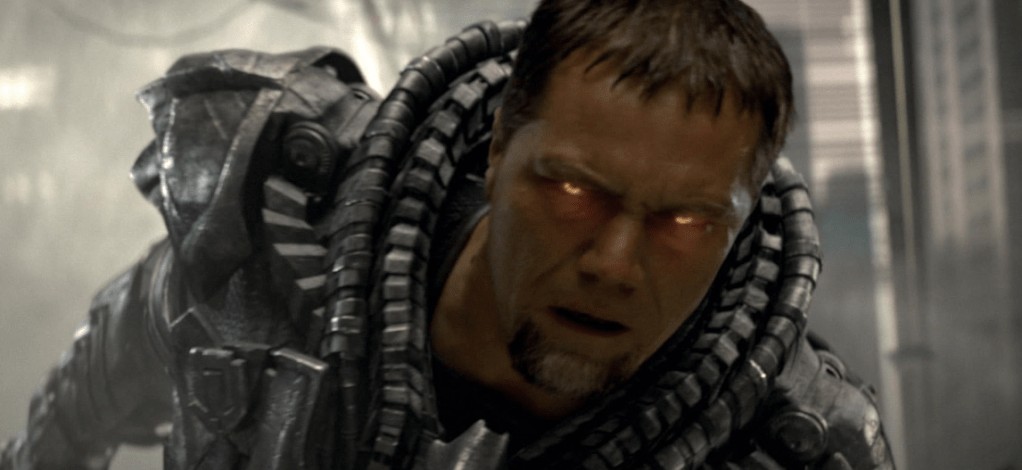
When General Zod (Michael Shannon) stages a rebellion he seeks to acquire the codex for himself so he can rebuild Krypton’s civilization under his rule. With Superman now safely flying in an escape pod for Earth, Zod is too late and his rebellion is quelled swiftly. As we have seen before Zod and his cohorts are sent into the Phantom Zone.

Back on Earth the adult Clark Kent makes his first acquaintance with Lois Lane (Amy Adams) when she stumbles upon an old Kryptonian scout ship that Clark was exploring. The movie dodges entirely the whole notion that Lane doesn’t know Clark Kent is Superman by having her uncover his identity early on. At the end of the film when he starts his first day at the Daily Planet she already knows who he is.
Man of Steel handles their love story even worse than the Reeve films did. Their first kiss comes out of nowhere, following only a small handful of meetings, all of which are professional and unflirtatious. The kiss is, in fact, the first indication that Lois was attracted to Superman at all.
Adams’ performance as Lois is markedly different than Margot Kidder’s. She is more like a journalist who stubbornly puts herself in dangerous situations for her paper. Kidder’s Lois Lane was more like a gossip columnist. Amy Adams plays the sort of stubborn journalist who sniffs out cover-ups and pesters the powers that be to find the truth. What is unfortunate is that that is all there is to her personality. Kidder was full of personality while Adams has virtually none.

During the final act, after Zod comes to Earth to take back the codex and terraform the planet for a new Krypton, the action scenes have the same problems that I have had with Superman Returns. The CGI, instead of being put to any artful use, is used to show things moving so fast that they are hard to make out. Superman zips about at high speeds, burning objects are hurled around in hundreds of shots per second, and explosions dominate much of the foreground. A lot of the action shots are also done in close-up which only furthers obscures a clear view. Computer generated special effects are at their best when they are used to show the audience things they haven’t seen before and couldn’t have seen otherwise. Too often they are utilized, like in this movie, to create highly kinetic action that is impossible to process and appreciate.

At the end of the day Superman is not an action movie star. Who he is as a character is just as important as what he does. Probably even more so. What the makers of Man of Steel don’t seem to understand is that when reinventing a character certain core traits need to be preserved if he is to be that character at all. What I saw was a very depressed and beleaguered man wearing a Superman costume. But I didn’t see Superman.
Back in 2013 I heard a few yea-sayers claim that “this is not your father’s Superman!” Perhaps we should consider that our fathers were right.

Director: Zack Snyder
Writers: David S. Goyer, Christopher Nolan
Producers: Christopher Nolan, Charles Roven, Deborah Snyder, Emma Thomas, Jon Peters, Lloyd Phillips, Thomas Tull, Wesley Coller, Curt Kanemoto
Cast: Henry Cavill (Superman/Clark Kent), Amy Adams (Lois Lane), Michael Shannon (Zod), Diane Lane (Martha Kent), Russell Crowe (Jor-El), Antje Traue (Faora-Ul), Harry Lennix (General Swanwick), Richard Schiff (Dr. Emil Hamilton), Christopher Meloni (Colonel Nathan Hardy), Kevin Costner (Jonathan Kent), Ayelet Zurer (Lara Lora-Van), Laurence Fishburne (Perry White)
Composer: Hans Zimmer
Cinematographer: Amir Mokri
Editor: David Brenner