

3/4 stars
Screwball comedies are a difficult form of art. To put so much chaos on screen and to allow it to escalate requires a great deal of careful orchestration to pull it off effectively. In a word, portraying chaos demands everything but chaos in the screenwriters room. What’s needed is a lot of comedic timing, tight physical choreography, firm character establishment, and diligent direction for the performers.
The Ghost and Mr. Chicken is one of the best and most successful examples of the genre. Masterpieces like Bringing Up Baby and It’s a Mad, Mad, Mad, Mad World make for stiff competition as classics; while this film, like its hero, is unfairly forgotten and unappreciated for the comic genius that went into its writing.
Luther Heggs (Don Knotts) is an excitable, easily frightened newspaper typesetter who isn’t taken seriously or respected much by anyone around him. His closest friends love his personality more than his intellect and his coworkers look down on him. He wants to be an ace reporter someday but his circumstances make this unlikely. He is the ultimate underdog.
The movie vitally establishes his lack of credibility in its opening scene. Luther overzealously pursues a story involving the sudden murder of the town drunk. He takes half a dozen pictures, questions the murder’s sole witness, and rushes to the police station to report the killing. Luther knows this is his ticket to becoming a reporter in his own right and his excitement has him so animated that he is barely able to get a comprehensible word out. The only problem is that the “victim” isn’t dead and soon walks into the police station in the middle of Luther’s statement. Luther is laughed out and has to the endure the following day a barrage of jokes at his expense from his family and colleagues.
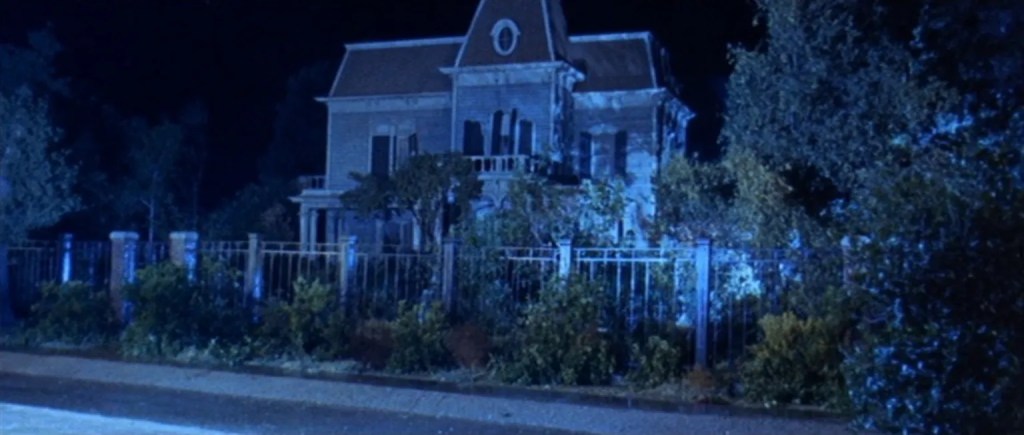
Fortunately, Luther’s own mishap opens up an opportunity for a second chance. An old mansion known to the locals as the Simmons House is about to be demolished the following week by the owner. The place is the subject of local legends as the previous owners had been killed a few decades earlier. Its reputation for being haunted has given rise for tall tales of organ music played at midnight and ghostly laughter from its long dead occupants. The newspaper wants to capitalize on the story before the building is bulldozed and Luther is chosen to spend a single night in the place. As one of the paper’s head writers puts it they want someone who is “a bit of a coward” and prone to superstition to sleep at the place. It’s an old formula to haunted house movies, but the film makes comic gold out of it.
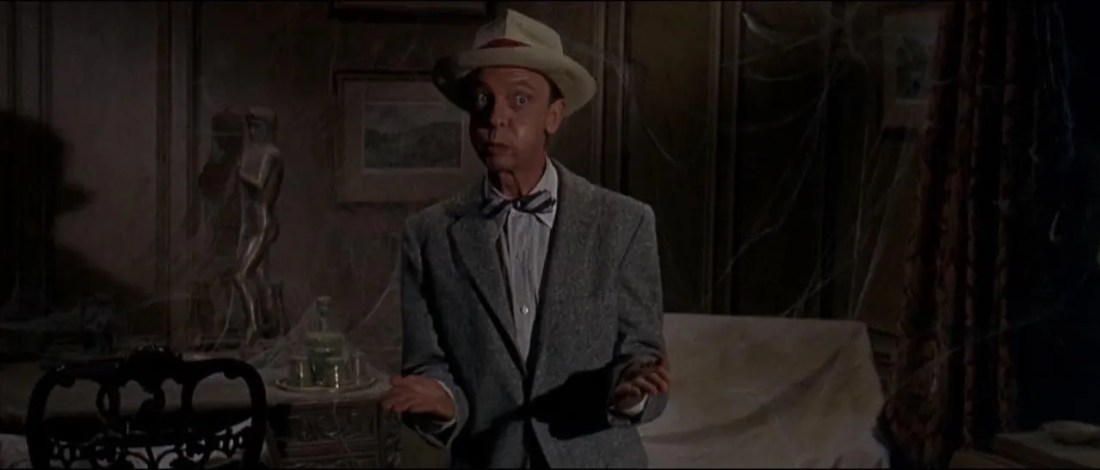
Luther reluctantly agrees and the night he spends there leaves him sufficiently traumatized. He hears cackling laughter in the walls, secret passages open before his eyes, a blood-stained organ plays by itself, and a portrait of the late Mrs. Simmons appears with a pair of pruning shears in the throat as blood flows from the canvas. While this sounds grim on paper, it is all played for laughs and Don Knotts’ physical and facial performance throughout the ordeal makes for some of the funniest scenes in the movie.
Luther’s story turns him into a local celebrity overnight. Everyone wants his autograph, men shake his hand, women fawn over him, and he gives painfully tepid and incoherent speeches to the crowds.
But, let me clarify this. Nothing that Luther saw and heard at the old Simmons place is what it seems. This becomes a serious problem when he and the newspaper are sued for libel by the house’s owner. Luther is impelled to prove in court that what he had witnessed really took place and he is forced to return to the house to recreate his movements and demonstrate what had happened. His own misapprehension over what he had seen works against him and he is made to look like a fool when he cannot replicate any of his claims to onlookers.
Of course, in the end Luther is vindicated in the midst of what becomes, surprisingly, a thoroughly engaging and interesting murder mystery.
Don Knotts, still fresh off his popularity on The Andy Griffith Show, brings to the role a hilarious portraiture of a man tightly wound up and intimidated by everything, including his own shadow. He can barely keep still as he fumbles around nervously trying to assert himself while nothing that happens to him seems to make sense. Knotts has a unique physicality to his performances in which he constantly reacts in sharp, jerky movements while his eyes are perpetually popping in fear. His is a role that I cannot picture any other comic actor of the time doing half so well. The Ghost and Mr. Chicken was made with Don Knotts clearly in mind and it remains one of his best and funniest movies.
I laugh at him, but root for him too. As an underdog he is innocent and good-natured, and his success at the end is satisfying and well-earned. Luther deserves to be happy and I was happy for him.
While classic Hollywood has plenty of superior screwball comedies to offer, The Ghost and Mr. Chicken remains a good one that merits more attention. It is uproariously funny, well-plotted, and cleverly performed throughout. While not overly ambitious or rife with social commentary, it is, nevertheless, an engaging simple story with plenty of laughs for any audience with a sense of humor. I recommend it highly. Tracking it down is worthwhile and it won’t disappoint.

