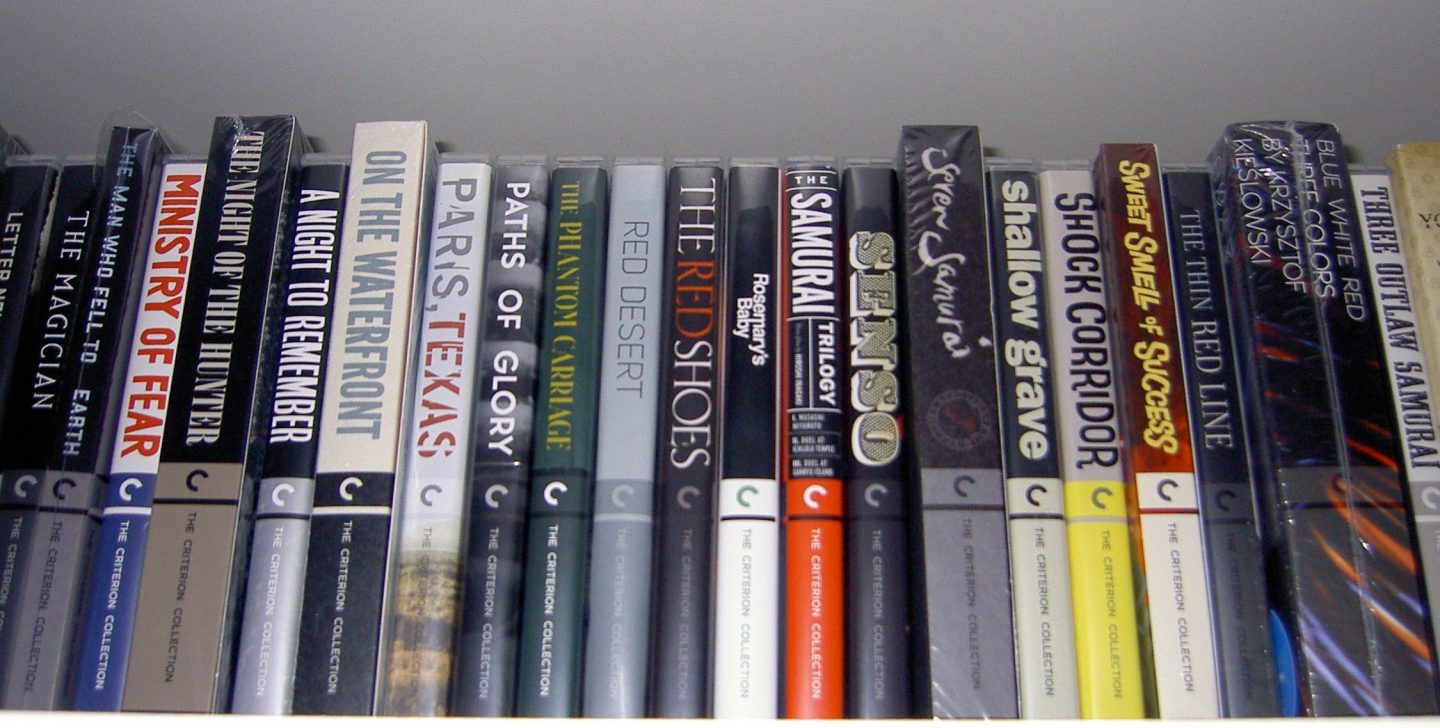
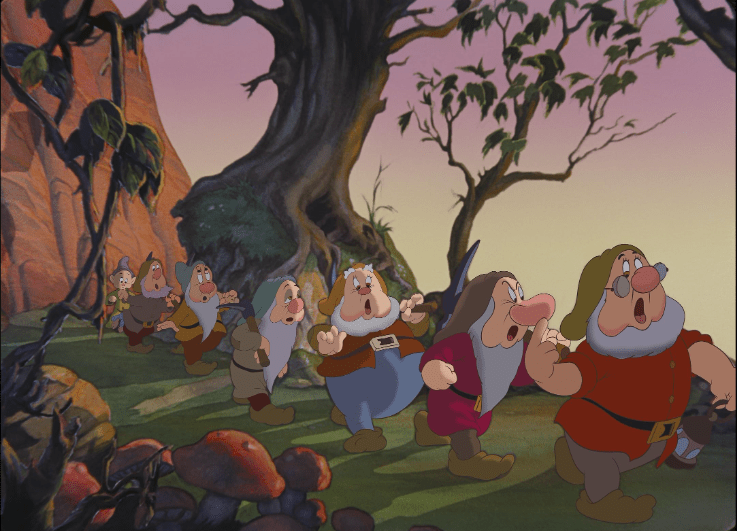
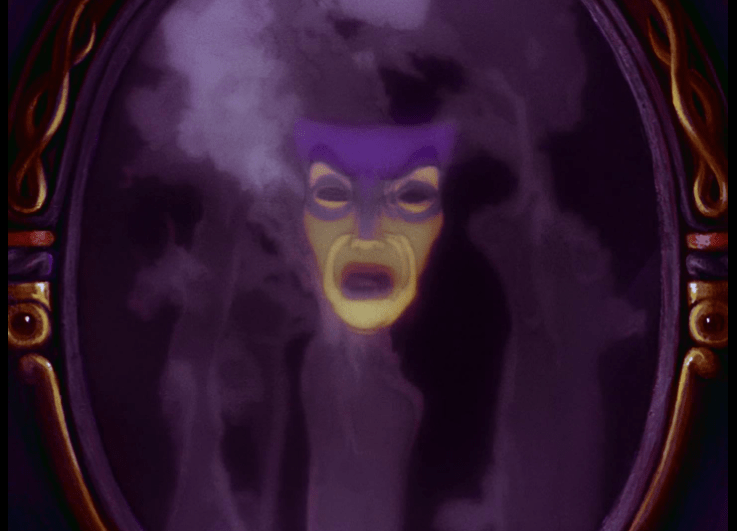
Snow White and the Seven Dwarfs (1937)

4/4 stars

When looking at cinema and its history, you will be hard-pressed to find a film more significant than Disney’s Snow White. Without it, what would we have today? It paved the way for all animated films produced in the future. Without Snow White there would have been no Pixar, Star Wars, Harry Potter, or the popular influx of superhero movies that we have today. Even The Wizard of Oz would not have been made had MGM not been inspired by Snow White’s success. It brought magic back into the movie theater.

The 1930’s was a rough decade for movies. Aside from the early Universal Monsters and an occasional gem from Hitchcock or Renoir, much of what remains of the decade prior to 1937 are any number of poorly preserved “talkies”; most of which were badly performed and awkwardly paced.

Around the time Snow White came out, the need to redefine cinema was at hand. It happens infrequently throughout the evolution of the art form. When safe bets and stagnation set in an auteur always comes along to remind us of the spectacle that movies were originally made for. It happened in the 1970’s with Spielberg and George Lucas’s Star Wars.
In 1937 the career of Melies – one of the best presenters of spectacle – was long over. Animation at the time was reserved for short subjects and the endeavor to produce a full-length theatrical cartoon like Snow White was considered a big gamble. But, it was a gamble that paid off and movies were never the same again.

The story of Snow White and the Seven Dwarfs is a familiar one. It’s been subject to many other adaptations following the Disney cartoon and it was a well known nursery staple before that. The most popular English form of the Grimm version that inspired the movie was released in 1857. This means that the movie is now older to our current time than the fairy tale was to Disney back in 1937. One might argue that the story is timeless, but if I may be indulged one minor digression, it is my opinion that the original Grimm publication in 1812 (Schneewittchen) was an amalgamation of elements from varying bits of folklore that the Grimm version only compounded and finalized. The story is hardly ancient since the Grimms would have had to make a lot of personal creative choices in its formation. It’s a classic story, but not truly proper folklore.

Literary history aside, the film itself is a work of art. These were the happy days of gorgeous painted backgrounds with animated cels adding liveliness and character to the setting. The film makes minimal use of spoken dialogue, preferring songs to carry the story. The movie makes abundant use of sound in every scene. Often, the musical beats match the beats of the action, letting music replace traditional sound effects. This is particularly seen in Heigh Ho and Whistle While You Work which incorporates the songs’ music into the little visual moments that occur. The mining of diamonds is made with triangles and cowbells and the sound of a tortoise’s laughter is produced with a trumpet. Snow White is one of the most musical of Disney’s productions. It’s like musical theater; a ballet set to the art of animation.

Snow White, the Prince, and the Evil Queen were animated with rotoscoping which was popular at the time. The method had the unfortunate effect of leaving their facial animations ill-defined and it has fallen out of favor long ago. Gratefully the dwarfs and the forest animals are not presented in this way, and they are where the animation truly shines. The saturated color of the animated cels add liveliness and character to the film. They give life and habitation to the beautiful painted backdrops, which unlike rotoscoping, I miss in modern cartoons. The animation gives each of the dwarfs their distinct personalities. They are easily recognized and stand out from each other, which, as fans of The Hobbit will tell you, is a difficult feat.

Disney’s Snow White and the Seven Dwarfs is one of the finest animated fairy tale adaptations ever made. More than that, it is one of the finest films of all time. Unbeknownst to any one at the time, what Walt Disney had accomplished was the future of cinema. It sets the gold standard for how popular films are supposed to be. Its influence cannot be denied. It is as relevant a historical work of art and cultural mainstay as the Sistine Chapel, Wagner’s opera, and the poems of Wordsworth.
In the big picture, film may still be in its adolescence; but Snow White, wherever the arts are respected, will always be among its greatest works.

There has been a lot of talk in recent years of Snow White’s character. Mainly, that she is a misogynistic character type. The general conception is that she lacks personal strength and relies on a male figure to come to her
rescue. In other words, she embodies the damsel in distress motif. However, I disagree with this assessment and I believe the movie deserves a fairer re-analysis. Quite frankly, I think the movie is being grossly misremembered by critics who had not viewed it in a while.
Snow White is shown with a sweet-natured disposition, for sure, and her voice is constantly at a high lilting pitch. She is giggly, bubbly, and extremely positive. But, these are personality traits that some people do have, and per se none of them have anything to do with personal strength. Under her circumstances, though, these traits are more indicative of strength than not. It should be borne in mind that Snow White is living alone with a cruel stepmother after her father had died. Instead of having her spirit broken she remains optimistic and holds onto her ideals of kindness. This is hardly behavior to be expected in the weak.
And the notion that the Prince is some sexist depiction of a male figure coming to her rescue is complete nonsense and not supported by the facts. He only appears in the movie twice, leaving her to spend the majority of the plot doing things for herself. While he does nothing, she survives alone in the woods and takes charge of the dwarfs’ household, becoming their leader. When she sings I’m Wishing, it is not a cry for rescue as modern critics like to claim, but a song of longing. It’s a song about the distance between herself and her lover. It’s a mutually established love and there is nothing sexist about missing the company of one’s partner. His kiss that wakes her from the witch’s curse has been lambasted as an example of non-consent which is just ridiculous when critiquing a fairy tale. In fairy stories we are expected as the audience to suspend our disbelief in love at first sight and we are also expected to accept that they are lovers and that such a kiss was welcome. And I especially don’t want to hear any nonsense about him carrying her in his arms at the end. She was in a coma for a year and her mobility had likely atrophied for awhile. What was the Prince supposed to do? Force her to crawl out of bed Kill Bill-style uphill to his horse?

This may just be my opinion, and others will have their feelings about Snow White, whatever I, or anyone else, might say. What can be agreed on is that movies would not be the same without Snow White. More up-too-date interpretations will continue to come and go and I wish them well. Stories like this were meant to be retold. Even the Grimms were only retelling it. But, better or worse, no retellings of the last hundred years will rival this film in importance. None of them will change the course of the arts like this movie had done. Snow White and the Seven Dwarfs marked the beginning of the modern movie.

Directors: William Cottrell, David Hand, Wilfred Jackson, Larry Morey, Perce Pearce, Ben Sharpsteen
Writers: Ted Sears, Richard Creedon, Otto Englander, Dick Rickard, Earl Hurd, Merrill De Maris, Dorothy Ann Blank, Webb Smith
Producer: Walt Disney
Cast: Roy Atwell (Doc), Adriana Caselotti (Snow White), Eddie Collins (Dopey), Pinto Colvig (Sleepy, Grumpy), Billy Gilbert (Sneezy), Otis Harlan (Happy), Lucille La Verne (Evil Queen), Scotty Mattraw (Bashful), Moroni Olsen (Magic Mirror), Harry Stockwell (The Prince)
Composers: Frank Churchill, Leigh Harline, Paul J. Smith, Bernard B. Brown, Edward H. Plumb, Norman Spencer
Editor: Bill Melendez
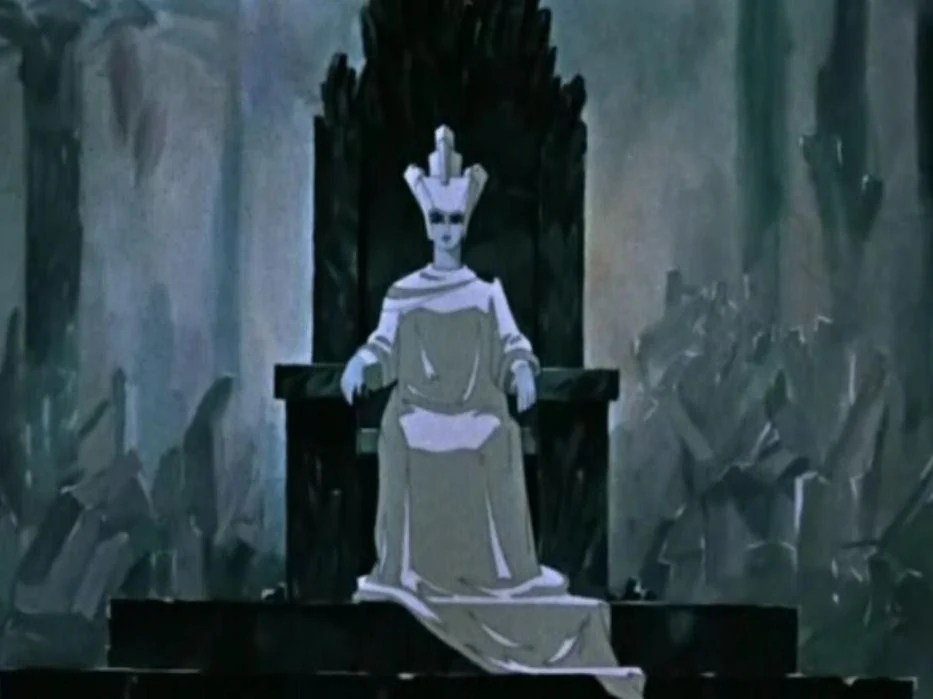
The Snow Queen (1957)

4/4 stars

There is an unspoken rule in the film industry that all children’s animated movies must be comedies. Disney follows this rule to the letter. Even when they are brave enough to trust children to accept a serious treatment of serious subjects, comedy is never too far away to provide a kind of cushioning pathos that I do not believe children truly need. At least certainly not to the degree that all children’s movies must be comedies. Lev Atamanov, the director of the highly evocative The Snow Queen, understands this perfectly. Children or not, he respects his audience.

The Snow Queen is in many ways a highly derivative work, owing much of its presentation and style to Disney’s Snow White, Pinocchio. and even Bambi. There is also nothing particularly transformative about its adaptation of the original Hans Christian Andersen story.
But, what elevates it to a masterpiece is its mood and its haunting imagery. Fairy story is at its best and its most pure when it is distant. Western animation (especially the modern variety) is generally garish and tends to over-explain. It often lacks that distance which is key to a love and appreciation of Fairy-Land. Without distance there is no magic and The Snow Queen glows with magic and takes it seriously.

The story begins with two young lovers named Gerda and Kai. When they first hear tales of the Snow Queen from Gerda’s grandmother Kai causes offence by suggesting that he would stuff her in the oven and melt her should she ever stop by. In response the Snow Queen sends a blast of ice to freeze his heart and he transforms from tender-hearted child to a cruel loveless miscreant. The Queen herself is made entirely of ice and dwells in a frozen castle that instantly calls to mind the White Witch and her keep in the Narnian stories. She, too, like the White Witch, drives a sleigh and whisks the boy Kai away in it. He goes willingly since his spirit has now gone cold. There, at her castle, Kai slowly forgets Gerda and all that he once valued which the Queen denies ever having existed. She tells him that poetry, artists, and feelings are not real; and even life itself appears to be denied when she claims flowers are inferior to ice crystals because they are not cold and stagnant like herself.

Gerda, who remains pure and innocent, journeys to find and rescue Kai and along the way meets talking ravens, lonesome witches, princes and princesses, and even roving bands of woodland robbers. In none of these adventures does Gerda meet much resistance and she moves on from each with a minimum of fuss. At 65 minutes in length the film cannot take more than a passing glance at its episodes, but manages to keep a gentle non-breakneck pace throughout. When she finally makes her way to Kai and the Snow Queen’s castle the resolution is swift, but natural and fitting.

More gratifying than the film’s story is its animation. While it is clearly influenced by Disney, it’s less gaudy and kinetic; maintaining a quiet holiday postcard quality and an atmosphere of distance between the audience and the ethereal fairyland that is its subject. The Snow Queen’s icy castle is isolated and apart from all other realities; appearing to Gerda magically rather than truly being got to. The Queen is of towering size and dwarfs Kai when sitting upon her throne. She is animated through the same old rotoscoping techniques seen in Disney’s Snow White, but much more effectively here. She is often shown completely still and statuesque, like a marble goddess of classical antiquity. She is more spooky than frightening, more awe-inspiring than beautiful.
The movie presents us with a fairy-land not rich and complicated, but dreamlike and perilous. The paths to the Snow Queen’s castle are cold, windswept, and hidden by winter’s night. And therein things can only fade, but never die for they are eternal.

The quality of distance that I had mentioned earlier is important to the fairy story because fairy tales are not meant to show us things that are new. They are not meant to awaken our consciousness to deep philosophical thoughts. Fairy stories don’t take us someplace else. They take us home. Our souls yearn and long for things that cannot be described prosaically, and fairy-land is where a taste of those longings is found. The Snow Queen succeeds as a fairy tale where many Disney films do not because it is evocative and not flashy; haunting without being brazen; and good-humored without being crass.

The Snow Queen is a Soviet film that we in the States could just have easily have missed for no other reason than petty politics which is often where art finds its death. In the late 1950’s cultural exchanges between America and Russia were largely unheard of thanks to the Cold War. This film was one of the first to cross the divide and we are richer for it. There are profound beauties in this world that we let barriers of language and identity keep us from discovering. The Snow Queen is proof of it.

Star Wars: Episode V – The Empire Strikes Back (1980)

4/4

The Empire Strikes Back is flawless. Not many movies are. Only a couple are released per decade really.

After the original Star Wars film released in 1977 it was a massive success with critics and audiences alike, and no film since had such a groundbreaking impact on the future of cinema. Fans, young and old, eagerly waited three years for the next installment in the Saga and what often happens when hype is built up for a sequel is disappointment. Sequels typically never live up to the originals because filmmakers put every bit of their talent into their first pictures and second entries are almost always an afterthought. They become obligatory cashcows bringing back familiar settings and characters with no serious attempt at telling a good story.

And yet, The Empire Strikes Back is flawless. It improves upon the original in every aspect of its production: it’s more tightly edited, employs even better and more groundbreaking special effects, has stronger performances from its cast, and is overall better written. The fans waited patiently (and impatiently) for three years and they got what they expected and more.

In the last film the final shot is of our heroes facing the camera happy and celebrant. This one ends with Luke, Leia, and the droids facing away. Gazing at a distant galaxy, comforting one another; hopeful and fearful. They’ve been separated from their friends, the future is uncertain, and the best they can do is wonder, looking away to their destinies. It ends on a strong note, but not a happy one.

The Empire Strikes Back – directed by Irving Kershner and written by Lawrence Kasdan and Leigh Brackett – is the darkest chapter in the entire 9-film saga. More than a few will argue in favor of Revenge of the Sith, but that movie cannot by its very nature as a prequel ever fill us with the sort of tension and doubt that this one does. At least assuming you are viewing them in the correct order.

The film opens three years after A New Hope and the Rebel Alliance is now on a brand new hidden base on the frozen wasteland world of Hoth. After they are discovered by the evil Empire and viciously attacked the remaining forces scatter.
Their mission is to rendezvous at a distant location in space, but before they do our heroes have unfinished business. Luke Skywalker (Mark Hamill) is sent by the ghost of Obi-Wan Kenobi (Sir Alec Guinness) to find an elusive Jedi Master named Yoda to complete his training as a Jedi Knight. Han Solo (Harrison Ford), Princess Leia (Carrie Fisher), Chewie (Peter Mayhew), and the two droids Artoo (Kenny Baker, Ben Burtt) and Threepio (Anthony Daniels) need to stop for gas.
The evil Dark Lord of the Sith, Darth Vader (James Earl Jones, David Prowse) is obsessed with finding Luke Skywalker in the hopes of turning him to the Dark Side of the Force and make him an evil Sith Lord like himself. Vader can somehow sense Luke’s presence in the Force much like he could with his old master Obi-Wan. Unbeknownst to the protagonists it is this perception which motivated the Imperial attack on Hoth.
Luke begins his training on the boggy world of Dagobah under Yoda who is a two-foot high green little goblin voiced and performed by Muppet-alumnus, Frank Oz. Yoda introduces himself as a playful, mischievous urchin annoying Luke and Artoo both with juvenile pranks and mocking comments. Luke tells him, “I’m looking for a great warrior.” Yoda laughs. “Wars not make one great,” he says. His mirth and behavior exposes Luke’s deep-seated anger issues and lack of patience. It bestows humility on him without which his descent to the Dark Side would be all the easier. I think many Star Wars fans I have seen on the internet could benefit from a weekend on Dagobah with Yoda.
Yoda is a masterful technical achievement. As a mere puppet his texture and look is decidedly realistic and he was designed to feature a whole range of emotions with his eyes and face unseen previously in movie-puppetry.

Han and Leia’s story is further developed in the movie in the meantime. They bicker like an old married couple in a way that is reminiscent of old 1930’s rom-com romances. He’s brash, arrogant, and fatally attracted to the woman who annoys him so much. She’s fierce, independent, unintimidated, and fatally attracted to the man that she imagines to be beneath her.
The hyperdrive on the Millennium Falcon is damaged and they are unable to make it to the rendezvous without making repairs. Han recruits the aid of an old smuggler buddy named Lando Calrissian (Billy Dee Williams) to help them. They go to Cloud City – a veritable castle in the sky floating over a gas giant – where Lando betrays them to the Empire. Vader deliberately tortures them knowing that Luke would sense it in the Force and come rushing to the rescue.
What follows is several grim happenings that are far removed from the heroic devil-may-care adventures of the previous film. Han is left incapacitated and captured by the space mafia and Luke is left physically maimed and devastated by the revelation that Darth Vader is his own true father. His world and pie-eyed optimism were dealt a singular blow and he never recovers or becomes the same person he was again.

What The Empire Strikes Back does is force its characters to grow up. It’s a much more psychological film than the other entries (save for perhaps the much-maligned The Last Jedi). The stakes get raised and there are serious losses. No one walks away unscarred and altered forever. The movie is about trauma and hope without guarantees. Simply being the good guy is not enough anymore.

Irving Kershner is a better director of actors and can get better performances out of his actors than George Lucas can, who takes a backseat from director’s duty and contributes instead to the story and provides creative input on the visuals. We get a much better film as a result with a tight script by Kasdan and Brackett.

Lucasfilm and ILM also had three years to further improve the special effects technology which makes for a spectacle miles ahead of the original film. John Williams also provides us with the best of the nine film scores composed for the Saga with several of them – The Imperial March included – having entered the pantheon of great classical pieces of music. His music is like that of a 19th century ballet and it sets the epic and dramatic tone of the film throughout.

I could keep going, but the fact is there is not a technical or dramatic aspect of The Empire Strikes Back that isn’t done perfectly. Really, after half a dozen or more paragraphs I can still summarize everything into one word. Flawless.

Star Wars (1977)

Rating 4/4

Star Wars since its release in 1977 has become one of those quintessential films like The Wizard of Oz or Snow White which everyone has seen and has entered into the collective consciousness of people all around the world. It’s as recognizable as Hamlet and Tom Sawyer and Hercules and Moses. And being a life-long die hard Star Wars fan and after the brand has expanded upon itself the last 40 years with sequels, prequels, comics, and novels it’s not easy to just review it purely as a movie from 1977. Star Wars is now a phenomenal mythic enterprise and viewing the film simply as a late seventies sci-fi hit created by the director of American Graffiti is not needed anymore.
Which is why I am not going to review it at all. What I would rather do instead is take a few moments of your time and discuss the phenomenon that this movie became and hopefully convey what it means to me personally.
I was 15 years too late to see this movie when it first came out in theaters; seeing it for the first time as a second generation fan in the early 90’s when I was about six years old. I have no recollection of that first viewing experience and as far as I am concerned Star Wars has always been around.
In my earliest memories Star Wars was already a near and dear thing to me. I played with the Kenner and Hasbro action figures, illiterately leafed through my uncle’s collection of comics, and eagerly picked up as much knowledge of the lore as I could. With the amount of affection I had for Star Wars, and how much space it took in my playtime and imagination; first seeing this movie must have been as close to a spiritual experience as I am willing to believe in.
I could drone on some more about how much Star Wars changed everything, but I would be being disingenuous. I never saw it change anything. Things had already been changed by it around the time I was born. The adults and teens who first saw it 47 years ago probably cannot understand how much my generation takes it for granted. It’s like the existence of automobiles, going to church, or just the presence of movies in general. A point in time in which it did not exist is beyond my comprehension.

But Star Wars did change everything. They say hindsight is 20/20 and I don’t disagree. I especially agree when I wasn’t even around back then in the first place. It baffles me how so many people in Hollywood had such little faith in Star Wars’ production. A quick glance at any of the making of features in print or on film will show constant references to risk-taking and predictions of failure. When I look at this movie I wonder how anyone in their right mind could have thought it was going to be a flop. Living in a time when movies like Star Wars are a dime a dozen and oversaturate the box office it’s hard to imagine the late 70’s when more serious pictures were being produced and science fiction/fantasy movies were frequent critical and financial failures. Believe it or not, sci-fi movies used to not be guaranteed blockbusters and many of them were your typical tax-shelter projects similar to what we are seeing being produced for the SyFy channel and Netflix today.

I won’t waste any more words on Star Wars changing cinema since we all know it did. What I find more interesting and less talked about is how much it changed George Lucas himself.
If one were to patiently sit through his early student films from the 60’s followed by his debut, THX 1138, you see the obvious influences and overall tone of his work. Lucas was making films for the anti-war counter-culture youth of America: fed up with Vietnam, fed up with Watergate, fed up with segregation and Jim Crow laws, and just plain fed up with The Man altogether.
He made THX as a Huxley-esque attack on authoritarian government and American Graffiti was a revisit to teenage life in California before Vietnam.
Star Wars was something different. Something special. Yeah, there is an echo of anti-imperialism in it, but much of it was written and produced with a more basic and ergo more important motivation. With his third film, Lucas left counter-culturalism in the background and sought instead to revitalize for younger moviegoers spirituality and myth in a language they could understand. And miraculously its success overshadowed its ambitions. Star Wars has achieved George Lucas’s goal more than he could have anticipated when he first began writing it in 1974. Probably even more than he anticipated when he was actually making the film which was fraught with budget problems, uncooperative cinematographers and crews, cynical execs having no faith in its success, supply problems, and labor difficulties of every kind…
But successful it was. Like the myths Lucas was drawing from, Star Wars became a natural part of our culture. The Force, wookiees, Darth Vader, Luke Skywalker, the Millennium Falcon, and even Jar-Jar Binks are as familiar and recognizable to us as Thor, Zeus, and the Garden of Eden. Many of its characters, creatures, planets, and technology have become proverbial and require no exposition when used to make a point or reference. Many of my generation learned “May the Force be with you” before we learned to say “Amen.” The lightsaber is as iconic as Excalibur or Mjolnir. It would be self-indulgent to go on, but I could for a thousand more paragraphs if I wanted to.

George Lucas would not direct another film again until 1999 with the release of The Phantom Menace. In the meantime he produced and wrote less of the counter-culture material that characterized his earlier work and focused more on writing the remaining movies of the Star Wars trilogy and Indiana Jones as well as championing the progress of special effects in cinema with ILM. In 1997, two years before the release of his first prequel, the Star Wars trilogy was re-released in theaters in the form of Special Editions with the films’ negatives cleaned up and restored, enhanced special effects inserts, and occasionally a few cut scenes put back in. Many of these changes were controversial and ironically helped create some new proverbial myths of their own. “Han Shot First” has become nearly as recognizable as “May the Force be with you.”

You may have begun to notice that I have been so far speaking more about Star Wars as a saga and critically successful franchise than I am about the 1977 picture itself and there is a reason for this. Any review I could write about this movie would add nothing that hasn’t been already said and said better than I can. To be frank, if you haven’t seen Star Wars, nothing in this piece is directed to you. Which is why I must reiterate this is not a review. There are not enough people living under a rock for such a review to be useful and if they emerge I am not so vain as to think they would come flocking to this blog to see if Star Wars is worth watching or not.
It is, and you should go watch it again sometime. Not because I said so, but because you and I already both know that you should.