
4/4 stars
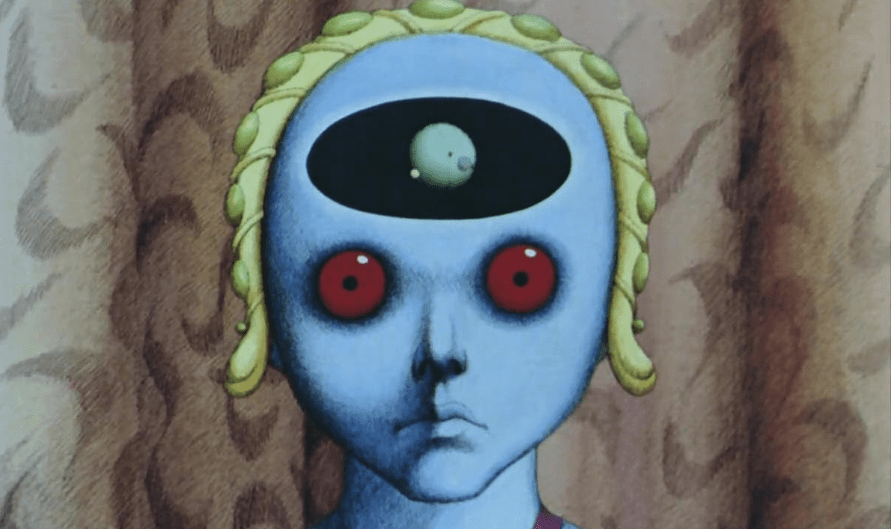
Fantastic Planet is a beautiful and visually arresting piece of counter-culture art. Roland Topor’s animation is like the illustrations of a storybook. Not a single shot is wasted and every frame is a work of beauty on its own. The images have a grim Dr. Seussian quality and are illustrated like a darker version of the works of Maurice Sendak.
The film presents a challenge to our notions of nature and humanity’s relationship with it. The natives of the planet Ygram are gigantic blue-skinned beings called Draags. Theirs is a sophisticated, proud culture where knowledge is highly sought after and meditation is a regular ritual in every household. Humans are also present, but they are the size of insects in comparison and are viewed as little more than dumb animals to the Draags. The humans are called Oms (evidently derived from “homme” the French word for Man), and when they are not being kept as pets they are treated as vermin.
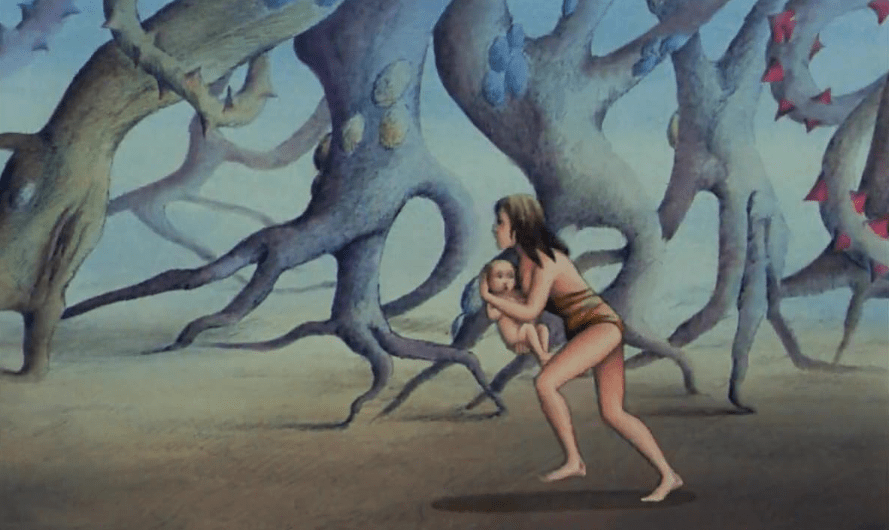
The movie opens with an Om mother carrying an infant in her arms. When she runs into a large blue hand, it’s finger flicks her around like one would an annoying bug. The casual cruelty brings about her death, but a young Draag child finds the Om baby and adopts it as a pet. Their relationship is a playful one, but I would not call it loving. The young Om is prodded and teased like he’s a toy and when the Draag grows into adolescence she becomes bored with him and neglects him. The Om (whose name is Terr) runs away and finds more of his kind in the wilds. These Oms are considered pests by the Draags and are routinely exterminated in a process called de-Ominization.
The Draag attitude toward Oms is not entirely hostile, but it is highly patronizing. Oms make decent pets they claim, but they breed too rapidly in the wild. As sub-Draag animals in their eyes, the Oms have no rights and kindness is afforded them only when it is convenient. In our own culture dogs and cats are loved and treated with familial affection, but little thought is given to killing them should they bite another human being or if they contract a disease. We distinguish them from humans where individual rights come into play. The Draag opinion of Oms is not dissimilar. What is most alarming about the Draag’s ideas about Oms is how sensible they are from their point of view. Why shouldn’t they flick an annoying Om away like a bug if a bug is all they are? Why shouldn’t their nests be subject to extermination if animals is all they are? As long as the Oms are equated with animals the Draags’ behavior toward them is justified. It’s as justified as how we treat animals on our own planet. No crime is committed when we squash a bug. Even when we take satisfaction and enjoyment from the experience. Think on the last time you squashed an annoying beetle. Did it make a popping crunch when it died? Have you ever sucked terrified pests with a vacuum and watched them go? Was it oddly fun and satisfying? In its own way The Fantastic Planet asks these questions. And it adds one more. Could there be something wrong with being so casual about it, let alone enjoying it? The reason we reject these questions is because we accept that they are sub-human species and the act of killing them and even enjoying it doesn’t carry the same moral weight as doing the same to another human being. As long as the Draag maintain this same view of the Oms they are cushioned against any guilt from causing them harm. When we are convinced of our definitions there is moral justification in committing these acts without moral censure. Roland Topor, who also co-wrote the film, knows this better than most. His father was a Polish-Jew who had been one of a small group of survivors of a Nazi death camp. And like the Draags, the Nazis freed themselves of guilt by their definitions. Jews were not human beings to them. Ergo their brutal treatment was justified. Evil doesn’t cackle and twirl its mustache like in cartoons. It moralizes and debates with cold reason.
Fantastic Planet is the sort of film that is only one of a handful of films that comes along in my lifetime. They are the films that challenge me by asking questions that are uncomfortable and difficult to answer. Like most of my species, I was raised to find the question of animal rights laughable at best. Fantastic Planet asks the question and it is not funny at all. It forces the viewer to face the issue even if the answer is not clear. I appreciate art that challenges. I personally think we need more of it. Even were we to fall back onto the opinions we held before, it is no bad thing to reevaluate them once in awhile.
Director: Rene Laloux
Writers: Roland Topor, Rene Laloux
Producers: Anatole Dauman, Simon Damiani, Andre Valio-Cavaglione
Cast: Jennifer Drake (Tiwa), Eric Baugin (Young Terr), Jean Topart (Master Sinh), Jean Valmont (Adult Terr)
Composer: Alain Goraguer
Cinematographers: Boris Baromykin, Lubomir Rejthar
Editors: Helene Arnal, Marta Latalova

