
3/4 stars
Visionary filmmaker Darren Aronofsky’s The Fountain is a visual marvel offset by a shallow and unsubtle story. It succeeds as a thoughtful meditation on grief, but ultimately fails as a meditation on death. The film aims to accomplish both, but in the end the rich images and Hugh Jackman’s heart-wrenching performance serve to mask a weak narrative that lacks the sort of depth the subject matter demands.
The Fountain has unique and arresting imagery rife with symbols and allegories that, while beautiful, do not give the audience much to think about. The attempts at allegory here are often obvious and over-explained throughout the film’s beats.
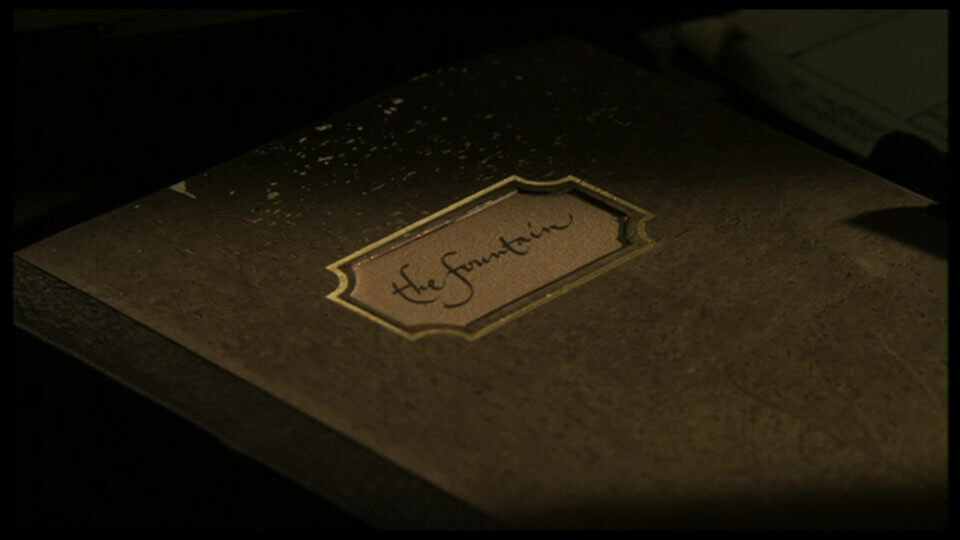
Tommy Creo (Jackman) is a doctor engaged in cancer research which, for him, involves a great deal of personal investment as his wife Izzy (Rachel Weisz) is dying of the disease herself. She is a vague figure; an idea whose personal substance has faded from his memories. Her scenes are typically recollections of moments with her that he regrets or quiet images of happiness he once had. She is writing a novel called The Fountain about a Spanish conquistador named Tomas (also Jackman) who, on behalf of Queen Isabella (also Weisz), goes on a quest to the Americas to capture a legendary Mayan temple wherein lies the fabled Tree of Life which promises fountain of youth like powers. The story is set against a backdrop of inquisitions and religious persecution that only feebly tie to his quest. Symbolically the predations of the Spanish Inquisition and the vicious palace intrigue align with the march of death that threatens the life of the real-life Izzy, but within her novel’s context they are under-explained and function poorly as an impetus for the hero. Like her book, the film has a similar problem. All of the visual feasts of allegorical imagery are only sensible when viewed allegorically, but defy logic when examined at the parallel literal level. A good allegory mixes both perfectly, but The Fountain is too obsessed with its symbolism to spend much time on story.
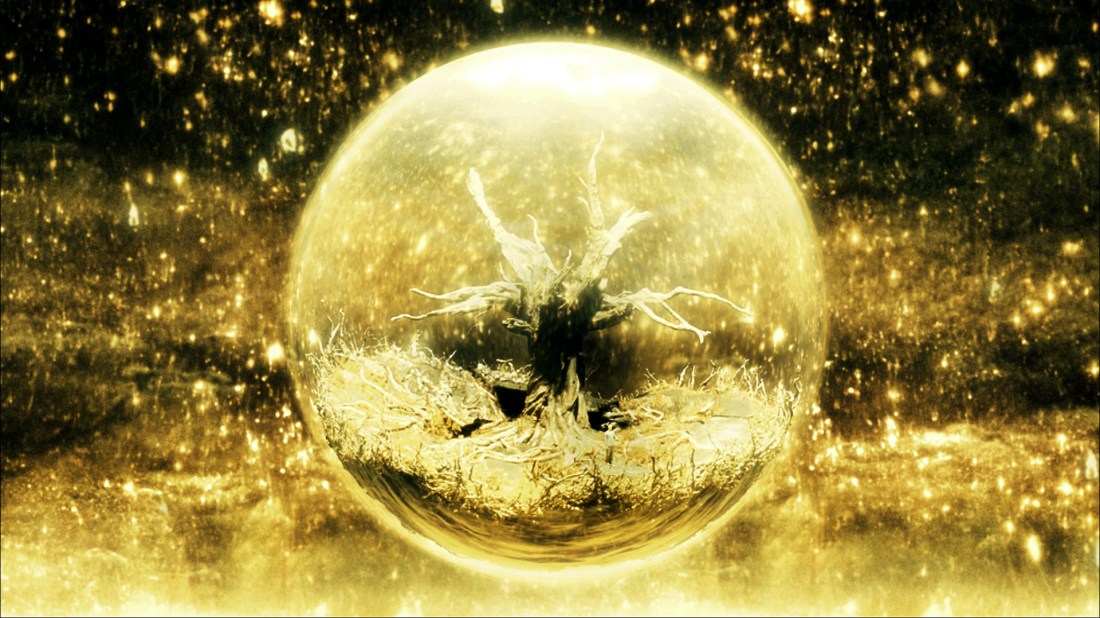
Mixed between the content of Izzy’s novel and the real-life events happening to her and Tommy there is a third parallel plotline involving a vision of Tommy inside a bubble hurtling toward a nebula called Xibalba which, according to the Mayans, contains the abode of the dead. With him, in the bubble, is the Tree of Life itself, dying slowly in conjunction with the passing of Izzy. The vision of Tommy desperately tries to keep the tree alive, occasionally consuming its bark for its rejuvenative effects.
What the movie does best is capture Tommy’s grief and the fear that comes with it. Jackman’s performance is among some of his finest. He evokes pain and loss in a way that is so profoundly real it almost brings me to tears. Another thing The Fountain does that I appreciate is showing the experience of hyper-focusing on random still things when we are frightened and aggrieved over a pending loss. He stares at a ceiling light soaking it in as if there is nothing else in the universe; and he does it again in an elevator creating a huge gestalten image of its interior paneling until it becomes everything. It’s an experience that is difficult to explain to someone who has not felt it, and Aronofsky has found a brilliant way to bring it on screen visually that I have not seen in other movies dealing with the subject.
On top of these excellent qualities is Clint Mansell’s beautiful, funereal score which is among some of his best compositions alongside Requiem for a Dream.
The Fountain’s visual language is highly poetical. It’s images are like music that recreates strong feelings. But, it is like music with bad lyrics. The moments in which Tommy purportedly comes to terms with his wife’s death and the onset of his eventual own are not convincing and are highly contrived by the aesthetics. The film tells me he is over his terror of death, but it doesn’t make me feel it in the slightest. Unlike Aronofsky’s other much better films, The Fountain suffers from the disingenuousness of pretension.
Behind the film’s production was a number of budgetary issues that during pre-production nearly killed the project. Inevitably, Darren Aronofsky, opted to make the film on a smaller budget and a smaller scale of ambition. What was intended to be an epic became a 96-minute art-piece severely lacking the director’s usual profundity and symbolic detail. There was a great picture in the works here during the film’s early planning that evaporated during its execution. Had he made the picture after Black Swan we may have had the masterpiece he originally intended. Alas, what is left is a beautiful and elegiac film, marred by limitations that robbed it off subtlety.
In the end, The Fountain is a good movie. But, it could have been a great one.

