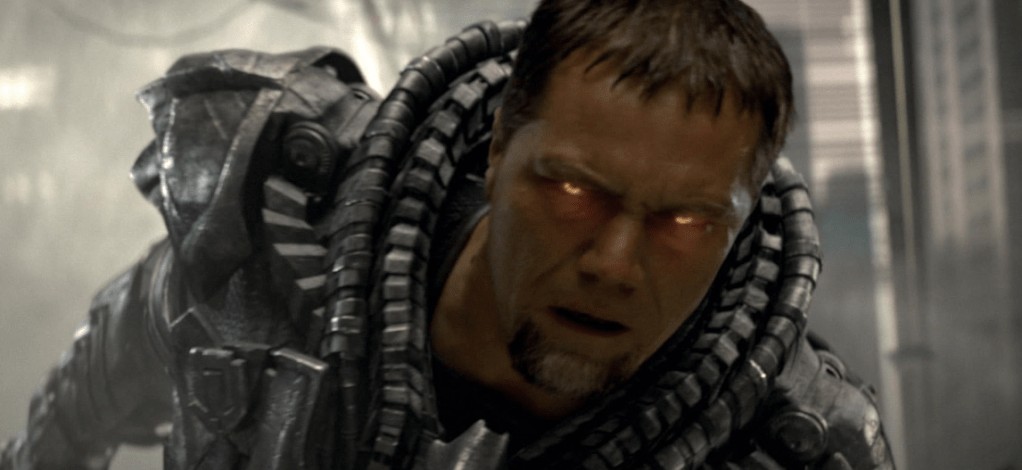
Man of Steel (2013)

2/4 stars

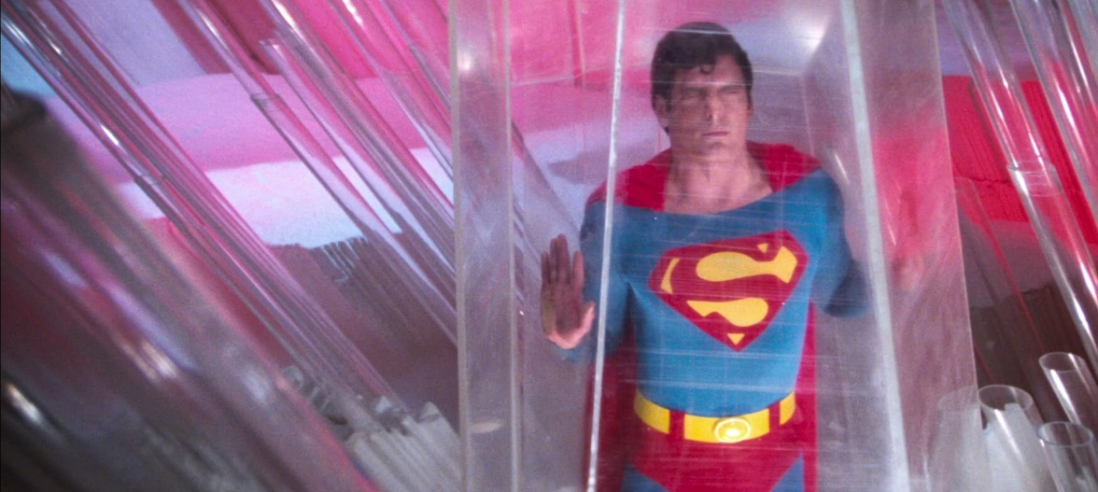
I believe that movies are best viewed on their own and on their own merits without constantly comparing them to other movies that they were not intended to be like. So when Warner Brothers finally saw fit to reboot the Superman franchise there ought to be a little latitude for reinvention. But, while Zack Snyder’s Man of Steel is not beholden to the Christopher Reeve canon, it is still beholden to Superman as a character. And that is where the movie fails.
Superman is more than Christopher Reeve. By a long tradition of comic books, movies, video games, and television series Superman has entered the cultural mythos as an established character whose lore, values, and personality have become sacred.

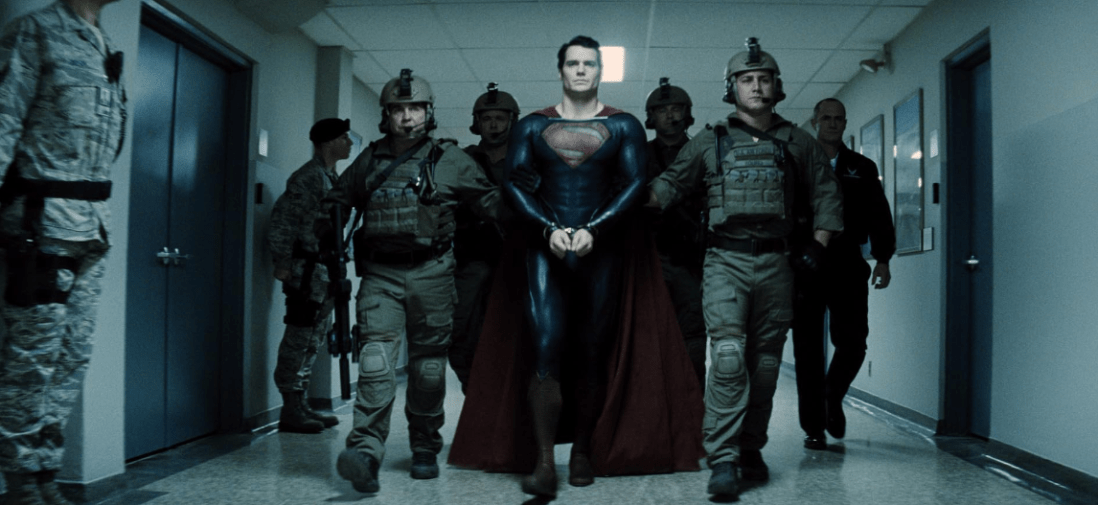
My objections to Man of Steel are not solely due to my preference for Christopher Reeve. What I object to is how the heart and soul of Superman has been so thoroughly sucked out. Even his costume is drab and colorless. Henry Cavill plays the role without personality. Instead of the idealistic boy scout we have grown to know and love, he is angsty and much too serious. His performance is like that of a robot. Instead of being Superman as I know him, Cavill plays the sort of impersonal hero that I would expect to address everyone as “Citizen!” As Superman he is dull and emotionless. As Clark Kent he is constantly anxious and facing existential crises.
It is not until the end of the film that he dons the glasses and becomes a reporter at the Daily Planet. The scene is too brief to say much, but in those brief seconds I saw little sign of the winsome mild-mannered reporter that he is supposed to be. He strides in with confidence and makes a charming smile. He is more like an adolescent fantasy of a handsome intern.

Clark’s childhood in Smallville is handled differently than it is in the original film, Here it is doled out in a series of flashbacks that come and go throughout the first act. These scenes run parallel against his adulthood right before he puts on the cape and boots. Clark is unsure of himself and desperately wants to know what his destiny and purpose in life is. As a child we see him struggle to adjust to his powers and his relations with his peers is strained and distant. Pa Kent (Kevin Costner) raises Clark to try to find the right outlet for his powers and to maintain a sense of self-restraint. To the film’s credit these scenes do a great job at revealing how Superman came to be responsible with his abilities without becoming corrupted and tyrannical by them. There is a key moment where Clark has to contend with middle school bullies trying to get him to fight. Instead of refraining from violence out of sheer goodness of heart, the scene more realistically shows how difficult it is to maintain self-control when one is angry. While cornered he is gripping a fence behind him which, after the bullies run off, is shown to have been crushed by his hand. Pa Kent praises Clark for not giving into his baser nature, but admits that a part of him would have been satisfied had Clark knocked their blocks off. Being a good person is hard work and the film presents those difficulties remarkably well.
But the movie never quite develops him into the character that we know. Up to the very end his uncertainties and trauma remain with him. I would have much better liked seeing these pieces of his past add up to the kind and idealistic man he would later become.
One thing I heavily disliked about the flashbacks is how far Pa Kent takes the lessons in self-restraint. His dialogue and actions suggest that he doesn’t want Clark to become a hero at all out of fears for what it would do to society. After saving a bus full of schoolchildren his dad seems more concerned about the attention it would draw to Clark than the lives he saved. And the way the film handles the death of Jonathan Kent is unforgivable. In the original lore Pa Kent’s heart attack was a poignant lesson to Clark about the limitations of his powers and how he cannot save everyone. But, in Man of Steel his death is something easily preventable, but occurs anyway due to over-caution.

The film opens, like in the original, on Krypton. The planet is about to explode thanks to over-mining that has destabilized the planet’s core. Superman’s father, Jor-El (Russell Crowe), is fed up with Krypton’s stagnant culture which is portrayed as being built on eugenics. The Kryptonians are grown in labs with preset destinies and roles to play. Jor-El would rather see his race breed freely without governmental controls. He steals a codex of DNA that he implants in his son in the hopes of reseeding the Kryptonian people somewhere else.
When General Zod (Michael Shannon) stages a rebellion he seeks to acquire the codex for himself so he can rebuild Krypton’s civilization under his rule. With Superman now safely flying in an escape pod for Earth, Zod is too late and his rebellion is quelled swiftly. As we have seen before Zod and his cohorts are sent into the Phantom Zone.

Back on Earth the adult Clark Kent makes his first acquaintance with Lois Lane (Amy Adams) when she stumbles upon an old Kryptonian scout ship that Clark was exploring. The movie dodges entirely the whole notion that Lane doesn’t know Clark Kent is Superman by having her uncover his identity early on. At the end of the film when he starts his first day at the Daily Planet she already knows who he is.
Man of Steel handles their love story even worse than the Reeve films did. Their first kiss comes out of nowhere, following only a small handful of meetings, all of which are professional and unflirtatious. The kiss is, in fact, the first indication that Lois was attracted to Superman at all.
Adams’ performance as Lois is markedly different than Margot Kidder’s. She is more like a journalist who stubbornly puts herself in dangerous situations for her paper. Kidder’s Lois Lane was more like a gossip columnist. Amy Adams plays the sort of stubborn journalist who sniffs out cover-ups and pesters the powers that be to find the truth. What is unfortunate is that that is all there is to her personality. Kidder was full of personality while Adams has virtually none.

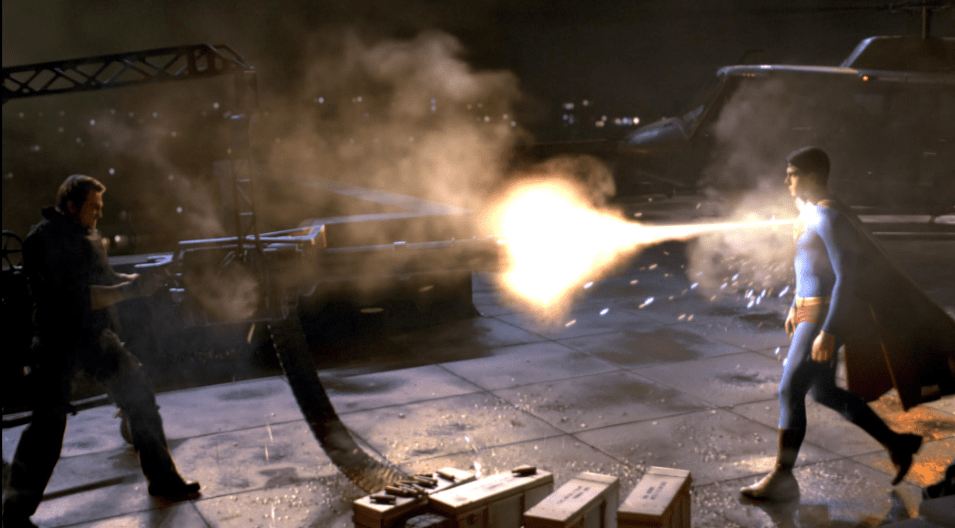
During the final act, after Zod comes to Earth to take back the codex and terraform the planet for a new Krypton, the action scenes have the same problems that I have had with Superman Returns. The CGI, instead of being put to any artful use, is used to show things moving so fast that they are hard to make out. Superman zips about at high speeds, burning objects are hurled around in hundreds of shots per second, and explosions dominate much of the foreground. A lot of the action shots are also done in close-up which only furthers obscures a clear view. Computer generated special effects are at their best when they are used to show the audience things they haven’t seen before and couldn’t have seen otherwise. Too often they are utilized, like in this movie, to create highly kinetic action that is impossible to process and appreciate.

At the end of the day Superman is not an action movie star. Who he is as a character is just as important as what he does. Probably even more so. What the makers of Man of Steel don’t seem to understand is that when reinventing a character certain core traits need to be preserved if he is to be that character at all. What I saw was a very depressed and beleaguered man wearing a Superman costume. But I didn’t see Superman.
Back in 2013 I heard a few yea-sayers claim that “this is not your father’s Superman!” Perhaps we should consider that our fathers were right.

Director: Zack Snyder
Writers: David S. Goyer, Christopher Nolan
Producers: Christopher Nolan, Charles Roven, Deborah Snyder, Emma Thomas, Jon Peters, Lloyd Phillips, Thomas Tull, Wesley Coller, Curt Kanemoto
Cast: Henry Cavill (Superman/Clark Kent), Amy Adams (Lois Lane), Michael Shannon (Zod), Diane Lane (Martha Kent), Russell Crowe (Jor-El), Antje Traue (Faora-Ul), Harry Lennix (General Swanwick), Richard Schiff (Dr. Emil Hamilton), Christopher Meloni (Colonel Nathan Hardy), Kevin Costner (Jonathan Kent), Ayelet Zurer (Lara Lora-Van), Laurence Fishburne (Perry White)
Composer: Hans Zimmer
Cinematographer: Amir Mokri
Editor: David Brenner
Superman Returns (2006)

3/4 stars

Superman Returns makes a solid effort to recapture the spirit of the original Superman movies. This is most clear in the film’s casting, where the performances are largely imitative of the original actors. It all makes for a conscious and deliberate attempt at producing a theoretical reconstruction of what a Superman 5 could have been had it been made back when Christopher Reeve, Margot Kidder, and Gene Hackman were in their prime. And it mostly succeeds.

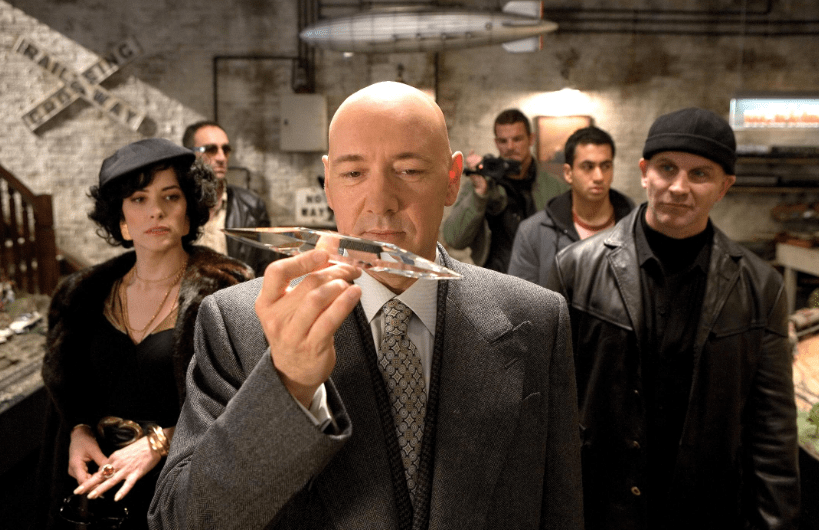
Kevin Spacey, in particular, fills in Hackman’s shoes as Lex Luthor remarkably well. Spacey doesn’t stoop to parody, but makes the role his own while keeping Hackman’s mannerisms and tone largely intact. What he does best is recapturing the narcissism of the character. He portrays arrogance and indifference to humanity a bit more convincing than Hackman did, but he is not as charming or funny. Their respective performances complement each other, broadening Luthor as a character, while each puts their own spin on him.
Among the more minor characters like Jimmy Olsen and Perry White, the recasts involve performances so spot on in imitation that there isn’t much to say about them if you had seen the previous movies. Sam Huntington is the spitting image of Marc McClure as Olsen, aside from being slightly more animated than McClure was. Frank Langella meanwhile plays White exactly as I remembered him when Jackie Cooper played him.
Brandon Routh as Superman, however, is a bit of a mixed bag. He has the right build for Superman, square jaw and everything. But, Routh’s performance as Superman is a trifle dull. He has the physicality of the character down, but not quite the personality. As Clark Kent, he is a bit better, although his imitation of Reeve’s winsome mannerisms boil down to mere mimicry. Reeve’s behavior as Kent was more charming and believable than Routh’s which is flat at times and doesn’t command as much attention.
Kate Bosworth as Lois Lane is the most transformative of all the performances in Superman Returns. Margot Kidder was more charismatic and more fun than Bosworth, but Bosworth adds a level of maturity and emotion to the role that Kidder didn’t quite capture. Of all the recasts Kate Bosworth is the least convincing as a continuation of the character in the originals, but she is better written.

The film opens with a bit of expository text saying that Superman had left Earth some time ago – later revealed to have been five years – after learning that scientists had discovered Krypton, his homeworld. He had flown off to go find it, but the movie never quite makes it clear what he intended to do when he got there. When he returns he says the planet was completely barren of life and that he truly is the last of his race. Would he have stayed if he found living Kryptonians there? Superman never says.
What makes for a point of contention with his friends and family is that he never said goodbye to anyone when he left. Lois is still angry with him and we discover that in his absence she had written an article for the Daily Planet called Why the World Doesn’t Need Superman which earned her a Pulitzer for journalism. The contents of the article are not specified other than that Lois began to feel that the Earth’s reliance on a godlike savior was not in the people of Earth’s best interest. She later expresses some regret for writing it, although she obviously keeps the Pulitzer. I know I would have.
Clark Kent, speaking for Superman, tells Lois that perhaps the reason he had not said goodbye is because it was too painful for him. I find this flimsy at best. It’s not a strong and emotionally detailed explanation and I couldn’t but wonder about his poor mother, Martha. The old woman spent five years wondering if Clark was dead and I don’t think avoiding a painful goodbye justifies putting one’s widowed mother through that.
When he comes home he finds a lot of things have happened since he was gone. Lois is with a new partner (James Marsden) and she now has a son. The revelations of what Clark had missed while he was gone suggests that Superman was mistaken in thinking that his kinship with Krypton was more important than the relationships he had on Earth. The theme is not dealt with explicitly, but these events say something about what family really means. Family is not always blood.

Luthor, meanwhile, is involved in a plot to raise a new continent from the sea where he would be its absolute ruler. That’s good old Lex for ya. After acquiring several of the same Kryptonian crystals used to build the Fortress of Solitude – Superman’s base in the North Pole – Lex wants to use them in a similar way to create a new landmass in the Atlantic. The only problem is such an event would eliminate much of the American east coast and even destroy parts of northern Africa. Naturally, Luthor doesn’t care. But the return of Superman won’t make this easy.

Superman Returns is a breath of fresh air. It’s story is solid and ends the series on a poignant note. Director Bryan Singer, who had given new life to X-Men a few years prior, salvages the Superman series from the dimwitted dreck that characterized the earlier sequels. It is certainly the second best film in the series after the first one.
It’s only weak points are the occasional pale imitations made by some of the cast and I have some reservations about its visual treatment of Superman. In the original movies when Superman was flying and saving the world he was the central focus of the camera. He soared gloriously with each shot good enough to hang on a wall. But, by 2006 Superman in flight is achieved through CGI which was still a bit primitive at the time. To avoid these problems Superman is often shot from a distance or in shadow, obscuring a clear view of him. When he flies he zips past the screen quickly instead of letting the camera remain fixed on him like in the original movies. My favorite parts of the older films were when Superman would fly toward the screen, his fist thrust forward heroically as John Williams’ classic score heightened the excitement. That is sadly lacking here most of the time and I missed it. This movie was made in a time when CGI objects would move at high speeds to disguise the fakeness of the special effects. The older filmmakers, however, didn’t balk at the matte lines and obvious super-imposures the flying scenes entailed and they were better for it.

As throwbacks go, Superman Returns is satisfying and a joy to watch. The series at the time was in sore need of revitalization and Singer delivers. Binge-watching the series has altered the experience a bit, but in 2006 this movie was like revisiting an old friend and it was a happy reunion.

Director: Bryan Singer
Writers: Michael Dougherty, Dan Harris, Bryan Singer
Producers: Jon Peters, Bryan Singer, Gilbert Adler, Loren Orleans (IMAX version), William Fay, Chris Lee, Scott Mednick, Thomas Tull, Stephen Jones
Cast: Brandon Routh (Superman/Clark Kent), Kate Bosworth (Lois Lane), Kevin Spacey (Lex Luthor), James Marsden (Richard White), Parker Posey (Kitty Kowalski), Frank Langella (Perry White), Sam Huntington (Jimmy Olsen), Eva Marie Saint (Martha Kent), Marlon Brando (Jor-El [archival footage])
Composer: John Ottman
Cinematographer: Newton Thomas Sigel
Editors: Elliot Graham, John Ottman

Superman II (1980)

3/4 stars

Superman II has all the excitement and visual spectacle of the original Superman film, but lacks its wit and plausibility. As a superhero movie it’s about as good as Tim Burton’s Batman or the first Avengers. But there isn’t much here of what made the 1978 Superman movie special.

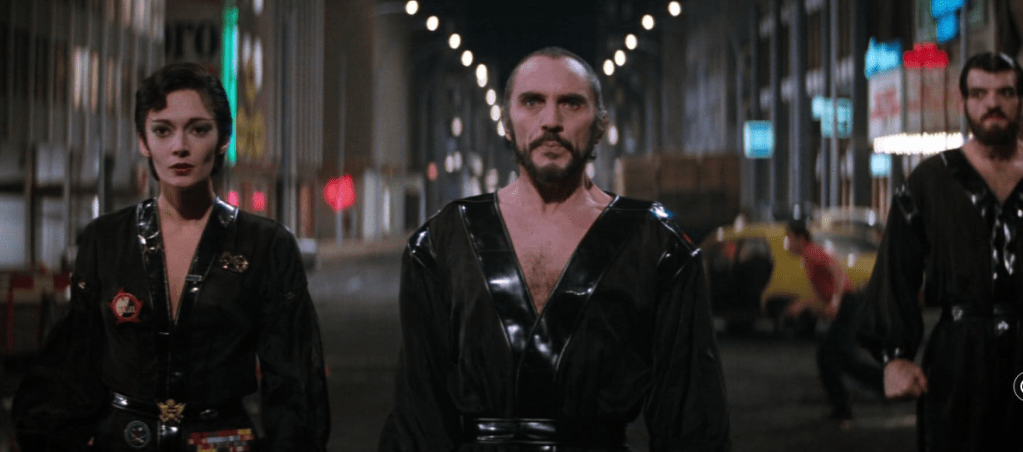
In the first film it opened with three Kryptonian criminals being charged with sedition. General Zod (Terence Stamp), Ursa (Sarah Douglas), and Non (Jack O’Halloran) are condemned to dwell inside a floating disc called the Phantom Zone which floats off into space just as baby Superman’s escape pod leaves the planet. Now, in Superman II we find out what happened to them.
The sequel opens with Superman (Christopher Reeve) rushing to Paris after a group of terrorists with a hydrogen bomb take control of the Eiffel Tower. Superman saves the day by rescuing hostages and flying the bomb up into outer space where it explodes harmlessly. Unfortunately, the Phantom Zone just happened to be flying by and the shock waves shatter it, releasing Zod and gang. Ursa murders a couple of astronauts on the moon, and then the trio land in Houston, Texas. Zod wants to rule the planet and be worshiped by its denizens, but upon hearing stories of Superman he realizes that there is one threat to him and his ambitions that must be removed if he is to succeed.
The three villains have only a low kind of cunning and rely mostly on brute strength and their powers to get what they want. As movie bad guys go they have none of Lex Luthor’s (Gene Hackman) charisma and act more like playground bullies than anything else. Much of their scenes consist of wrecking havoc, causing property damage, and making comments about puny earthlings. Lex is regrettably given less to do. He joins forces with the Zod gang in the hopes of getting revenge against Superman, but he is forcibly sidelined by the new villains; his scenes little more than standing in a corner uttering some witticism.

Superman II’s subplot involving Clark Kent’s growing romance with Lois Lane (Margot Kidder) is slightly more interesting. Lois, who has been growing increasingly suspicious of Kent’s true identity, finally uncovers the truth. Superman is in love with Lois, but he discovers that for the two of them to be together he must sacrifice his powers and immortality. We are not told why and Superman accepts it without question. The time they spend together as a human couple is sweet and hopeful, but is sadly short-lived. Zod and his friends threaten Metropolis and it becomes clear to Clark that the world needs Superman. Clark and Lois’s breakup, however, represents one of several different failings that Superman II has in its writing. The movie does not convincingly establish that Clark Kent and Lois Lane are in love at all. Their interactions throughout the majority of the film is not much different than the simple infatuation they had in the first one. That they are deeply in love is something we are told more than we are shown. Break-ups can take a serious emotional toll on a person, and for a moment in the movie’s final scenes it appears that something poignant will be made of it. Lois tells Clark that he is “a tough act to follow” after he tries to suggest that someday she may meet someone else. I think a lot of people following a break-up feel as Lois does, even when their boyfriend isn’t the Man of Steel. But, the film cops out of any further dramatic tension by Superman implausibly wiping her memories clean with a kiss.
This kiss is just one of several stupid moments in the movie. I cannot abide arbitrary powers being lazily introduced to get the main characters out of a bind, and Superman II is full of moments like this. In the original film, Superman’s powers, while impossible, are at least explicable to the audience. We understand that he has super strength, laser vision, and can fly. We also know why he has these powers, being an alien living on a planet with a different sun and atmosphere. But, in the sequel his powers expand beyond any plausibility. Instead of changing into his costume with super speed he now makes his civie clothes magically vanish as the Superman garb materializes out of thin air. When Non charges at him Superman pulls an S off his chest and throws it at him. The material expands into a sort of plastic wrap that temporarily takes Non out of the fight. These moments are pure dei ex machina, lacking any sort of explanation and occurring from a standpoint of quick convenience.

In the final act, Superman and the Zod gang do battle in the streets of Metropolis and later in the Fortress of Solitude. The Metropolis scenes as action set pieces are not very exciting. There is little energy to them, with most of the fight just smashing things one by one at a slow rate and some petty taunts from Zod. There is a sense of city-wide chaos one would expect that is lacking here. The fight feels more like an elaborate street brawl while the rest of the city remains asleep or dully watches on.
The real purpose of the Metropolis battle seems to be product placement. There is an annoying scene in the first Superman involving Cheerios, but it is brief enough to not detract from that movie’s greatness. In Superman II, though, we are fed a whole marching gallery of products obnoxiously shot to hold the viewer’s attention. In the span of a single minute I counted about four or five products strutting their stuff while Metropolis is under attack. These include, but are not limited to, KFC, Coca-Cola, and even Marlboro cigarettes. I doubt Superman would have approved.

When all is said and done I find Superman II to be a sufficiently entertaining movie. I was not bored by it by any means. And I can get behind its plot and adventure, if not so much its execution. But, as Lois said of Superman himself, the first movie is a tough act to follow.

Directors: Richard Lester, Richard Donner
Writers: Jerry Siegel, Joe Shuster, Mario Puzo, David Newman, Leslie Newman, Tom Mankiewicz
Producers: Pierre Spengler, Ilya Salkind, Alexander Salkind
Cast: Gene Hackman (Lex Luthor), Christopher Reeve (Superman/Clark Kent), Ned Beatty (Otis), Jackie Cooper (Perry White), Sarah Douglas (Ursa), Margot Kidder (Lois Lane), Jack O’Halloran (Non), Valerie Perrine (Eve Teschmacher), Susannah York (Lara), E. G. Marshall (The President), Terence Stamp (General Zod)
Composers: Ken Thorne, John Williams (Superman Theme)
Cinematographers: Robert Paynter, Geoffrey Unsworth
Editor: John Victor Smith