Star Wars: The Mandalorian and Grogu (2026) [spoiler-free]

2/4 stars

On Facebook this afternoon I read a comment from someone gushing over The Mandalorian and Grogu, saying it was like “sitting through an entire season” of the TV series. I am afraid I cannot help but agree. The movie very much feels like an extended episode of the Mandalorian TV show, with a narrow unexpansive story that doesn’t justify the silver screen.

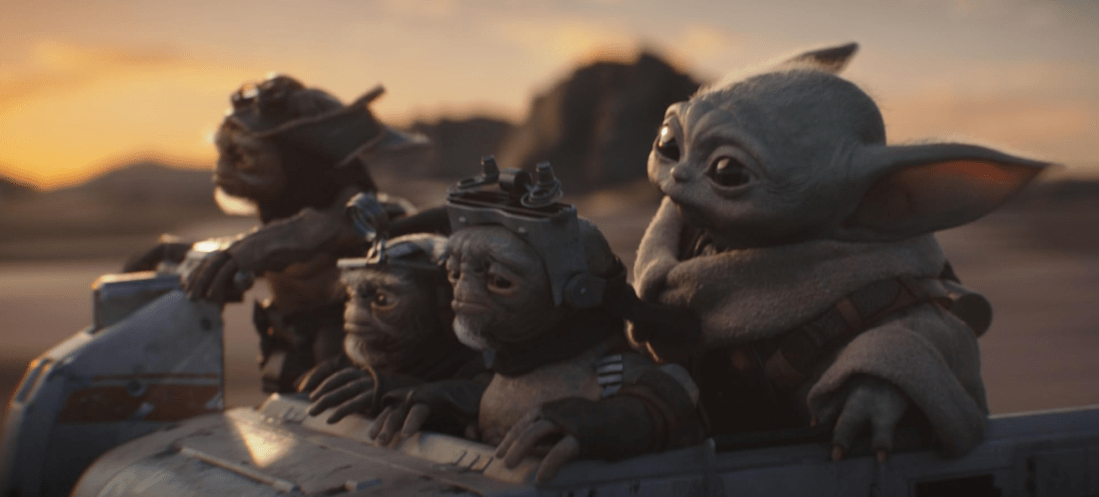
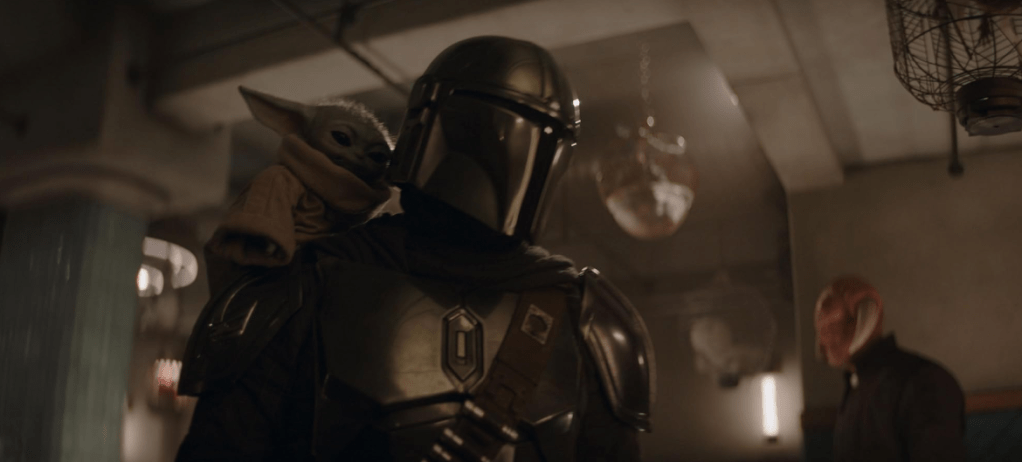
“Baby Yoda” has become a cultural icon for a lot of people; his casual appearances not limited to merchandise, but also memes and fan art much in the same way as Betty Boop or Tinker Bell a few decades ago. I suspect that the movie was mostly made for Baby Yoda fans in mind. The film certainly doesn’t bother much with any loose ends or plot arcs of the TV series and it can be approached without having seen the show at all. What we get instead is a barely significant side adventure featuring the Mandalorian (Pedro Pascal) and, of course, Baby Yoda himself, Grogu. But there is nothing here that expands the Star Wars galaxy an inch. The current intrigues of the New Republic after the fall of the evil Empire are not touched upon and the personal lives of the two leads are not altered in any way that future seasons of the TV show need worry about. All in all, The Mandalorian and Grogu is the sort of story best suited for TV or one of the innumerable comics and novels set in the Star Wars universe. There is nothing here that merits a theatrical experience and I personally suggest saving your 15 dollars and wait for its release on Disney+.

I shall spare plot details for the spoiler-conscious save to say that the main plot involves The Mandalorian, now working for the New Republic, taking orders from Rebel navy pilot, Colonel Ward (Sigourney Weaver). She wants him to track down remaining Imperial warlords, but one of his targets is elusive and info on his whereabouts is known to the Hutts who want a favor in return. The Mandalorian and Grogu will cross paths with one Rotta the Hutt (Jeremy Allan White) whom the Hutts want returned to them. But, Rotta has ambitions and dreams of his own and conflicts of interest soon turn the Mandalorian’s mission into something much more complicated.

But enough about all that. The movie is only a few days old and Star Wars mixed with spoilers tends to explosive results on the internet. What I can say is that White’s voice acting as Rotta is nothing to write home about. In his defense, the dialogue he is given is the sort of uninspired, depthless, on-the nose junk given to characters in adventure-oriented cartoons. Jeremy Allan White conjures no enthusiasm in the role and he felt entirely out of place every time he speaks.

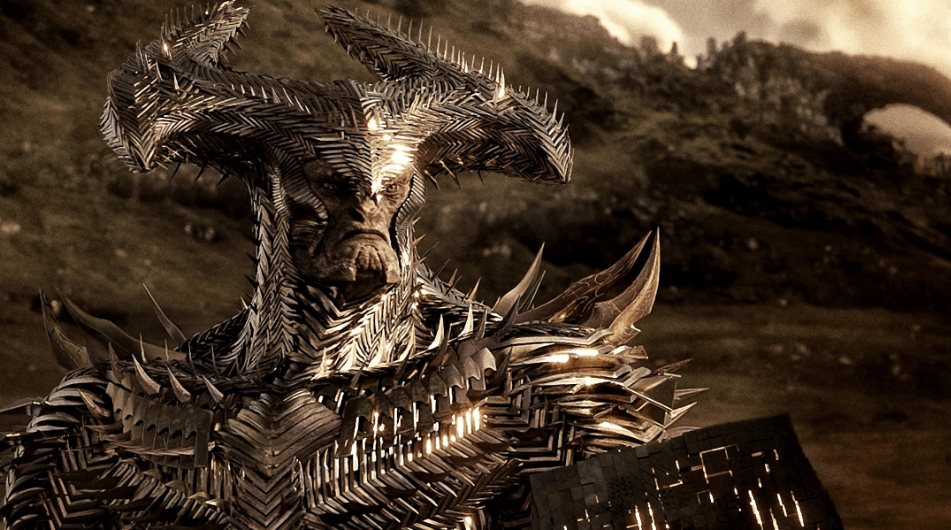
The weakest elements in the movie are the action sequences and special effects, which is a damned shame when speaking about a Star Wars movie. The effects are nothing we haven’t seen before on any of the Star Wars television series and there is not a memorable shot or anything groundbreaking to be seen in its over two hour runtime. The action sequences come and go entirely too often, with the Mandalorian plodding through the plot from one fight to another each following a pattern of minion fighting, boss fight, and deus ex machina. I felt I was watching a video game more than a movie. All of the sequences are shot extremely fast and often under murky lighting so that I was never able to get a good look at any of the creatures and droids that our hero battles with. The fight scenes are all a visual blur and they unfortunately make up about 80% of the film. After leaving the theater I felt that I still could not say what any of the baddies looked like.
I saw the movie at a local theater in my hometown which makes me hesitate to comment on the film’s sound design as it is possible the issues lay in the theater’s setup rather than the movie itself. But some of the things I heard weren’t pleasant. The movie is heavy-handed with explosions and they are so loud that they drown out the music and other sounds in the mix. This may be a failure of the film’s sound-mixing or something that will improve when I rewatch it at home. But, my local cinema’s fault or not, this ended up being one of the loudest Star Wars movies I have seen and not in a way for the better.
By the end, the movie had me feeling exhausted with nothing interesting to reward me for having seen it.

I would like to say the movie isn’t all bad though. There are moments I genuinely liked. Grogu, for one, is given a great deal to do compared to the TV show and the scenes that focus entirely on him are some of the movie’s best. There is also a small cameo of Martin Scorsese playing a four-armed monkey that I found delightful and I sorely wished for more of him. The obligatory bits of comedy found in these sorts of pictures were put to good use here and, indeed, the small moments between the Mandalorian and Baby Yoda when things are quiet were when the movie was most entertaining.

But the movie’s story and action set pieces are nothing but a load of ho-hum. Traditionally Star Wars movies, even the weaker entries like Solo or Rise of Skywalker, manage to sweep the viewer off on a grand adventure that moves the Saga in new directions and treats our starving eyes to new images and places in the imagination. The Mandalorian and Grogu does none of these things. I wanted the film to take me to a galaxy far, far away. Instead, it took me to a galaxy not much farther than my living room.

Furiosa: A Mad Max Saga (2024)

3.5/4

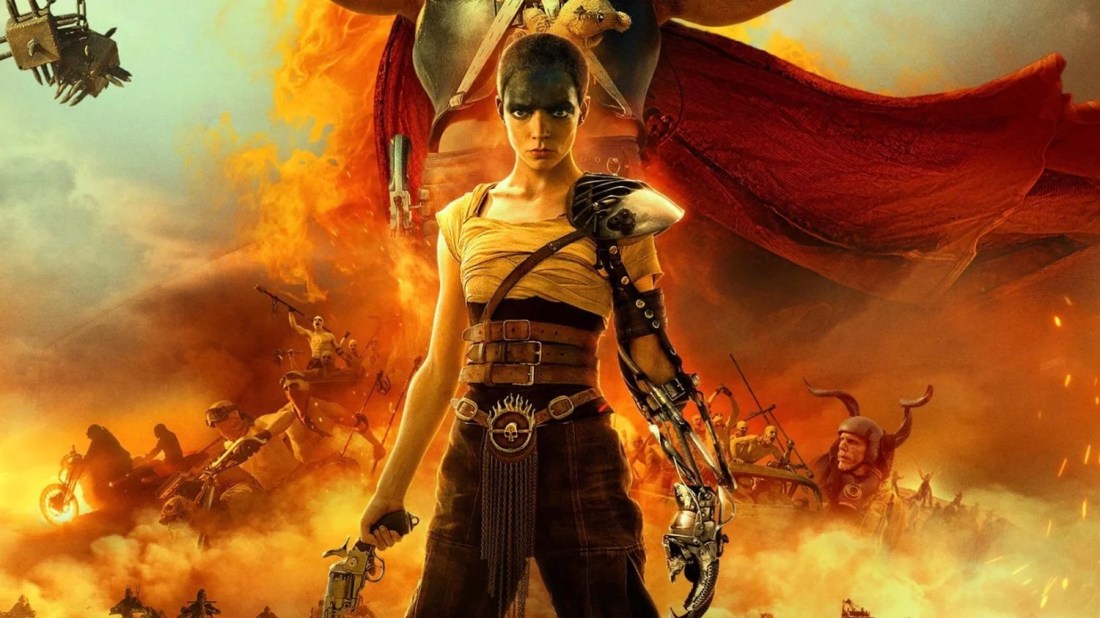
Furiosa: A Mad Max Saga is a thoroughly entertaining movie that doesn’t quite reach the kinetic energy of the previous film. Mad Max: Fury Road was a well-sustained action sequence from beginning to end, but here there is more room for introspection. Director George Miller doesn’t try to top what he had achieved with Fury Road and I cannot say I blame him. That movie represents the height of his craft as an action director and with his latest he attempts to do something different.
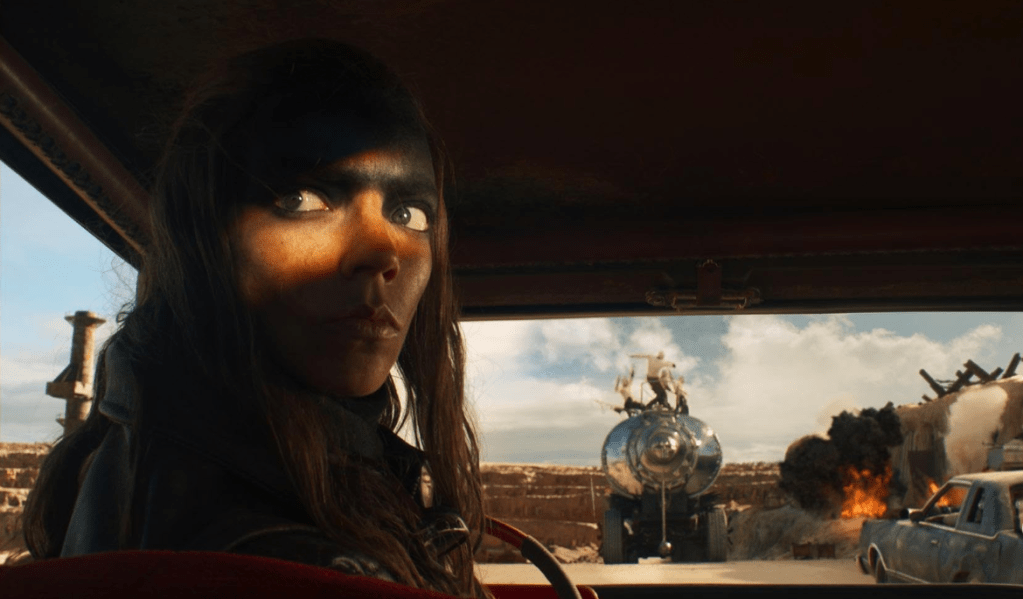
The previous Mad Max entries were more or less one-offs that could be viewed in any order. They all exist on a floating timeline and each creates its own world and aesthetics. Furiosa, however, doesn’t look at all that different in style from Fury Road and, indeed, this should more deservedly be considered a companion piece. It expands upon the world Fury Road created, revisiting much of same locations and characters. But, this time with no Mad Max. The absence is not greatly missed and it goes to show that this world is interesting enough to tell stories in without him. Instead, the film is a prequel exploring the early life of Imperator Furiosa, originally played by Charlize Theron in Fury Road. Miller, to avoid overusing de-aging techniques recasts the role with the lovely, but much less charismatic Anya Taylor-Joy.

We first meet Furiosa as a young girl (Alyla Browne) who is kidnapped from her home by raiders. When her mother (Charlee Fraser) rescues her they are caught and Furiosa’s mom is killed by the bandits’ leader, Dementus (Chris Hemsworth). Hemsworth’s performance is one of the biggest draws in the picture. He is affably wicked, playing the role like a soft-headed child turned bully. He throws deadly tantrums when he doesn’t get his way, clutching a teddy bear like a totem throughout. He strikes me as someone who in their childhood was given too much sugar and not enough spankings.
Dementus strikes a deal with warlord Immortan Joe (Lachy Hulme) that leaves him in control of Gastown, one of three major ramshackle cities in the wasteland. Part of the exchange involves handing over Furiosa to Immortan, who is to join his harem when she comes of age. She, understandably, wants no part of this and she flees. She disguises herself as a warboy (one of Immortan’s foot soldiers) and pretends to be mute.
Following a quick transition in time (a first in the series) Furiosa is older and one of Immortan’s most trusted enforcers. In the sequences where we see her grow from child to adult George Miller makes impressive use of AI tools to blend Anya Taylor-Joy’s face with Browne’s. He is a director who understands the limits of CGI and, while the film is the most CGI-laden of the Mad Max films, he doesn’t become overambitious. The use of AI here is subtle enough to escape notice and far more convincing than what we have seen in the last Indiana Jones or The Mandalorian. He keeps her body and head shrouded completely in these scenes allowing only the face to be seen resulting in none of the usual unnatural movements that characterize AI tools most of the time.
Furiosa befriends a war-rig driver named Jack (Tom Burke) who shares in her dream of escaping from Immortan Joe’s Citadel. He teaches her everything she knows setting her up for her role as war-rig driver in Fury Road. If Jack is somewhat lacking in personality it can be forgiven. He is introduced to the audience as incentive and encouragement to Furiosa, but obviously meant to die before the story is over. Is that a spoiler? Perhaps, but he is not in the previous film so…
A pathway for revenge against Dementus soon opens up when Immortan declares war on him for going rogue. The climax is not quite the action spectacle that graced Fury Road’s final act, but the film has a satisfying conclusion that gives surprisingly meaningful insight on the psychology of revenge. Her dialogue with Dementus at the end airs out intelligently what vengeance can achieve and what it cannot. He tells her that she can do him in slowly or quickly, but it won’t matter either way. His death is only merciful oblivion and faced with his lack of remorse there can be no pain that she can inflict that will justly match her own. Dementus, like any good Mad Max villain, is absurd and over-the-top. But in his final moments when he is weak and vulnerable there is something more menacing in his words. He gives full expression to how frustrating seeking revenge really is. His tolerance for physical pain is high and there is no room in his heart for seeing the error of his ways. He can be killed. But he is untouchable. The eventual choice she makes at the end may not be understood by everyone, but they are her own to make and moral judgment is left to the viewer.

Furiosa: A Mad Max Saga is an engaging revenge story packed with action and impressive special effects. But, I wanted more from Taylor-Joy’s performance. She is given very little dialogue throughout the picture which grates against the more talkative portrayal of her in Fury Road. Especially given that the film ends exactly where Fury Road begins, showing unnecessary clips from that movie during the end credits. The recap is gimmicky and only insinuates a dependence on the other film that I don’t believe is there. This is only a mild gripe, and my main issue remains the disappointing use of Furiosa as a character. She is not very interesting, which is frustrating given Anya Taylor-Joy’s talent as a performer. The best written character by far is Dementus which diversifies Chris Hemsworth from his more typical heroic roles. He is a great deal of fun to watch and he is my favorite of the many villains that have come and gone in the Mad Max series. He is, of course, ridiculous, but underlying his absurdity is a genuine menace.

The movie is good, but mostly for the reasons that made Fury Road good. There are a number of impressive shots, but nothing transformative enough to elevate it to greatness. I would recommend the picture, but with the added warning that it is not the same experience as watching Fury Road.
Miller has said he intends to make at least one more Mad Max film after this one and I am optimistic. Furiosa shows he has not lost his touch and I am hopeful that the next will be another elevation in quality we had seen before. Furiosa: A Mad Max Saga as a side story is an excellent diversion while we wait. But, I expect the next to be much better.

The Father (2020)

4/4 stars

The Father is one of the most compassionate movies I have ever seen. Dementia is a serious subject that the film treats with a deep empathy that is brilliantly artful.
Director Florian Zeller’s writing (he also wrote the original stage play) is subtle and meditative and very brave in its honesty. Instead of taking the easier road of Oscar-bait where emotions are constantly elevated and every scene drips with melodrama, there is a quiet sincerity in the dialogue and performances that resonated with me as a human being. In years to come this film will be regarded as one of the best movies about mental illness ever made.

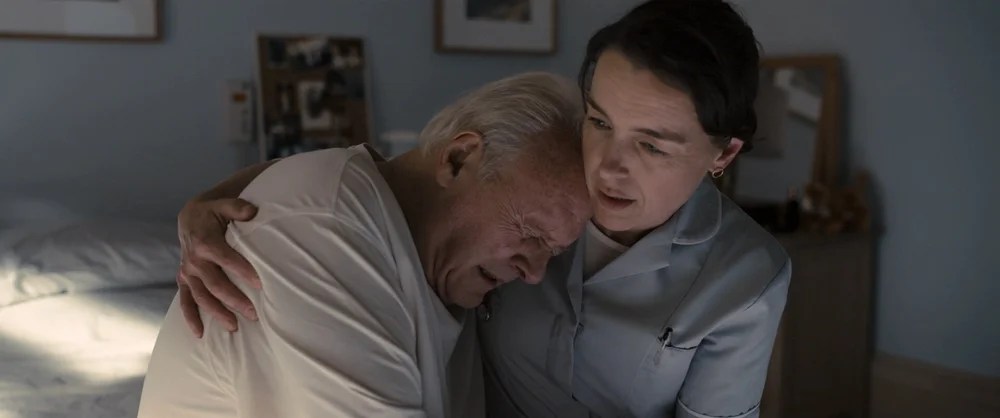
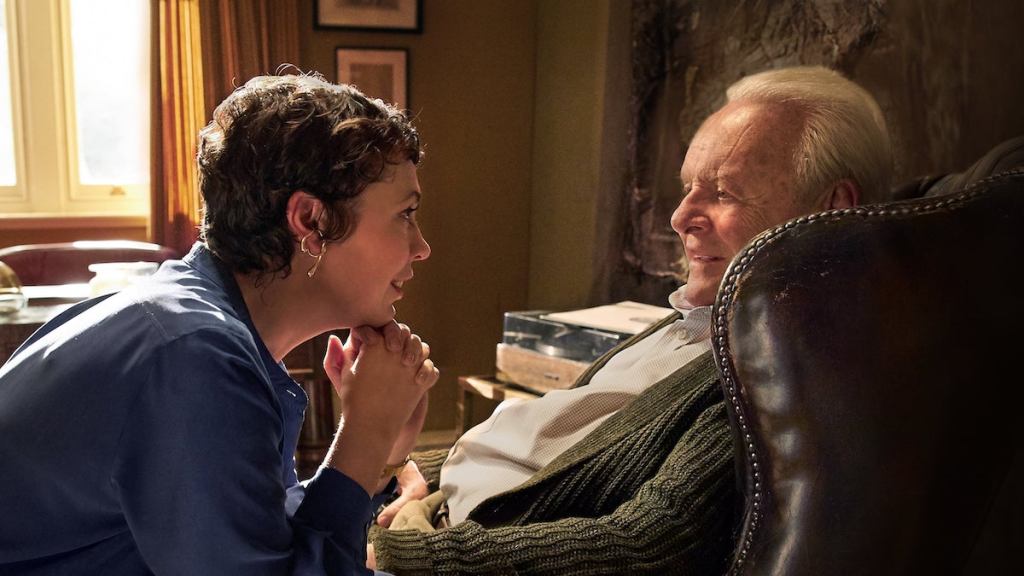
Anthony (Anthony Hopkins) is an octogenarian living with his daughter Anne (Olivia Colman). He has become well-advanced in dementia, struggling to recognize those around him and he requires constant care. Anthony frequently forgets that the apartment they share is hers and not his and he becomes confused as the many faces that come and go seem to blend together and are hard to identify. He lives a frustrating and frightening existence where each passing moment seems to come with wild changes in circumstances he cannot make sense of. Anne tells him she is moving to France with her husband and he is to be left in the apartment by himself. The next day a strange man named Paul (Mark Gatiss) appears claiming to be Anne’s husband. Anthony doesn’t know who he is and when he mentions France, Paul has no idea what he is talking about. He tells Anthony that the apartment is his and Anne’s and that she is just on her way back home from shopping. When she returns she looks like someone else and he, at first, doesn’t recognize her. She hands a bag of chicken to her husband and he leaves to go dress it in the kitchen. Anthony starts asking her about Paul and Anne tells him she hasn’t been married since she got divorced and that there is no one else there except for the two of them. When she leaves the room Paul reappears to ask him why he is being such a burden to everyone. The entire sequence is brilliantly portrayed in real time and to Anthony these contradictions occur minutes or even seconds apart. These sorts of moments happen frequently throughout the film and there is a sense of passing in and out of different realities that leaves Anthony feeling confused and vulnerable. There are days when Paul is there, who now also looks like someone else (Rufus Sewell); and some days he doesn’t exist at all.
Anthony takes a liking to Laura (Imogen Poots), a home health aide hired by Anne. She strikingly resembles his other daughter Lucy whom he hasn’t seen in some time and there are days when Lucy and Laura are indistinguishable. He misses Lucy a lot and wonders when she will stop by again. Her tragic death in a car accident years ago is largely forgotten. His frustration nearly reaches its peak when after gleefully waiting for Laura to come a completely different aide named Catherine (Olivia Williams) arrives at the apartment and he is told Laura had stopped working for them awhile ago.
I could go on, but it is best to see the film than read about it. Anthony’s story develops along to a climax that is heartbreaking and an exemplar of some of the finest acting I’ve seen in recent cinema.

Anthony Hopkins’ performance earned him his second acting Oscar following his 1991 win for The Silence of the Lambs and it is well-deserved. He goes through every possible emotion on the spectrum, each time doing it with care and subtlety. While he goes from impotent rage to laughter to childlike weeping for his mother it’s all performed as if I was witnessing a real person struggling with dementia.
The film is supported by a minimal cast all of which give performances resembling real people acting as people really do. Contrasts between the sympathetic, annoyed, and overwhelmed are deftly portrayed without aggressive pathos. The directing shows a highly reflective familiarity with human behavior.
The movie is set primarily in a singular setting inside the apartment where Florian Zeller maintains a simple structure in showing each passing day while crafting these skillful and complicated scenes where Anthony’s reality seems to shift in real time. It’s an exceptionally directed picture, impressive in that this is Zeller’s film debut. His knowledge of stagecraft is perfectly translated to film showcasing undeniable talent for direction and introspective writing.

Throughout The Father I was overwhelmed by how kindly its realism is. There is not an ounce of preachiness or sentimentality to the picture and, yet, it doesn’t become raw or cynical in its approach. There is a genuine compassion and kindliness in its writing that cannot be faked. Without being overly cheerful or nihilistic, not a single moment rings false or hollow. Hopkins’ portrait of a man struggling to rationalize his increasingly confusing life during the ravages of dementia is sympathetic and emotionally arresting. In the movie’s final scene Hopkins gives a performance that left me in tears. I was taken aback by how committed to honest feeling the movie was without being depressing or uplifting. Zeller’s screenplay goes beyond either sentiment, giving a solid bit of still-life that didn’t tell me how to feel. The film’s emotions come naturally to the viewer without contrivance or manipulation. When I watched The Father I saw real people, with real feelings, saying real things. And hanging over me the whole time was pure compassion, unadulterated by well-intended lies and triteness.

The Father is the kind of story that an author like Mitch Albom would render toothless with saccharine melodrama or a director like Sidney Lumet would elevate to nigh Shakespearean elegy. Florian Zeller meets us somewhere in the middle where simple empathy doesn’t take the sting out of sorrow, but gives it something we can relate to and find meaning in on our own. The Father is not a profound movie. It’s a deeply human one.