
2/4
The Zack Snyder cut of Justice League – something the fans clamored for after the original’s lukewarm reception – is overpadded and badly paced. Nearly two and a half hours go by before the story emerges from its first act and when it finally does it turns into a meandering exercise in repetition. The final climactic battle between the heroes and Steppenwolf (Ciaran Hinds) doesn’t feel like a climax at all as it is barely distinguishable between any of the other fights in the movie. They fight him again and again and again and then the film just kinda stops suddenly. While I didn’t particularly like the original theatrical version when I saw it in theaters I like it better than this one. The original’s final act was poorly written and made too many awkward unfunny attempts at humor, but what it had going for it was a real sense of being climactic. Pacing is more important than length in any movie, and at 4 hours and 3 minutes Zack Snyder’s Justice League is just plain boring.
An issue I had was its use of intertitles that divide the film in a series of parts. It comes across as pretentious and the fades to black to show us these only drag the movie’s pacing even more. I was taken out of the movie each time they appeared and they seemed to serve only as a reminder that the movie was still going.
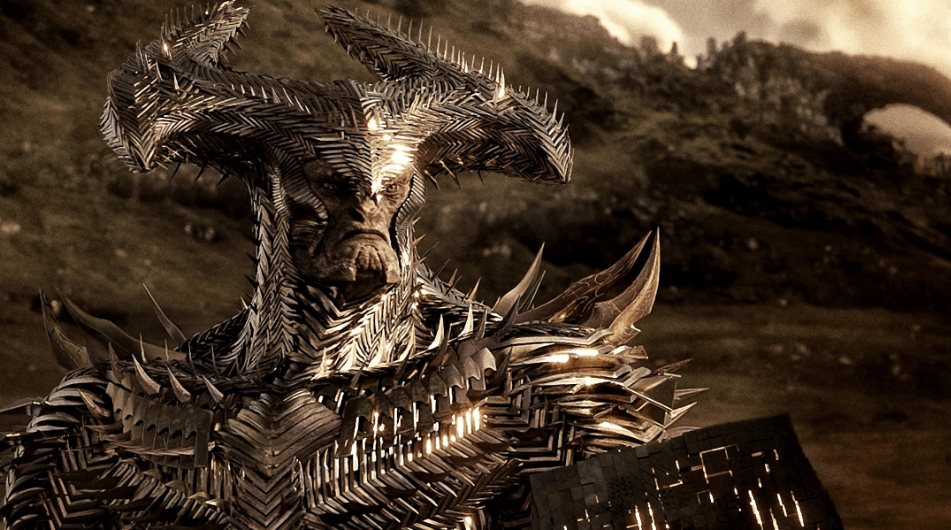
The plot revolves around a new villain named Steppenwolf – an armored CGI giant straight out of Diablo – who has fallen out of favor with his nephew, Darkseid, and now wants to redeem himself. Steppenwolf is seeking three macguffins called Mother Boxes with which Darkseid wants to gain ultimate control of all life in the universe or something. I mean, look, macguffins and villain plots are not that important in most superhero movies because the resolution is always the same. The heroes win some, lose some, and then ultimately win some again and then the movie is over. We know who the bad guy is and we know who the good guys are and we want to see them fight each other. It’s like PPV wrestling or a video game without interactivity or an ability to skip the cutscenes. The Roger Moore Bond era had the same problem. No one cares what the bad guy is doing, just grab a pair of skis and stop him like always.
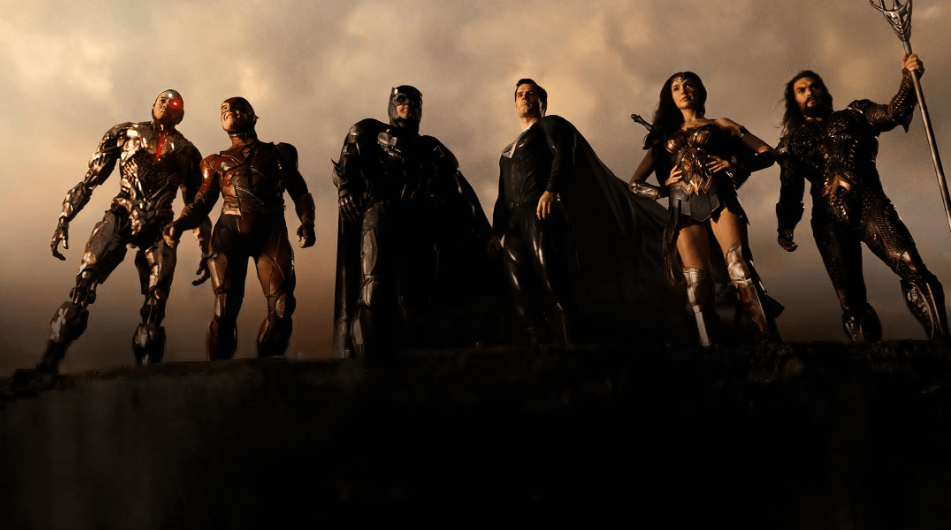
One of the Mother Boxes is in the possession of new JLA member, Cyborg (Ray Fisher), who was created with it after suffering injuries from a car accident. This same Mother Box is used to revive Superman (Henry Cavill) who now dons a black suit with a silver S.
Superman’s revival makes for the best and most interesting part of the movie. He awakens with no memories of who he is at first and starts attacking the Justice League before being snapped out of it by Lois Lane (Amy Adams). My favorite shot during the attack is when the Flash (Ezra Miller) tries to get around Superman at high speeds. Whenever he does this he disappears and the rest of the world goes into slo-mo similar to what happens to Quicksilver in the X-Men movies. As he passes, Superman’s eye slowly shifts in his direction revealing that he is able to keep up with the Flash at all times.
The majority of the movie’s first few hours is Bruce Wayne (Ben Affleck) meeting with the future Justice League members and trying to recruit them. He meets with Aquaman (Jason Momoa) in Iceland who makes it clear that he wants nothing to do with whatever Batman and co. are planning. Obviously he comes around later.
The writing and casting of Aquaman in the DCEU is a conscious effort to distance the character from the memes and jokes that have been made at his expense on the internet. Shows like Big Bang Theory and Family Guy are largely to blame. There is now a consensus among non-comic readers that a man from Atlantis with a three-pronged spear, who can control the power of the seas, and talk to sharks is somehow lame. Here, Aquaman is a rough brawler who drinks heavily and tries to intimidate everyone with his surliness and physique. Momoa’s performance is good enough, but this choice is definitely an odd one.
Batman’s first success is with Wonder Woman (Gal Gadot) who is first introduced in the film stopping terrorists from blowing up a building full of schoolchildren. It’s the usual plot armor gimmick with a bomb with a timer that goes down at a varying rate. If you actually try to count the remaining seconds you realize everyone should have been blown up a minute ago.
Gadot’s Wonder Woman is not strong on personality. She gives dull pep talks and plays at being serious. She is not convincing as a character and her action scenes continue to suffer from special effects tricks that don’t look real.
Cyborg is more reluctant to join than perhaps even Aquaman. He doesn’t relish being in the suit he is in and his prolonged isolation from society has left him bitter and angry. What makes him more interesting than the other characters is that his origin story is ripe for a villain. The circumstances of his condition and his anger says a lot about free will when he ultimately joins the good guys anyway. He has the ability to tap into any network, computer, and camera feed making him an asset that rivals the resources of the Batcave. Before joining JLA he tries to find purpose in life helping poverty-stricken single mothers by hacking their bank accounts and making them millionaires overnight. Even when he is being bad he does it kindly and with pure motivations. Bruce Wayne tells Flash in the movie that his superpower is being rich. But all we have seen him do with that is pay for Clark Kent’s funeral. What does he have to say for himself?
Lastly is the Flash played by Ezra Miller. In the established lore he is prone to causing crisis events, coming in and out of reality, and being an overall nuisance to the space-time continuum. But enough about Ezra Miller.
The Flash character in Justice League is written as comic relief. He is eager for friends and to be liked, but is socially awkward and tends to say the wrong thing or too much at the wrong time. Occasionally he can be funny, but often his bits don’t land and his utterances make me wince. The funniest moment is when he tries to say goodbye to a Russian family, but says Dostoevsky instead of do svidanya. Sadly that moment was cut in this version. Miller puts in the best performance of any of the other actors in Justice League, but he could have been given better lines.
As far as the action set pieces, special effects, and cinematography go, the film has the same problems I had with Batman v Superman. They’re dimly shot, over-reliant on cartoonish CGI, and use so much fast-cuts and quick editing that I doubt even Flash could understand what he was seeing without pausing it off and on again. With the far superior Wonder Woman (2017) released between this movie and BvS it is clear that this is just Zack Snyder’s style. I’m not a fan. His films tend to look drab and ugly and they’re soullessly written.
This movie certainly didn’t anger me the way Suicide Squad did. But it is not exciting like Wonder Woman or as interesting as Batman v Superman. The theatrical version is slightly less good than Man of Steel (another film I disliked), but the Snyder Cut fatigued me. What made movies like Lawrence of Arabia and Gone with the Wind justify their run-times was that there are no wasted shots and the writing is engaging throughout. With Justice League the reincorporated footage and added pickup shots are just mere padding. Stuffing everything back into a movie for a vanity project doesn’t make it good. It just makes it long.
Director: Zack Snyder
Writers: Chris Terrio, Zack Snyder, Will Beall
Producers: Charles Roven, Deborah Snyder, Ben Affleck, Wesley Coller, Curt Kanemoto, Benjamin Melniker, Christopher Nolan, Jim Rowe, Chris Terrio, Emma Thomas, Michael E. Uslan, Madison Ainley, Marianne Jenkins, Tamara Watts Kent, Madison Weireter, Andrea Wertheim, Gregor Wilson
Cast: Ben Afflect (Bruce Wayne/Batman), Henry Cavill (Superman/Clark Kent), Amy Adams (Lois Lane), Gal Gadot (Diana Prince/Wonder Woman), Ray Fisher (Cyborg/Victor Stone), Jason Momoa (Aquaman/Arthur Curry), Ezra Miller (The Flash/Barry Allen), Willem Dafoe (Vulko), Jesse Eisenberg (Lex Luthor), Jeremy Irons (Alfred), Diane Lane (Martha Kent), Connie Nielsen (Hippolyta), J. K. Simmons (Commissioner Gordon), Ciaran Hinds (Steppenwolf)
Composer: Tom Holkenborg
Cinematographer: Fabian Wagner
Editors: David Brenner, Carlos M. Castillon, Dody Dorn)

