
4/4 stars
“Was any of it real?” Truman asks. His “creator” doesn’t provide a satisfactory answer and he is left to work out his reality on his own. This is not unfamiliar to the human experience and there is something relatable here that is starkly put in The Truman’s Show allegory.
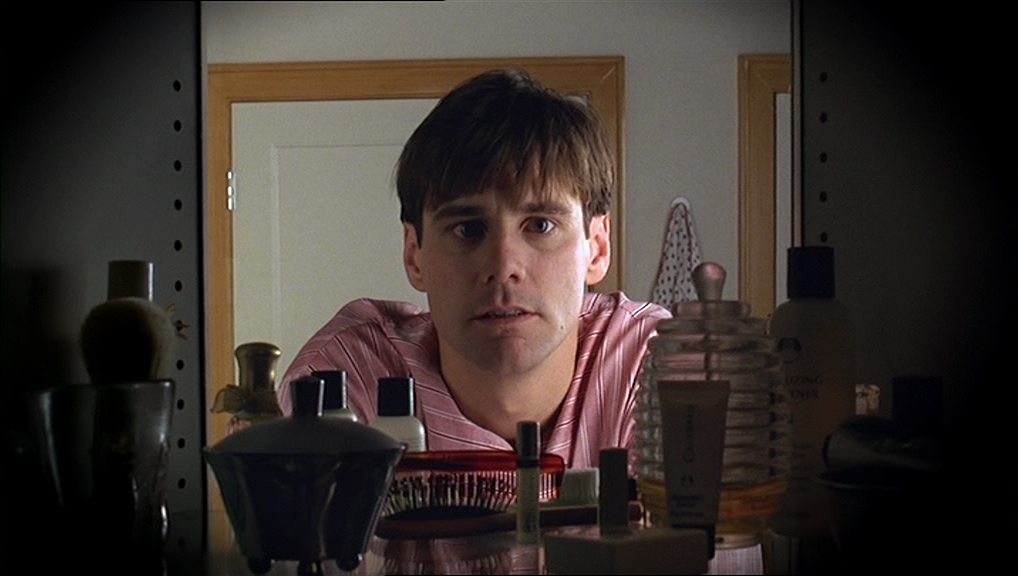
Truman Burbank (Jim Carrey) lives in the idyllic suburb of Seahaven, which, he is constantly reminded, is a nice place to live. It’s a place where everyone knows his name and everyone likes him. He has everything a man could want: a successful and comfy desk job, a best friend always equipped with an encouraging word, and a doting wife who smiles constantly as if she is posing for a Sears catalog. The only thing that keeps Truman from being perfectly happy is his wanderlust. While everything else continues to get handed to him his desire to travel and see the world remains unfulfilled. It is, in fact, largely discouraged by everyone; even his grade school teacher tells him incredibly that he is too late to become an explorer because “there is nothing left to explore.”
His fear of the ocean doesn’t help. After his father apparently drowns during a fishing trip his phobia of water is capitalized on by everyone who seems hellbent on keeping him from leaving or even thinking about it.
What Truman doesn’t know, but everyone else does, is that his life is carefully and painstakingly scripted. Everyone he meets are actors and the world of Seahaven is a massive TV film set with thousands of cameras running 24/7. Outside in the real world millions of viewers from around the world are watching The Truman Show, the ultimate in reality TV broadcasting. Truman’s life is the subject of constant analysis. He has no privacy and everything is being quietly manipulated behind the scenes by Christoph (Ed Harris) who is the creator of the Truman Show. Christoph is an artist of the avant-garde type who proudly claims that Truman is the first person to be legally adopted by a corporation.
Truman begins to suspect that his existence is being contrived by outside influences after a studio set lamp suddenly falls from the sky. One thing after another follows. His car radio mistakenly taps into a walkie-talkie feed that is describing all of his movements and later he finds a craft table behind an elevator surrounded by grips and cameramen before he is dragged away by security.
He is treated like he is being paranoid while everyone around him seems more and more obvious as performers. Christoph tells his critics that if Truman truly wanted to leave he could do so if his will was strong enough, but he quickly becomes aggressive in trying to stop Truman from leaving when this notion is tested. With the power of the weather and natural disasters at the push of a button Christoph is more than confident that Truman is going nowhere.
There is an indictment that can be found here in The Truman Show against the dehumanization that reality television offers. His many fans consider his humanity and feelings secondary to the soapish drama with which the show entertains them. To them he is a character in the same way that the Bachelor or the Real Housewives of where-the-hell-ever are characters. They and Christoph’s staff feel a cynical appreciation for dramatic gravitas. This is most keenly felt when the showrunners “kill off” Truman’s dad to boost ratings only to bring him back several seasons later with an unbelievable amnesia storyline. The manipulation is cruel and I had genuine feelings of anger provoked at the means in which these things are done to him. In one of the most disheartening moments Truman’s “best friend” Marlon (Noah Emmerich) tells him that he cares about him and that he would never lie to him. All of these lines are being fed to him by Christoph via an earpiece.
Truman is soon come to the realization that his “wife” doesn’t like him, his closest friends don’t care about him, and everyone he once trusted has only ever “loved” him from 9 to 5 for a paycheck.
Reality TV has only got worse since 1998 and in today’s day and age the satire has only become more poignant. But there is more than a satire of reality TV to be found here. Beneath that surface lay bigger questions about free will and the freedom to define oneself. When Christoph first reveals himself to Truman it is only after the fraud has been fully exposed and Truman is inches away from exiting Seahaven forever. Christoph’s voice booms godlike from the sky and he identifies himself as “the creator.” Whether Christoph believes in God himself is not made clear, but he clearly believes that there should be one if there isn’t. For Truman he has tried to take on the role himself, making what he believes to be a perfect existence for Truman to live in. Writer, Andrew Niccol seems to be someone who has grown up on claims that all trials are tests and are designed by God to direct us where we should go. In favor of human-directed destiny Truman rejects this to push back against the confined beliefs that had shaped his reality.
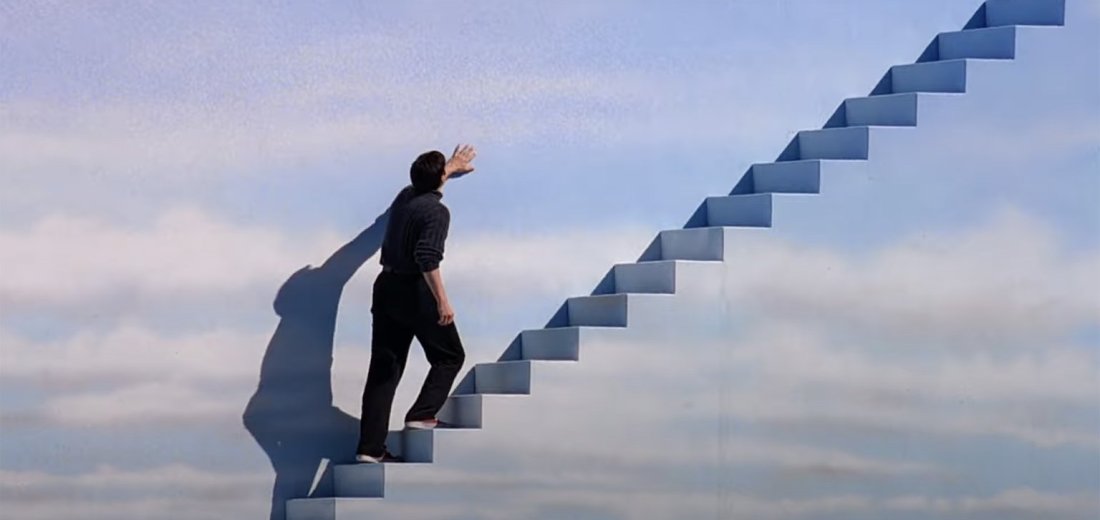
Truman, throughout the film, is full of questions, but it is his last, “Was any of it real?”, that is the most important. It’s difficult to say after so many lies and deceits, but what is clear is that, if nothing else, Truman himself was real. Every expression, every thought, and every affection from him was hundred percent real. And Truman deserves to be around people who are just as real. What Christoph offers in the final scene is not fulfillment, but stagnation.
Real life, independent and free, is uncertain and full of vagaries. But it is more rewarding. Happiness found in it is earned and pain is far from meaningless. What The Truman Show says is that a life needs some sense of meaning. It requires self-direction to be healthy. Should Truman remain in Seahaven, his life would be perfect, but it would not be happy. Nor would it be a life.
 Perspectives on Film