American Graffiti (1973)

3.5/4

Jack Weinberg once told us “Don’t trust anyone over 30”; and watching the majority of high school coming-of-age comedies that have been released over the years I believe he was right. Most of these types of films are made by men well over thirty who have forgotten what it was like to be truly young. For them youth means the sort of lechery, booze, and boorishness that made Bob Clark’s pictures so popular.
George Lucas was 29 when American Graffiti, his second film, was released to American cinemas. It counts. And if there is anyone who can recapture in a bottle what it was like to be a teenager on the cusp of the adult world it is the man who would later give us Star Wars.

American Graffiti is not a film with a plot that can be adequately described and explained without losing some of its heart and appeal. The movie is a slice of life kinda picture showing the last night of freedom for a group of high school graduates about to go out and get jobs and go to college.
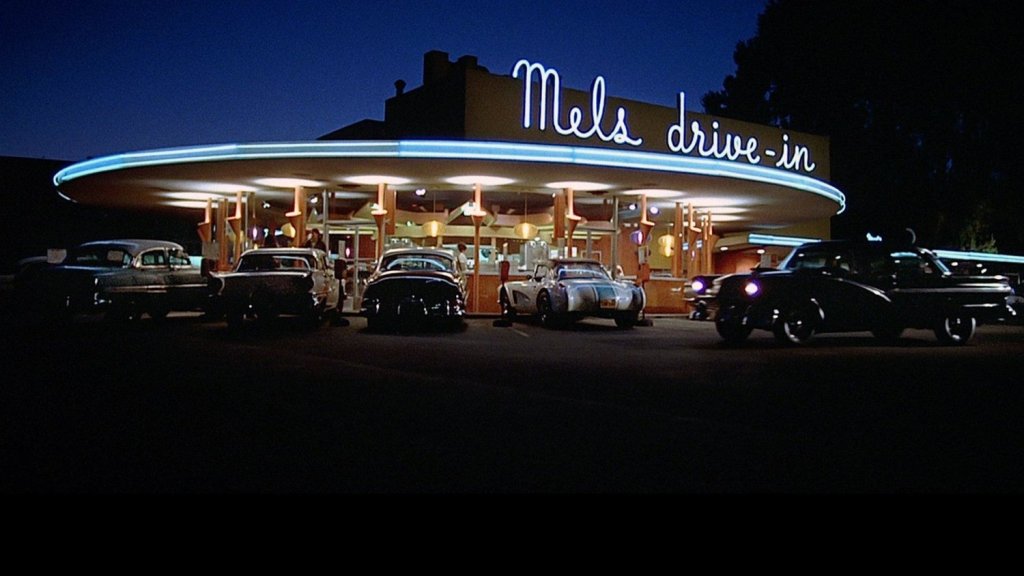
Set in the summer of 1962 with an atmosphere of 50’s diners, music, and cars American Graffiti perfectly and often hilariously portrays its characters living their best lives before the ravages of adulthood begin to take over.

Curt (Richard Dreyfuss) wonders if he really wants to go to college after all and goes on a wild excursion searching for a beautiful girl he saw passing by only to get entangled with a group of greasers whom he helps commit a few petty crimes to avoid getting beaten up by them.
His friend Steve (Ron Howard) is hormonal and immature; pressuring his girlfriend into sex just hours after telling her he wants to be free to see other people while he is away at school. As someone who actually is over 30 I know this is a really bad move.
Steve loans his car to the geeky bespectacled Terry (Charles Martin Smith) who uses it to impress Debbie (Candy Clark), a pretty blonde miles out of his league only to have everything fall apart when Steve later takes the car back. The romance between Terry and Debbie is absurd, charming, and comedically unrealistic in how much she puts up and puts out for him.
Milner (Paul Le Mat) is tricked into taking out a friend’s 12 year old relative, Carol (Mackenzie Phillips) out on a date and their petty bickering and her wit while he tries to pass himself as her babysitter make for some of the funniest moments in the movie. They both know she is too young for him and she takes every opportunity to embarrass and annoy him while she enjoys a night on the town. At the end they part ways with a reluctant mutual respect.
Milner’s rival, Bob Falfa (Harrison Ford) is a brash and immature tool who never quite grew up and has a hankering for street racing high schoolers. He is all ego and bravado who has no qualms over stealing Steve’s girlfriend, Laurie (Cindy Williams). When I was younger I may have felt something for Steve about this, but once again as a man who is over 30 I sympathize more with Laurie’s decision to leave and I was less than satisfied with her resolution with Steve; not being convinced that he really took responsibility for his actions that drove her away in the first place. This, and an unnecessarily tacked-on postscript which tells us what happened to a few of the other characters are the only weak points I found in the movie.

American Graffiti makes for a highly entertaining look at adolescent life in pre-counter culture America. The atmosphere of 50s rock tunes and classic cars doesn’t lose itself in nostalgia and shoe-horned references. It’s more about the characters and their misadventures than it is about the setting. It’s kids being kids without resorting to crude jokes, keg parties, and togas. It’s a sugary slice of young American life and it earns its place as a classic piece of New Hollywood cinema.
THX 1138 (1971)

Rating 2.5/4

Director George Lucas’s directorial debut, THX 1138, is in the fine tradition of science fiction movies of ideas such as 2001: A Space Odyssey and Logan’s Run.

Its world is a dystopic underground society, policed by robots and inhabited by a subjugated populace too drugged up by state-mandated medications to even realize they aren’t free or even should be. Their reality is a pale and lifeless one, both mentally and physically. The titular hero, THX 1138 (Robert Duvall), like the rest of the film’s characters; has every facet of his life regulated by an all-watching Big Brother-esque state that forces him to take medications which suppress emotions and molds him into whatever type of working drone the government wants him to be at any time.

THX lives with an assigned roommate named LUH 3417 (Maggie McOmie) who rebels against her government by swapping his pills with hers causing him to develop forbidden emotions and forbidden sexual desire. This relationship and the overwhelming emotions he experiences without the drugs causes a workplace accident that lands him in prison for “drug evasion.”
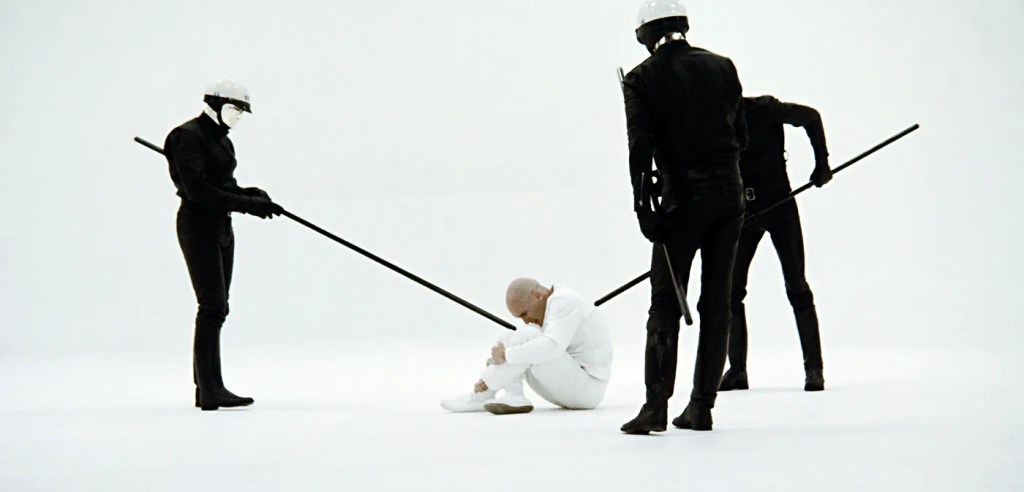
He shares this prison, an all white space stretching eternally, with another dissident named SEN 5241 (Donald Pleasance) whom he had reported earlier for illegally changing shift patterns in order to get a preferential roommate. This society is efficient, if also harsh.
What follows is a daring escape in which THX and SEN evade the authorities in order to find the world’s surface where men and women can live free.

In an impressive directorial debut we get amazing visuals and special effects showing a community rendered colorless and sterile by consumerism and unquestioning loyalty to one’s government. It is a beautiful looking picture and what is even more powerful than its art direction is its editing – largely helmed by director George Lucas himself. Lucas, before he became a filmmaking icon, was a master of using editing to pace a movie limited by its budget.
A lot of THX 1138 is shot from the perspective of computer monitors and surveillance equipment and much of the dialogue and action is presented in closeups that intensify the characters’ desperation and sense of panic – especially when THX begins withdrawing from the drugs.

The movie also brilliantly portrays the impersonal attitude of authority over a populace that has been quantified and dehumanized. Religion has been supplanted by a faux-benign computer system that plays simultaneously the role of a confessional priest and an advertising man. It preaches, “Consume. Be happy,” while failing to adequately respond to the personal issues and problems of its worshippers.
In one of the film’s most affective scenes THX is subjected in prison to a number of torturous tests which is commented on by unseen tormenters who sound like bored lab techs experimenting on mice or IT professionals playing with software. His reactions of pain and stress are just data.

The movie’s weakest point, unfortunately, is its characters who provide necessarily muted performances which serve to show the affects of the state and its drugs on what is essentially a human ant farm. However, by the same token this prevents any one of them from eliciting much care or concern from the viewer. The characters are governed by only the most base emotions of fear and anxiety which carries into all three acts of the plot.

THX 1138 is a visual marvel and it is one of most intelligent examples of dystopic science fiction in cinema. What it is not, however, is a compelling human drama.

Godzilla, King of the Monsters (2019)

00d5d9d1-f0bb-432a-926d-68617aa6c2bc.sized-1000x1000

Godzilla, King of the Monsters is a demonstration of how more of something is not necessarily a good thing. The film improves on the 2014 Godzilla which had very little footage of monsters at all by filling the majority of the movie’s 2 and a half hour screen time with monsters fighting and destroying cities. Unfortunately, in the end we get a result similar to the 2014 film which was a boring, poorly balanced mess.

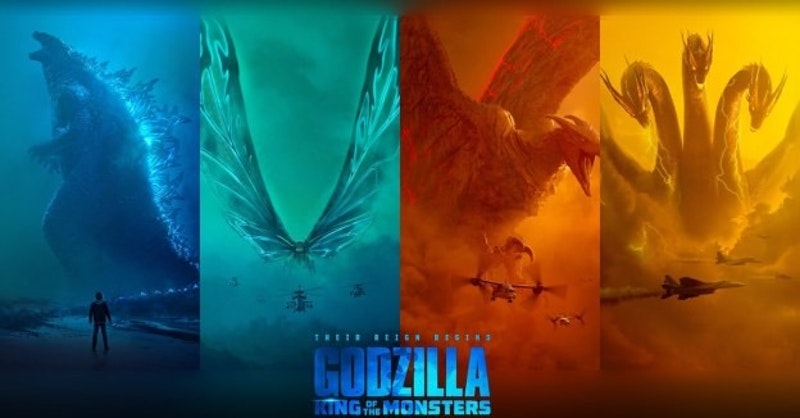
The film opens in a world where everyone is now aware of the existence of giant monsters living among us and it is treated with nary a tongue in cheek, but rather with such solemnity and seriousness that it becomes involuntarily funny at times. The problem this movie has is it doesn’t understand that its subject matter, chock full of fire breathing lizard, three-headed dragons, giant moths, and bird monsters bursting out of volcanoes, really cannot be taken that seriously at all.
At the very least the director of the 2014 film, Gareth Edwards, understood this and consequentially focused more on the aftermath of Godzilla’s actions and their effect on people in a vein similar to a disaster film and thus he got away with making a tonally serious Godzilla movie.
Here we have a 2 and a half hour action sequence with 6 or more giant monsters all vying for attention on screen to the point that the schlock begins to take over despite the filmmakers best efforts to present everything in a serious tone.

What little plot this movie does have gets easily overwhelmed by the perpetual action sequences and CGI effects. What story the movie does gives us is this: the world discovers that Godzilla and company were here on this Earth long before us and after being revived humans are getting caught in the crossfire between these Titans who are now vying for supremacy. A group of eco-terrorists led by the always delightful Charles Dance begin waking these monsters up in the belief that they are reestablishing the natural order of things.
But these story elements never stay long on screen before we are being subjected to repetitive monster fights and explosions. Ultimately many of the story’s plot threads are not tied up which is clear evidence of the producers’ intention of baiting future sequels.

Despite all the action, special effects, and monsters this movie is boring. There is no adequate balance between the film’s drama and the action scenes and the fighting and explosions begin to feel like a broken record. How many times does it take seeing a monster knocked down, get back up again, blast a few buildings, rinse, and repeat before we stop caring anymore. For me it was about 40 minutes into the movie.

I would also point out that for a movie called Godzilla, King of the Monsters this film gives him little presence. He constantly remains in stiff competition with Ghidorah and Mothra for the majority of the movie and it feels more like a monster ensemble piece rather than a movie that is actually about Godzilla.

Let’s hope that in the next one where Godzilla fights a giant monkey we will finally get a Godzilla movie we can take seriously.

2 Stars

Dr. Jekyll and Mr. Hyde (1920)

9432_5.jpg

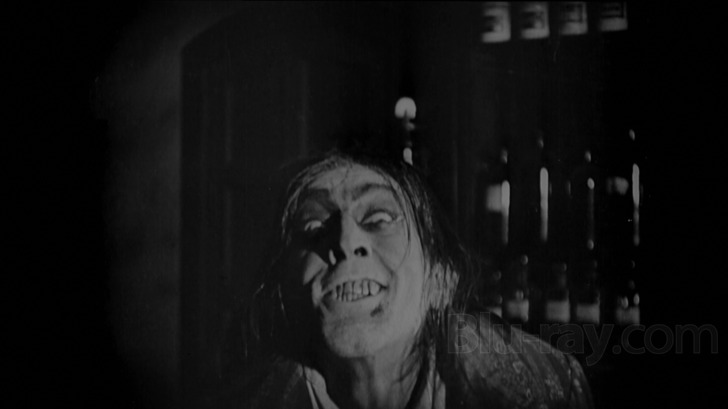
The 1920 adaptation of Robert Louis Stevenson’s Dr. Jekyll and Mr. Hyde is a marvel not from just a narrative standpoint, but also from a technical one. The cinematography and set design is so well crafted and adeptly achieved that one could be forgiven for believing the film to be of a later date than it is.
The film was clearly made with a budget appropriate for its ambitions and we are treated to some very lavish sets. Most notable are scenes in a dining hall where Dr. Jekyll’s love interest waits for him and a scene inside his personal library/parlor. When most silent films have the look and feel of a stage play it is impressive to see a level of detail in set decoration such as seen in these scenes. Today’s standards may see little to make note of, but for a 1920 film crafted in a time when most films were shot on locations very obviously manufactured to even the most untrained eye Dr. Jekyll and Mr. Hyde does better than most in showing the viewer more realistic and lively places.

From a narrative point this movie tells its story with a fast, entertaining pace without a great deal of lingering shots on character expressions and locations which was common practice of silent films of its day. Unlike most of the silent filmmaking of the era the filmmakers knew and understand fully what could be done with the art and they knew that this was a movie and not a stage production. Intercutting with multiple shots depicting action, constant shifts between characters in shots, and quick pacing in storytelling; all of which we take for granted in our movies today are impressively produced in this movie that will in only a few years from this writing turn a century old.

If there is anything more remarkable than the films technical achievements it would be John Barrymore’s performance as the titular Dr. Jekyll and Mr. Hyde. Unbelievably, the transition from Jekyll to Hyde was not achieved through copious amounts of makeup and special effects as was common to most adaptations of this classic story. Instead, Barrymore shows his talents for expression by twisting his own face into the leering, lascivious Mr. Hyde. Like voice work, facial expressions require a great deal of talent that not all actors possess and Barrymore outshines many performers who played this role like Fredric March or Spencer Tracy by this unique talent alone.

Overall Dr. Jekyll and Mr. Hyde (1920) may not fully showcase all of the technical structure and innovations of later film adaptations of the original novella, but it is remarkable in how much it achieves given the limitations of movie-making of its day.

It’s entertaining, does not bore, and is oddly charming in its old school portrayal of a penny dreadful horror story and its alluring sensuality with its dance hall scenes that only pre-code films of the 1920’s could deliver.  For film history buffs and horror geeks both this movie is very much worth a look. You aren’t likely to be disappointed.

3 1/2 Stars

The Cabinet of Dr. Caligari (1920)

caligari11-768x431

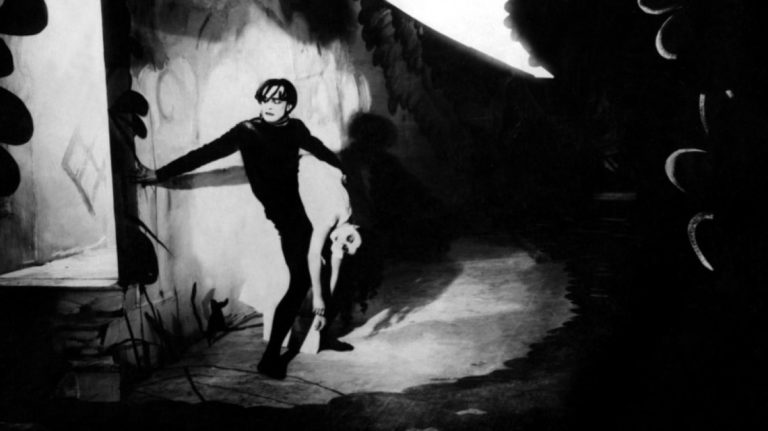
Robert Wiene’s The Cabinet of Dr. Caligari plays out like an eerie nightmare. The macabre imagery from the German Expressionistic set design to the surreal cinematography brings together what is widely considered to be the first true horror film.

Dr. Caligari (Verner Krauss) and the somnambulist, Cesare (Conrad Veidt) both give haunting performances where they seem to cast a shadow over the lives of the protagonist, Francis (Friedrich Feher) and his allies. Dr. Caligari is a spirit of meanness, exerting control and dominance over anything and anyone he can. He moves with a lurching animalistic gait as he gloats and glares at the environment around him. Cesare more haunts his world than he lives in it. He walks in a slow fluid manner as he does the murderous bidding of his master.
All of this plays out in a dreamlike state where reality becomes increasingly unclear and the truth behind the perspectives of the characters becomes uncertain. The Expressionistic art design of the movie, with its crooked almost Dr. Seussian architectures, furthers the impression of everything being a subjective dream.

While the nightmare plays out, a persistent theme of authoritarianism and the evil of dominating others is personified in the character of Dr. Caligari. He uses Cesare to do his bidding even when his will is pure evil. We find later that Cesare was a patient of Caligari’s at an asylum which makes the theme of freedom being suppressed by a tyrant even more palpable as we see Cesare as a victim at the mercy of Caligari who was put over him by the state.

The writers of The Cabinet of Dr. Caligari, Hans Janowitz and Carl Mayer both served in the German military during World War I and grew distrustful of authority and dictatorships after their experiences in the war. Caligari, a man granted power by the state and uses it to dominate and harm others, was representative of the authoritarianism they despised so much.
It was not lost on many retrospective critics and film historians that this film preceded the rise of Hitler and Nazi Germany. To many it would seem that The Cabinet of Dr. Caligari was a reaction and forewarning regarding the spirit of the German people following World War I which later led their nation down the path it did prior to the second World War.
For these reasons Janowitz and Mayer both objected to the Expressionist design and the twist ending forced upon them where we find Francis to be only a madman who fabricated the evil activities of Caligari who was, in reality, just an asylum director. They felt that this invalidated their themes of anti-authority as it made the crimes of Caligari a fantasy to be disregarded. Furthermore the rendering of the hero into a madman in an asylum who needed to be locked up, in fact, seems to encourage an authoritarian viewpoint rather than condemn it. While I am not inclined to disagree with this criticism of the film’s ending I hesitate to condemn the expressionist design as it is the finest and most exemplary use of Expressionism in cinema. While, for some, it may mitigate the essential themes of the film’s story I do not think the harm is so severe as to mitigate the value of the film’s visual artistry. In other words, The Cabinet of Dr. Caligari may be thematically imperfect, but it is one of the most remarkable and influential visual masterpieces ever produced in the history of horror filmmaking.

Extremely divisive when it was first released in 1920, the movie today is one of the most important works of cinema history and remains to this day one of the most influential works of art for filmmakers and film students. Wherever one may stand on the film’s themes and its controversial ending it is an essential work that needs to be seen.

3 1/2 Stars

Frankenstein (1910)

Frankenstein-650x368

The 1910 adaptation of Mary Shelley’s Frankenstein is best approached with an appreciation of its historical context. It is a product of its time and consequentially suffers from the limitations and trends of its era. Little more than an intriguing curiosity now for film historians and horror buffs Edison’s take on Frankenstein aims high, but ultimately fails to achieve its aims.

Before D. W. Griffith came along only a few years later with A Birth of a Nation and forever codified the fundamental language and structure of filmmaking, movies were made in a manner not unlike that of the performances of plays. Shots would linger on sets with little to no inter-cutting, closeups, or any special editing tricks to speak of. And given the lack of sound the means for conveying narrative was limited to the often exaggerated miming of the actors and the use of title cards.
Movies of the time were little more than short sideshow attractions like The Kiss (1896) or films with limited and simple narratives like The Great Train Robbery (1903) and Georges Méliès’ A Trip to the Moon (1902). While The Great Train Robbery and A Trip to the Moon were entertaining rides into escapism the Edison Frankenstein instead tries too hard to create a thought-provoking experience that completely fails due to the then limitations of the craft.
The director had insisted that the gruesomeness of the original novel be omitted from his adaptation and he opted instead to recreate the more mystical elements of the book. However, the attempts at emotional and intellectual depth by director J. Searle Dawley were lacking in subtlety and his attempt at “elimination what would be repulsive to a moving picture audience” (his words not mine) seems to be a vain endeavor as his film is little more than a grotesque geek show to shock audiences of 1910. There is a particularly hamfisted moment in which we see Doctor Frankenstein peer into his looking-glass only to see the monster he created looking back at him rather than his own visage. While I could appreciate the notion that Doctor Frankenstein was a monster deep inside, this sort of symbolic imagery doesn’t convey itself very successfully when the film in question is less than 20 minutes long and none of the characters are given time for development. And that is where The Great Train Robbery and Méliès’ work outshine this movie. Those were competently made films that were designed with the fullest awareness of what sort of limitations the filmmakers had in crafting their stories. Dawley and Edison on the other hand try too hard to do something that their craft could not do at the time.
Frankenstein (1910) aims high with its pretentious and pedantic overtones but misses the mark and lands instead somewhere in the genre of grotesque horror and freak show. Which, admittedly in those areas this movie excels. One of the more striking visual moments in the film is when Frankenstein’s monster is first created. In the giant vat in which the monster is being born we see slowly flesh grow on a skeleton and take shape eventually culminating into the hulking brute portrayed by Charles Stanton Ogle who sadly received no screen credit as such things were not standard practice at the time. Frankenstein’s monster here has not the traditional Karloff look created by Jack Pierce in 1931. You won’t see any bolts on this monster’s neck and nor will you see a flat top to its head. Ogle’s Frankenstein’s monster is a large hunchbacked asymmetrical monstrosity that terrifies and appalls his own creator the minute he comes to life.
While this is no where near as iconic as the Boris Karloff version it certainly shows the creativity and imagination on hand with the early pioneers of filmmaking just after the turn of the century.

While this movie may be imperfect due to its poorly crafted narrative it is certainly an important piece of history and is surely required viewing for any film student or horror buff looking to see the history of the genre. Other films may have done better before and after it, but its place in history outside of its own merits keeps it immortal.

1 1/2 Stars

Vertigo (1958)

0393

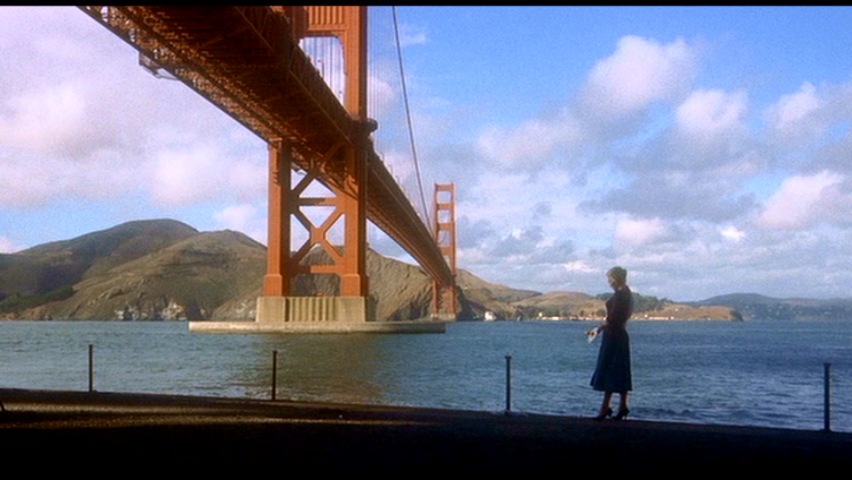
There are certain kinds of movies where not a single shot is wasted. Vertigo is one of these sorts of films. Every frame, every movement, every camera trick finely crafts together a perfect film and a fantastic work of art. Visually the film presents us with a number of memorable moments such as the famous “dolly zoom” effect when Ferguson (Jimmy Stewart) is having acrophobic episodes as well as the abstract and uncanny animated nightmare sequence when his sanity finally begins to unravel. There are so many beautiful shots in this movie that I believe equally showcase the mastery of direction the cinematography uses to tell its story. When Ferguson is trying to reach out to Madeleine (Kim Novak) sitting in the carriage we see her silhouetted against the daylight outside of the stable creating an effect perfectly emphasizing, not in dialogue; but in images, Ferguson’s growing sense of isolation and impending loss regarding this woman he loves. And this is not the only example of Vertigo’s power of visual storytelling outweighing the need for dialogue. One of the best scenes in Vertigo is when Ferguson is tracking Madeleine on the behest of her husband (Tom Helmore) and throughout this sequence he silently watches her behavior without any inner monologue being needed to tell us what he is thinking.
Everything from the angle of the camera, to where the action is centered in view, to the lighting, and to the camera’s movements effectively convey all of the emotions and turmoil of Vertigo’s characters without needing to resort to dialogue to do the job for us.
Hitchcock has always had a unique skill for having the cinematography combined with his actors’ body language and expressions do the communicating. In other Hitchcock films like Rope there are scenes where we can tangibly see Rupert Cadell (also played by Jimmy Stewart) starting to piece together his suspicions without once uttering a word.
There is no better example of a successful practitioner of the “show; don’t tell” rule of filmmaking than Alfred Hitchcock.

Thematically Vertigo is commonly cited as a story of obsession and the vagaries of male aggression. This, of course, could be taken as a reflection of Hitchcock’s general possessive attitude toward women that permeated, not only his films, but also his personal life. Madeleine is a figure of feminine mystique. An alluring and sensual archetype of that other half of humanity that the masculine cannot grasp or comprehend. The feelings and personality and thoughts of Madeleine are not treated in Vertigo as a subject of much importance to the narrative and the only moments where they come to play is when they are needed to create an emotional conflict for Ferguson. But Madeleine is hardly felt to be a real live person throughout this film. She is merely the object for which the film’s subject of male possessiveness and fatal obsession is focused. Hitchcock is a master filmmaker and a fine artist, but one cannot ever accuse him of being a feminist and this attitude toward women is not an uncommon sight in his movies as I pointed out above.
The only female character in the film who seems to have any true personality and character of her own is Midge (Barbara Bel Geddes) and her role is sadly wasted in the last act of the movie. Midge is a funny, charming, intelligent, and companionable woman whose affection for Ferguson is shown through a lot of bumbling, cautious approaches, and awkward mistakes. She is extremely likable and as a viewer I wanted her to win. It was my hope to see Midge succeed and win the affection of the man she adored. It was clear from the beginning that Ferguson’s feelings for Madeleine were fated for tragedy and so as a viewer I could not ever feel like I was rooting for him. His obsessive behavior is repellent and disturbing and Madeleine’s inconsistent and chaotic reactions are infuriating and frightening. Midge is the sole character in this movie who was on a path I could support. Unfortunately her character is tossed aside shortly before Ferguson is released from the hospital never to be seen again. Which I guess one cannot blame the screenplay too much for considering she was a last minute addition created by the third man hired to pen the script. But, to me, she was the most delightful character in the entire movie.

Vertigo is a tragic story. Madeleine’s intrusion into Ferguson’s life could only go in a variety of destructive paths and while the film ends in the best possible outcome (for Ferguson) it is still a painful event that he won’t recover from for a long time. Obsession and possessiveness is never a good thing, but obsession and possessiveness over a person who is toxic is how lives are destroyed and people are left feeling broken. Madeleine is probably the ultimate example of the Hitchcockian femme fatale. The aforementioned figure of feminine mystique that can break or even kill the unwary masculine other half. Are these sort of themes PC? No. But they are Hitchcock.

4 Stars