
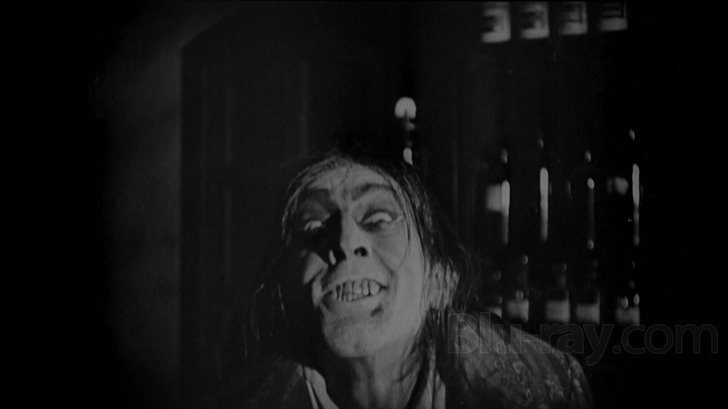
The 1920 adaptation of Robert Louis Stevenson’s Dr. Jekyll and Mr. Hyde is a marvel not from just a narrative standpoint, but also from a technical one. The cinematography and set design is so well crafted and adeptly achieved that one could be forgiven for believing the film to be of a later date than it is.
The film was clearly made with a budget appropriate for its ambitions and we are treated to some very lavish sets. Most notable are scenes in a dining hall where Dr. Jekyll’s love interest waits for him and a scene inside his personal library/parlor. When most silent films have the look and feel of a stage play it is impressive to see a level of detail in set decoration such as seen in these scenes. Today’s standards may see little to make note of, but for a 1920 film crafted in a time when most films were shot on locations very obviously manufactured to even the most untrained eye Dr. Jekyll and Mr. Hyde does better than most in showing the viewer more realistic and lively places.
From a narrative point this movie tells its story with a fast, entertaining pace without a great deal of lingering shots on character expressions and locations which was common practice of silent films of its day. Unlike most of the silent filmmaking of the era the filmmakers knew and understand fully what could be done with the art and they knew that this was a movie and not a stage production. Intercutting with multiple shots depicting action, constant shifts between characters in shots, and quick pacing in storytelling; all of which we take for granted in our movies today are impressively produced in this movie that will in only a few years from this writing turn a century old.
If there is anything more remarkable than the films technical achievements it would be John Barrymore’s performance as the titular Dr. Jekyll and Mr. Hyde. Unbelievably, the transition from Jekyll to Hyde was not achieved through copious amounts of makeup and special effects as was common to most adaptations of this classic story. Instead, Barrymore shows his talents for expression by twisting his own face into the leering, lascivious Mr. Hyde. Like voice work, facial expressions require a great deal of talent that not all actors possess and Barrymore outshines many performers who played this role like Fredric March or Spencer Tracy by this unique talent alone.
Overall Dr. Jekyll and Mr. Hyde (1920) may not fully showcase all of the technical structure and innovations of later film adaptations of the original novella, but it is remarkable in how much it achieves given the limitations of movie-making of its day.
It’s entertaining, does not bore, and is oddly charming in its old school portrayal of a penny dreadful horror story and its alluring sensuality with its dance hall scenes that only pre-code films of the 1920’s could deliver. For film history buffs and horror geeks both this movie is very much worth a look. You aren’t likely to be disappointed.
3 1/2 Stars
 Perspectives on Film